Venezuelan Empanadas: Crispy and Savory
- Time: Active 30 minutes, Passive 30 minutes, Total 60 minutes
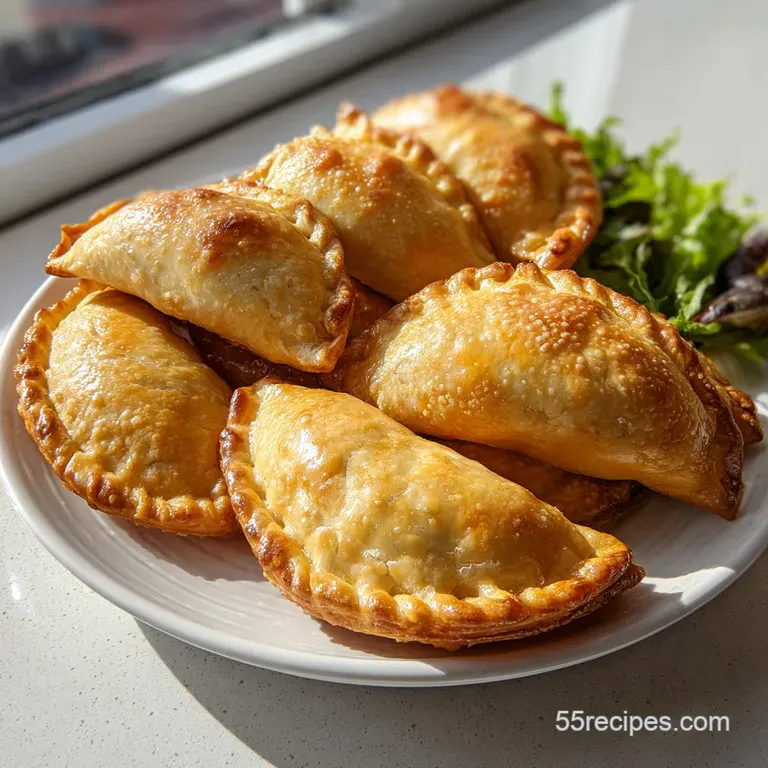
- Flavor/Texture Hook: A golden, crunchy corn shell that shatters to reveal a velvety, cumin spiced beef interior.
- Perfect for: Weekend family gatherings, budget-friendly meal prep, or a Latin inspired party appetizer.
- Mastering Golden and Crispy Homemade Venezuelan Empanadas
- Key Techniques for the Best Texture
- Important Metrics and Recipe Specs
- The Building Blocks of Flavor
- Essential Kitchen Gear for Frying
- Step-by-Step Method for Success
- Troubleshooting and Fixing Common Errors
- Scaling This Recipe for Crowds
- Creative Swaps and Flavor Twists
- Storage Rules for Long Lasting Crunch
- Best Serving and Pairing Ideas
- Common Kitchen Myths Debunked
- Recipe FAQs
- 📝 Recipe Card
Mastering Golden and Crispy Homemade Venezuelan Empanadas
That first bite of a Venezuelan empanada is something you never forget. I remember standing at a small street stall, the air thick with the scent of hot oil and toasted corn. The vendor handed me a steaming crescent wrapped in a thin napkin.
When I bit into it, the crust didn't just crumble it practically shattered, followed immediately by the rich, savory steam of slow cooked beef hitting my senses. It’s a sensory experience that feels like a warm hug from the inside out, and honestly, it’s one of the most satisfying things you can make in your own kitchen.
Most people think making these at home is a massive chore, but it’s actually one of the most affordable and straightforward ways to feed a crowd. You don't need fancy flour or expensive equipment. We are talking about humble yellow cornmeal, some pantry spices, and a bit of patience.
The joy comes from the rhythm of the work kneading the dough until it feels like soft clay and watching them bob in the oil until they turn that iconic sunset gold.
The secret to a great result isn't just following a list of steps; it's about feeling the dough and understanding how it reacts to heat. If you've ever had an empanada burst in the pan or come out soggy, don't worry I've been there too.
We’re going to walk through exactly how to avoid those little kitchen heartbreaks so you can get that professional crunch every single time. Let's get into what makes these beauties so special.
Key Techniques for the Best Texture
Getting the crust right is usually the biggest hurdle for home cooks. Unlike wheat based doughs, this corn dough doesn't have gluten to keep it together. Instead, it relies on the pre cooked nature of the cornmeal.
When you mix it with warm water, the granules swell and lock together, creating a dough that is surprisingly pliable but can become brittle if you aren't careful.
Sugar Caramelization: The tablespoon of granulated sugar in the dough isn't just for sweetness; it reacts with the heat of the oil to help the cornmeal brown more deeply and evenly, creating that beautiful golden hue.
Fat Induced Elasticity: Adding a little vegetable oil directly into the dough might seem weird, but it actually lubricates the corn particles, allowing them to slide past each other so the dough doesn't crack when you fold it over the beef.
Hydration Pause: Letting the dough rest for 5 minutes is non negotiable because the cornmeal needs time to fully absorb the liquid, ensuring a uniform texture that won't feel gritty or sandy on the tongue.
Moisture Equilibrium: Cooking the beef filling until the liquid has evaporated prevents steam from building up inside the empanada, which is the main cause of the dough bursting during frying.
| Method | Time | Texture | Best For |
|---|---|---|---|
| Deep Fry (Stovetop) | 6-8 minutes | Ultra crispy, shatter effect crust | Traditional flavor and maximum crunch |
| Baking (Oven) | 20-25 minutes | Firmer, slightly drier crust | Health conscious version with less oil |
| Air Fryer | 12-15 minutes | Crunchy but more matte finish | Quick cleanup and smaller batches |
The choice between stovetop and oven really comes down to what you're looking for. While the stovetop method is the classic way to get that deep, rich flavor and the ultimate "shatter" texture, the oven is a great friend if you're trying to cut back on oil.
Just know that baking them won't give you those tiny, delicious bubbles on the surface of the crust that you get with frying.
Important Metrics and Recipe Specs
Before you start mixing, you need to understand the components you're working with. Using the right type of cornmeal is the difference between success and a bowl of mush. You are looking for pre cooked cornmeal, often sold under the brand Harina P.A.N.
Do not use regular cornmeal or cornstarch here; they simply won't hydrate the same way.
| Ingredient | Science Role | Pro Secret |
|---|---|---|
| Pre cooked Cornmeal | Structural Base | Use yellow cornmeal for a more vibrant color and deeper toasted corn flavor than the white version. |
| Warm Water | Hydration Agent | Use water that is warm to the touch (around 105°F) to help the cornmeal swell faster and more thoroughly. |
| Vegetable Oil | Plasticizer | A small amount in the dough prevents it from drying out as you shape the remaining empanadas. |
| Sugar | Browning Agent | Sugar lowers the temperature at which the crust browns, ensuring it looks cooked before the inside gets too dry. |
When you're dealing with the beef, the cut matters. Beef chuck is perfect because it has enough connective tissue to stay juicy even after being shredded and sautéed. If you use a leaner cut, the filling might end up feeling a bit "stringy" or dry inside the crisp shell.
The Building Blocks of Flavor
One of the best things about this recipe is how budget friendly it is. You’re taking basic staples like onions, peppers, and cornmeal and turning them into something that feels like a feast. If you can't find beef chuck, you can easily use ground beef or even shredded chicken. If you're looking for another great chicken option, you should definitely check out my Fiesta Chicken Empanadas recipe which uses a similar vibe but with a twist.
- Pre cooked yellow cornmeal (2 cups / 320g): This is the backbone. Why this? It provides the authentic flavor and the specific "crunch" that defined Venezuelan street food.
- Warm water (2 ½ cups / 600ml): The carrier for hydration. Why this? The ratio of 2.5 parts water to 2 parts cornmeal creates the perfect "play dough" consistency.
- Fine sea salt (1 tsp / 6g): Essential for flavor.
- Granulated sugar (1 tbsp / 12g): For browning and balance.
- Vegetable oil (1 tbsp / 15ml): For dough elasticity.
- Beef chuck (1 lb / 450g): Slow cooked and shredded. Why this? Chuck breaks down beautifully, giving you those tender, succulent threads of meat.
- Yellow onion & Red bell pepper (1 each): The aromatic base for the filling.
- Garlic cloves (2 minced for filling, 1 for sauce): For that sharp, savory punch.
- Ground cumin (1 tsp): The signature spice of Latin beef fillings.
- Tomato paste (2 tbsp): Adds depth and helps bind the filling together.
- Ripe avocado (1): The base for your creamy Guasacaca.
- Fresh cilantro (¼ cup): For brightness in the sauce.
- White vinegar & Olive oil: The acidic and fatty components of the sauce.
- Vegetable oil (2 cups): Specifically for deep frying.
| Original Ingredient | Substitute | Why It Works |
|---|---|---|
| Beef Chuck | Ground Beef (80/20) | Much faster to cook. Note: Sauté until very dry to avoid soggy dough. |
| Yellow Cornmeal | White Cornmeal | Same texture and hydration. Note: The empanadas will be paler in color. |
| White Vinegar | Lime Juice | Provides the necessary acidity. Note: Adds a citrusy note that's great with avocado. |
If you happen to have leftovers, don't throw them away! The beef filling is incredible the next day tucked into a taco or even served over a bit of rice. Cooking like this is all about being smart with your ingredients and making sure nothing goes to waste.
Essential Kitchen Gear for Frying
You don't need a professional deep fryer to make amazing Venezuelan empanadas. In fact, a heavy bottomed skillet is often better because it allows you more control over the oil temperature.
I personally love using a cast iron skillet because it holds heat like a champ, meaning the oil temperature won't drop as much when you drop in the cold dough.
Another essential "tool" is actually a humble plastic freezer bag. You're going to cut the sides of the bag so it opens like a book. This is what you'll use to flatten the dough and fold it.
The plastic prevents the corn dough from sticking to your counter and makes it incredibly easy to get that perfect crescent shape without the dough tearing.
Finally,, grab a wire cooling rack. If you put hot, fried empanadas directly onto a plate or paper towels, the bottom will steam and lose its crunch within minutes. Setting them on a rack allows air to circulate around the entire empanada, keeping that crust "shatter crisp" while the excess oil drips away.
step-by-step Method for Success
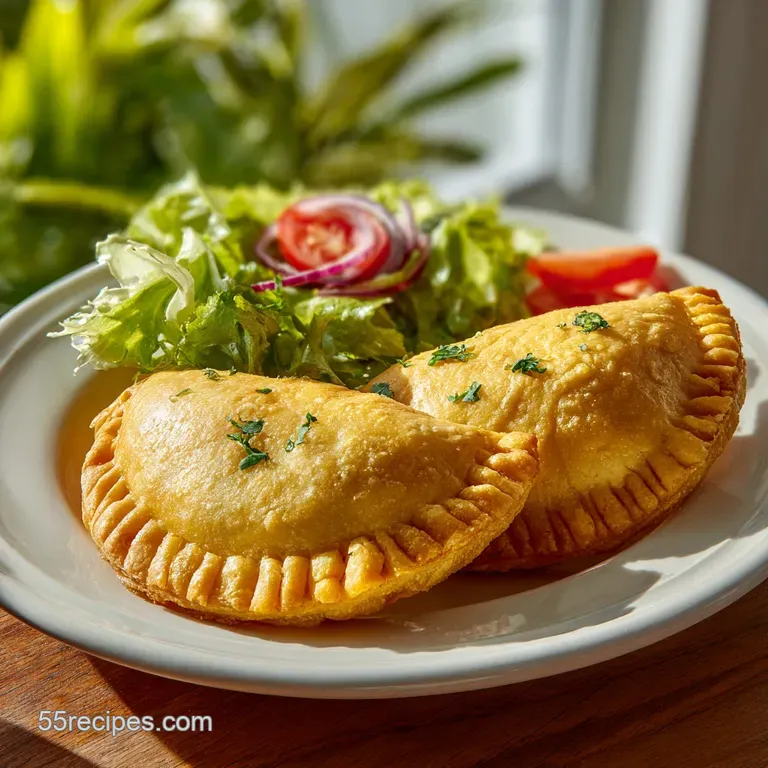
- Combine 2.5 cups warm water, 1 tsp salt, 1 tbsp sugar, and 1 tbsp oil in a large bowl. Stir until the solids are fully dissolved.
- Gradually add 2 cups cornmeal while mixing with your hand. Note: Using your hand helps you feel for any dry lumps that need breaking up.
- Let the dough rest for 5 minutes. Wait until it feels firm and holds its shape without being sticky.
- Sauté diced onion, bell pepper, and 2 cloves garlic in a pan. Add the shredded beef, 1 tsp cumin, and 2 tbsp tomato paste.
- Cook the beef mixture until no liquid remains in the bottom of the pan. Note: This prevents the empanadas from exploding.
- Blend avocado, cilantro, 1 garlic clove, 2 tbsp vinegar, and 3 tbsp olive oil. Process until the sauce is velvety and smooth.
- Divide dough into 11 balls (85g each). Flatten each ball on a plastic bag until it is 1/4 inch thick.
- Place 1.5 tbsp filling in the center. Fold the dough over and press the edges firmly with a bowl to seal.
- Heat 2 cups oil to 350°F (175°C) in a skillet. Fry for 3-4 minutes per side until deep golden and audible when tapped.
- Drain on a wire rack for 2 minutes. Serve immediately while the crust is at its peak crunch.
Chef's Tip: If the dough feels too dry and starts to crack while you're shaping the balls, just wet your hands with a little bit of warm water and knead it for another 30 seconds. It’s very forgiving!
Troubleshooting and Fixing Common Errors
Even with a great recipe, things can go a little sideways in the kitchen. The most common issue people face is the dough cracking. This usually happens because the cornmeal wasn't hydrated enough or the dough sat out too long and dried up.
Keep your dough bowl covered with a damp kitchen towel while you work to prevent this.
Why Your Dough Cracks
If your dough looks like a dry desert floor when you try to fold it, it's screaming for more moisture. Pre cooked cornmeal is like a sponge; it will keep drinking water until it reaches equilibrium. If you're struggling, don't be afraid to add a tablespoon of water at a time until it feels like soft, moist clay again.
| Problem | Root Cause | Solution |
|---|---|---|
| Dough Cracking | Under hydration or air exposure | Add 1-2 tbsp warm water and keep dough covered with a damp cloth. |
| Empanada Bursting | Too much moisture in filling | Sauté the beef until all visible liquid has evaporated before filling. |
| Oily/Soggy Crust | Oil temperature is too low | Ensure oil is at 350°F (175°C) before adding dough; don't overcrowd the pan. |
Avoiding Common Mistakes Checklist
- ✓ Always use warm water to mix the dough (it activates the starches better).
- ✓ Never skip the 5 minute rest period for the dough.
- ✓ Use a plastic bag or parchment paper to fold; never try to do it by hand.
- ✓ Check your oil temp with a thermometer; 350°F is the "sweet spot" for frying.
- ✓ Don't overfill the empanadas; 1.5 tablespoons is the maximum for this size.
- ✓ Let them drain on a rack, not a flat surface, to maintain the crunch.
If you find that your empanadas are browning too fast but the dough still feels a bit soft, your oil is likely too hot. Dial it back a bit. If they are taking forever to color and coming out greasy, your oil is too cold. It’s all about that 350°F (175°C) balance.
Scaling This Recipe for Crowds
This recipe is incredibly easy to scale up for a big party or down for a solo lunch. Since the dough is a simple ratio, you can remember the "2 to 2.5" rule (2 parts cornmeal to 2.5 parts water). If you're cutting the recipe in half, just use 1 cup of cornmeal and 1.25 cups of water. It's that simple.
When scaling up to make, say, 22 empanadas, be careful with your spices. While you can double the meat and cornmeal easily, sometimes doubling the salt and cumin can be a bit overwhelming. I usually start with 1.5 times the spices and then taste the filling to see if it needs that full double dose.
Also, remember to work in batches when frying. If you put 10 empanadas in the pan at once, the oil temperature will plummet, and you'll end up with a greasy mess.
For a smaller batch, you can actually freeze the raw, shaped empanadas. Just lay them on a baking sheet to freeze solid, then pop them into a bag. When you're ready to eat, you can fry them directly from frozen just add an extra 2 minutes to the cook time to make sure the beef gets hot all the way through.
Creative Swaps and Flavor Twists
While the beef filling is the classic, the beauty of the Venezuelan empanada is that it's a blank canvas. In Venezuela, you'll find everything from fish to black beans and cheese tucked inside these corn shells. If you're looking for a different protein but want to keep that Latin flair, you could experiment with different spices or even a different base. For example, if you want something with a bit more of a kick, you might look at how other Latin dishes handle spice, like in a Fiesta Chicken Empanadas recipe.
- The Cheese Factor: Adding a slice of salty white cheese (like Queso Fresco or even Muenster) alongside the beef creates a "con queso" version that is to die for.
- Black Beans (Pabellón Style): Mix your shredded beef with some seasoned black beans and a little fried sweet plantain for the ultimate Venezuelan flavor profile.
- The Seafood Route: Sautéed shrimp or flaked white fish with lime and cilantro makes for a lighter, coastal style empanada.
| Variation | Key Change | Flavor Impact |
|---|---|---|
| Domino | Black beans and white cheese | Salty and earthy; great vegetarian ish option. |
| Cazón | Shredded shark or firm white fish | Light and briny; traditional in coastal regions. |
| Sweet Dough | Increase sugar to 3 tbsp | Creates a "dessert" shell that pairs well with salty cheese. |
Don't be afraid to get creative with the dipping sauces too. While Guasacaca is the gold standard, a spicy garlic aioli or even a simple squeeze of lime can change the whole experience.
Storage Rules for Long Lasting Crunch
Storing fried food is always a bit tricky because the moisture from the filling wants to migrate into the crust, making it soft. However, if you follow a few simple rules, you can enjoy these for several days. If you have leftovers, let them cool completely on the wire rack before putting them in the fridge.
This prevents steam from being trapped in the storage container.
In the Fridge: Place them in an airtight container for up to 3 days. To reheat, avoid the microwave at all costs! It will turn the crust into a rubbery disappointment.
Instead, pop them in a 350°F (180°C) oven or an air fryer for 5-8 minutes until the shell crisps back up.
In the Freezer: You can freeze cooked empanadas for up to 3 months. To reheat from frozen, bake them at 375°F (190°C) for about 15-20 minutes.
The high heat helps drive out any ice crystals and restores the crunch without overcooking the inside.
Zero Waste Tip: If you have leftover dough but no filling, don't toss it! You can roll the dough into small discs and fry them as "arepitas." They are delicious with a little butter and cheese for breakfast the next morning.
Best Serving and Pairing Ideas
Venezuelan empanadas are rarely eaten alone. In a traditional setting, they are served with a variety of "salsas." The Guasacaca included in this recipe is the most iconic pairing. It’s essentially a thinner, more acidic version of guacamole that cuts through the richness of the fried dough and the savory beef.
If you're serving these for a party, I love to put out a big platter with a bowl of Guasacaca in the center and maybe a second spicy sauce for those who like heat. A side of fresh slaw or a simple tomato and onion salad provides a nice crunch and acidity to balance the meal.
For drinks, a cold tropical fruit juice or even a light lager is the perfect companion to the toasted corn flavor.
Honestly, though, my favorite way to eat these is just standing in the kitchen with a friend, dipping a hot empanada directly into the blender jar of sauce. There’s something about that immediate reward that makes all the effort of shredding beef and kneading dough totally worth it.
Common Kitchen Myths Debunked
One big myth is that you need to use ice cold water for corn dough, similar to how you make pie crust. This is actually the opposite of what you want. Warm water is essential for pre cooked cornmeal because it helps the starch granules hydrate and soften properly.
Using cold water will often leave you with a grainy dough that is much harder to shape.
Another misconception is that the oil needs to be smoking hot to get a crispy result. If your oil is smoking, it's too hot (likely over 400°F). At that temperature, the outside of the empanada will burn before the dough has a chance to cook through and the beef gets hot.
A steady 350°F (175°C) is the magic number for a deep, golden, and thoroughly cooked crust.
Finally,, some people think you can't make these without a specialized empanada press. While those tools are nice, a simple small bowl or even a large round cookie cutter is all you need to get that perfect, professional looking seal.
The pressure from the bowl cuts the dough and seals the edges at the same time it’s a total game changer for your workflow!
Recipe FAQs
What is a Venezuelan empanada?
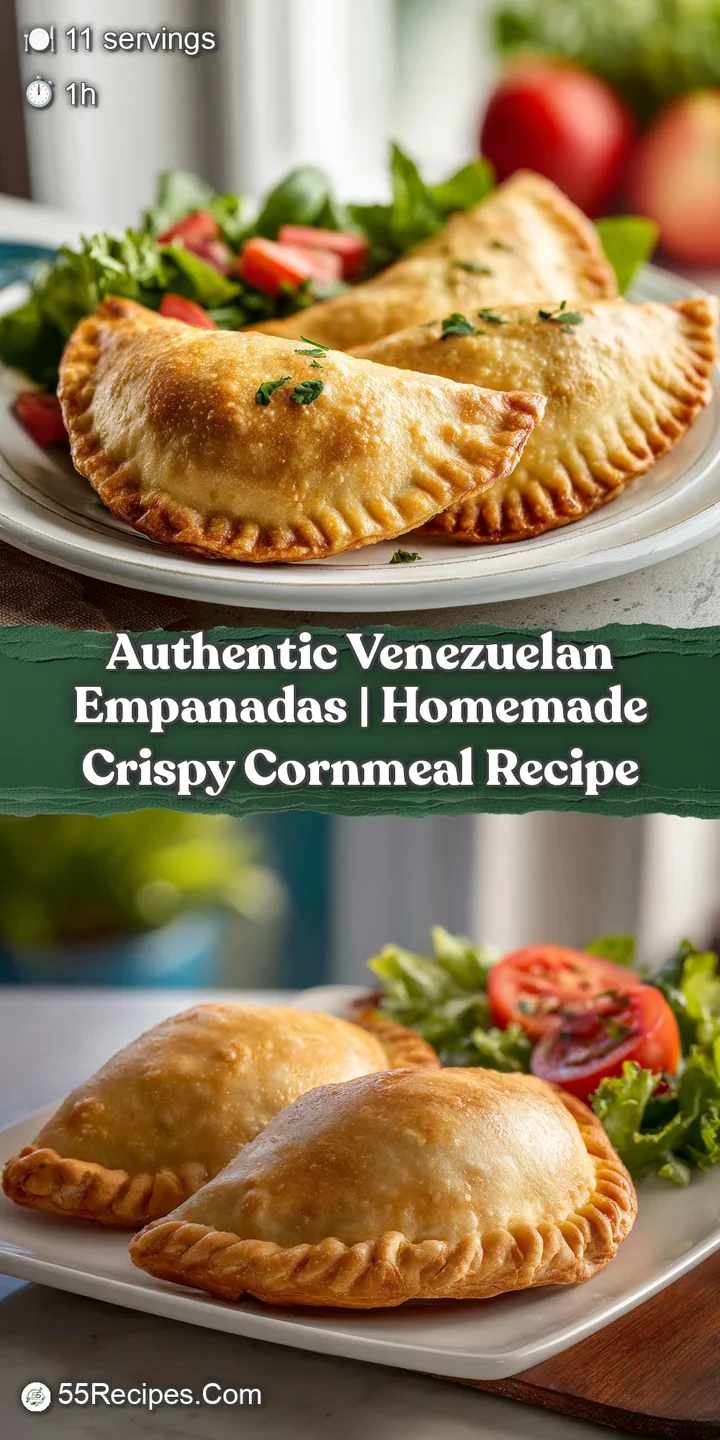
A Venezuelan empanada is a crescent shaped savory pocket made from a pre-cooked yellow cornmeal dough and deep fried until the crust is deep golden yellow and extremely crispy.
What makes Venezuelan empanadas different?
The corn based dough distinguishes them from wheat based versions. By using pre-cooked cornmeal, salt, sugar, and water, the dough develops a unique texture that stays firm and crunchy when fried to a deep golden yellow.
Is it true that empanadas are only from Colombia?
No, this is a common misconception. Empanadas are a staple throughout Latin America, and Venezuelan versions are uniquely defined by their specific cornmeal dough and the use of fresh guasacaca sauce.
Are Puerto Rican empanadas the same as Venezuelan ones?
No, they are distinct preparations. Puerto Rican versions typically use a wheat flour based dough, whereas Venezuelan empanadas exclusively use pre-cooked yellow cornmeal.
How to prevent the dough from cracking while shaping?
Keep your dough bowl covered with a damp kitchen towel to prevent it from drying out. If cracking persists, ensure you allowed the dough to hydrate for the full 5 minutes and verify that your mixture is firm and not too dry before flattening.
How to fry for the perfect crispy texture?
Heat 2 cups of vegetable oil in a heavy bottomed skillet to 350°F (175°C) and fry in batches. Maintain the temperature to ensure they cook for 3-4 minutes per side until the crust reaches a deep golden yellow color.
How to reheat leftovers to keep them crunchy?
Avoid the microwave at all costs because it will make the crust rubbery. Reheat them in a hot oven or air fryer until the exterior regains its crunch, then let them sit on a wire rack for 2 minutes before eating.
Authentic Venezuelan Empanadas
Ingredients:
Instructions:
Nutrition Facts:
| Calories | 318 kcal |
|---|---|
| Protein | 11.4 g |
| Fat | 19.2 g |
| Carbs | 26.8 g |
| Fiber | 3.6 g |
| Sugar | 2.1 g |
| Sodium | 342 mg |
