Moist Blue Velvet Cake Recipe
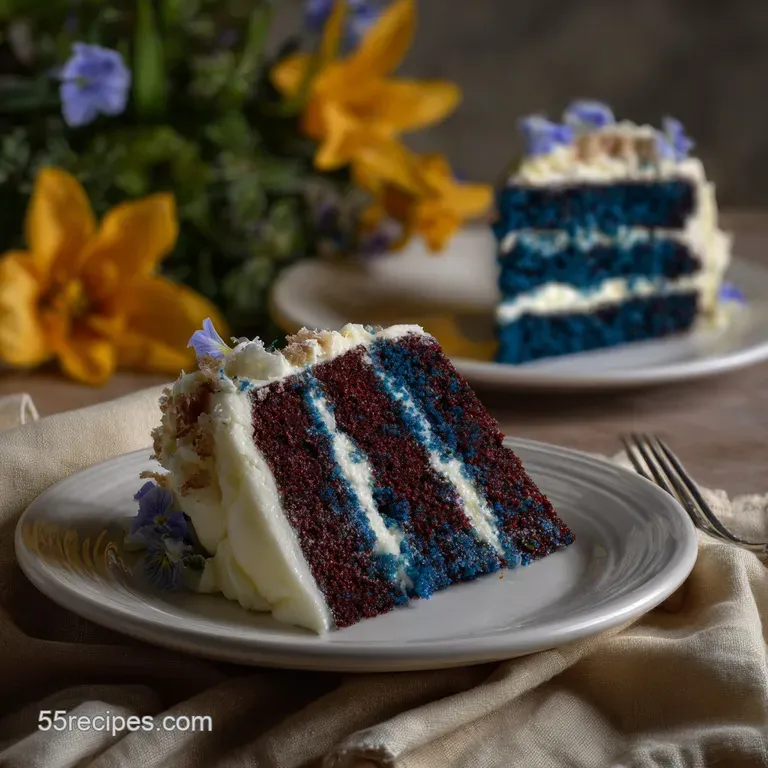
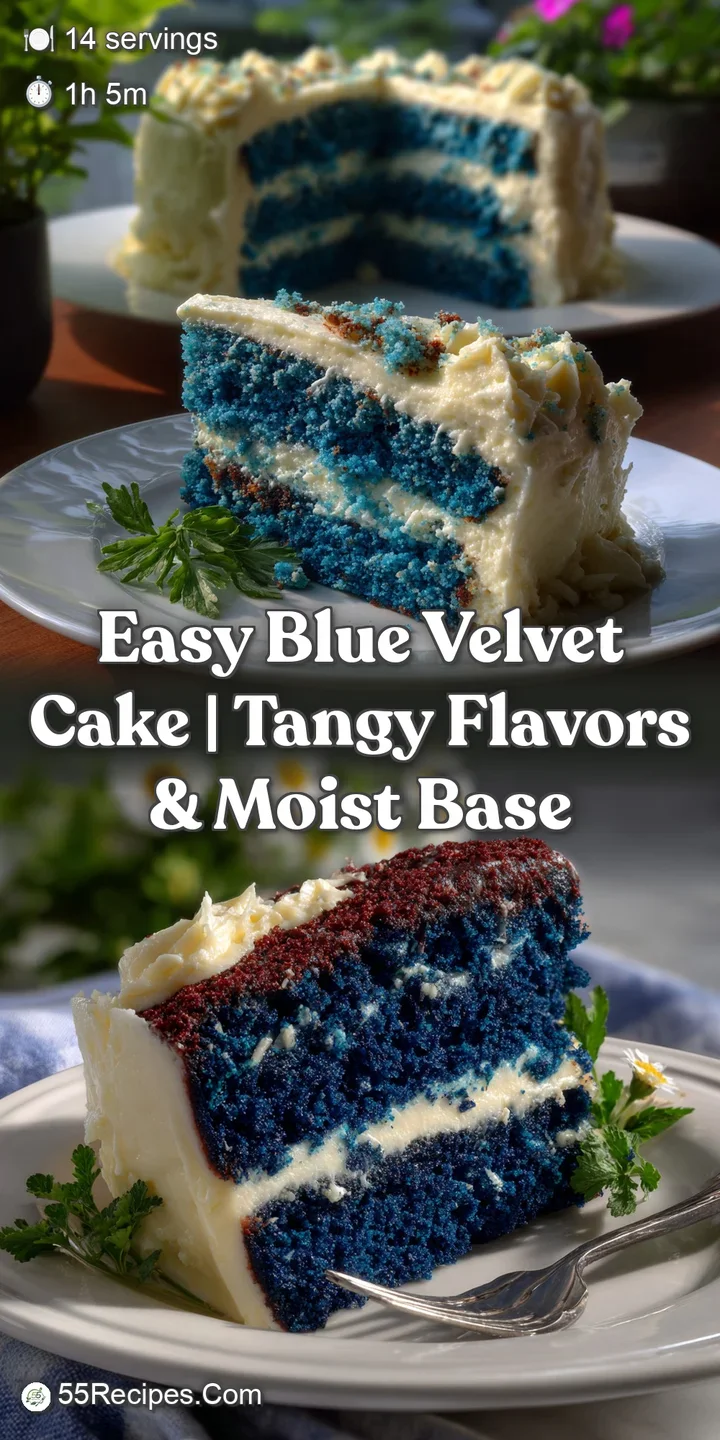
- Effort/Time: 1 hour 5 mins total; Moderate skill level.
- Flavor Hook: Tangy cream cheese meets a subtle, earthy chocolate finish.
- Perfect for: Gender reveals, birthday parties, or a show-stopping holiday dessert featuring this iconic blue velvet cake.
Mastering the Velvety Crumb of a Classic Blue Velvet Cake
There is nothing more heartbreaking than spending $40 on premium butter and cream cheese only to pull a muddy, forest green brick out of the oven. Most people think a blue velvet cake is just a vanilla cake with a bottle of food coloring dumped in, but that’s a recipe for a chemical tasting disaster with a coarse, dry texture.
If the pH balance is off, the cocoa powder reacts with the acid, turning your vibrant royal blue into a murky, unappetizing brown. The success of your blue velvet cake hinges on pH control.
I’ll be the first to admit I’ve failed this recipe spectacularly in the past. In my early days, I tried to "shortcut" the process by using liquid grocery store coloring and cold eggs, resulting in a curdled batter that leaked oil in the pan.
I ended up with a cake so dense you could use it as a doorstop, and a frosting that slid off the sides like a slow moving glacier. It was a humbling lesson in the physics of emulsification and the importance of ingredient temperature when baking a blue velvet cake.
The secret to that signature "velvet" mouthfeel isn't just a marketing term; it’s a specific scientific interaction between Swan's Down Cake Flour, buttermilk, and vinegar. This acidic environment weakens the gluten proteins, creating a soft, tender crumb that practically melts.
By using a hybrid fat approach combining softened Land O'Lakes Unsalted Butter for flavor and vegetable oil for consistent moisture we achieve a crumb that is both sturdy enough for stacking and incredibly plush to the touch, the hallmark of a superior blue velvet cake.
The Science of Moisture and Vibrant Color Stability
- Acidic Gluten Weakening: Buttermilk and vinegar lower the batter's pH, which prevents the gluten network from becoming too tough or elastic, essential for a tender blue velvet cake.
- Starch Gelatinization: The high sugar content in this blue velvet cake delays the point at which egg proteins coagulate, allowing the cake to rise higher before setting.
- Emulsion Stability: Using room temperature eggs ensures the fat from the butter and oil bonds with the liquid buttermilk, preventing a "broken" batter.
- Anthocyanin Management: Cocoa powder contains natural pigments that shift color based on acidity; keeping the batter acidic ensures the blue gel coloring remains true and vibrant for the final blue velvet cake.
Precision Measurements and Time Based Execution Plan
To get this blue velvet cake right on the first try, follow this high efficiency workflow to manage your kitchen space and cooling times.
| Phase | Duration | Primary Focus |
|---|---|---|
| Prep Flow | 15 minutes | Sifting dry ingredients and bringing dairy to 70°F (21°C). |
| Baking Flow | 35 minutes | Monitoring the "spring back" tactile cue and internal temp. |
| Finishing Flow | 15 minutes | Aerating the cream cheese frosting for a cloud like texture. |
- 1. Batter Temperature
- Aim for 68 72°F (20 22°C) before the pans hit the oven to ensure even leavening.
- 2. Oven Calibration
- Use an oven thermometer to verify a true 350°F (175°C); even a 10 degree variance can cause the cake to sink.
- 3. Internal Doneness
- Pull the cakes when a digital thermometer reads 205°F (96°C) for the ultimate moist crumb in your baked blue velvet cake.
Essential Elements for a Flavorful and Affordable Blue Velvet Cake
Selecting the right components is the difference between a grocery store-quality dessert and a masterclass result when crafting a blue velvet cake.
- 3 cups (375g) Swan's Down Cake FlourWhy this? Lower protein content (approx. 8%) ensures a delicate, fine textured crumb.
- 2 cups (400g) Domino Granulated Sugar
- 2 tbsp (15g) Hershey's Unsweetened Cocoa PowderWhy this? Provides the signature "velvet" flavor without overpowering the blue hue.
- 1 tsp (5g) Arm & Hammer Baking Soda
- 1 tsp (6g) Morton Kosher Salt
- 1 cup (240ml) Full Fat Buttermilk (Room Temperature)Why this? The high acid content is required to activate the baking soda.
- 1 cup (240ml) Wesson Vegetable OilWhy this? Stays liquid at room temperature, providing superior "moistness" perception.
- 1/2 cup (115g) Land O'Lakes Unsalted Butter (Softened)
- 2 Large Eggs (Room Temperature)
- 1 tsp (5ml) Heinz White Distilled Vinegar
- 1 tbsp (15ml) McCormick Vanilla Extract
- 2 tsp Americolor Royal Blue Gel Food ColoringWhy this? Gel is highly concentrated; liquid dye adds too much moisture and dulls the color.
For the Frosting:16 oz (450g) Philadelphia Brick Style Cream Cheese (Slightly Softened)1 cup (230g) Land O'Lakes Unsalted Butter (Softened)4.5 cups (560g) C&H Powdered Sugar (Sifted)2 tbsp (30ml) Heavy Cream1 tsp (5ml)
Nielsen Massey Vanilla Bean Paste
Ingredient Chemistry Breakdown
| Ingredient | Chemical/Physical Role (Science) | The Pro Secret (Why This Matters) |
|---|---|---|
| Baking Soda + Vinegar | Rapid CO2 production via acid base reaction | Provides immediate lift before the heat sets the structure. |
| Vegetable Oil | Interferes with gluten strand formation | Keeps the cake feeling "wet" even after refrigeration. |
| Cake Flour | Lowers the starch-to-protein ratio | Results in a "velvety" shatter rather than a bready chew. |
Recommended Tools for a Professional Cake Finish
You don't need a gourmet kitchen, but these specific tools make the process much more flavorful and easy for the family cook making this dessert.
- KitchenAid Stand Mixer: Necessary for high speed aeration of the butter and sugar.
- USA Pan 9 inch Round Cake Pans: These have a corrugated surface for better heat distribution.
- Off-set Spatula: Crucial for that smooth, professional frosting finish.
- Fine Mesh Sieve: Cocoa powder is notorious for clumping; sifting is mandatory for this stunning blue velvet cake.
The step-by-step Architecture of a Moist Blue Velvet Cake
Follow these steps exactly to ensure the color stays true and the texture remains light in your finished blue velvet cake.
- Preheat the oven to 350°F (175°C) and grease two 9 inch pans with butter and a dusting of flour.
- Sift the 3 cups of cake flour, 2 tbsp cocoa powder, and 1 tsp baking soda into a large bowl. Note: Sifting removes lumps that cause dry pockets.
- Cream the 1/2 cup softened butter and 2 cups sugar in a KitchenAid for 5 minutes until pale, fluffy, and significantly increased in volume.
- Emulsify by adding the 2 eggs one at a time, beating well after each.
- Stream in the 1 cup of vegetable oil, 1 tsp vinegar, 1 tbsp vanilla, and 2 tsp blue gel coloring until the batter is a deep, uniform cobalt.
- Alternate adding the dry ingredients and 1 cup buttermilk, starting and ending with dry. Note: This prevents the batter from "breaking" or curdling.
- Divide the batter evenly between the two pans.
- Bake for 30 35 minutes until the edges slightly pull away from the pan and the center springs back when touched.
- Cool in the pans for 10 minutes until the sides loosen naturally, then move to a wire rack.
- Whip the 16 oz cream cheese and 1 cup butter for 3 minutes until smooth and no lumps remain.
- Incorporate the 4.5 cups powdered sugar slowly, then add 2 tbsp heavy cream and 1 tsp vanilla bean paste until the frosting is glossy and holds a stiff peak.
- Assemble by frosting the top of the first layer, stacking the second, and applying a thin crumb coat before the final decorative layer.
Chef's Note: If you want an even more professional look, use a serrated knife to level the tops of your cakes. Use the leftover blue crumbs to decorate the outside of the frosting! It’s an affordable way to add a "gourmet" touch. This technique is similar to how we handle crumbs in our German Chocolate Cupcakes recipe.
Why Your Cake Sinks: Pro Baker Fixes
Nothing ruins a family dinner like a cake with a crater in the middle. Here is how to handle the physics of a "failed" rise.
Why Your Blue Velvet Cake is Dense
When a cake is dense, it usually means the leavening agent (baking soda) was expired or the butter wasn't aerated enough. Without the tiny air pockets created during the creaming stage, the CO2 from the baking soda has nowhere to expand, leading to a heavy, gummy texture.
If you want that famous plush interior, be meticulous when baking this blue velvet cake.
| Problem | Root Cause | The Fix | Pro Protocol |
|---|---|---|---|
| Sinking Middle | Oven door opened too early | Don't open the door before 25 minutes | Use the oven light to check doneness first. |
| Greenish Tint | Too much yellow in the butter/eggs | Use a "Bright White" food gel or more blue | Add a tiny drop of violet gel to neutralize yellow. |
| Dry Crumb | Over baking/Over mixing | Use a timer and mix only until combined | Pull at 205°F internal temperature. |
⚗️ The Scaling Lab: The Physics of Quantity
If you are doubling this blue velvet cake for a large wedding or family reunion, you cannot simply double everything and hope for the best.
- The Evaporation Paradox: If you double the batter in one large bowl, it takes longer to mix, which can lead to over developed gluten. Mix in two separate batches if possible.
- Chemical Leavening: Scale the baking soda and vinegar exactly. An imbalance in the pH will not only ruin the rise but can turn your blue cake into a muddy gray.
- Thermal Mass: Doubling the recipe and putting four pans in the oven at once will drop the oven temperature significantly. Instruction: Increase your preheat to 375°F, then drop it back to 350°F as soon as you slide the cakes in to compensate for the heat loss.
- Flavor Saturation: Scale the vanilla and salt to 1.5x (NOT 2x). These flavors become more intense in larger volumes and can quickly become overpowering.
Creative Adjustments for Every Family Celebration
This recipe is incredibly flexible. If you're looking for a simpler finish, you can use techniques from The Essential Simple recipe to create a soaking syrup that keeps the cake moist for up to a week.
| Original Ingredient | Substitute | Why It Works |
|---|---|---|
| Cake Flour | All-Purpose + Cornstarch | 1 cup AP minus 2 tbsp + 2 tbsp cornstarch mimics low protein. |
| Buttermilk | Milk + Lemon Juice | Acidifies the milk to react with the soda. Note: Slightly thinner texture. |
| Vegetable Oil | Melted Coconut Oil | Adds a subtle tropical note; cake will be firmer when cold. |
Decision Shortcut: If you want a deep navy color, use "Royal Blue" gel. If you want a light sky blue, use only 1/2 tsp of gel. If you want a whiter frosting, use clear vanilla extract instead of bean paste.
Maintaining Freshness and Freezing Protocols
Fridge Storage: This cake must be refrigerated because of the cream cheese frosting. It will stay fresh for up to 5 days if kept in a sealed cake carrier. To prevent it from drying out, press a piece of plastic wrap directly against any cut surfaces.
Freezing: You can freeze the unfrosted layers for up to 3 months. Wrap them tightly in two layers of plastic wrap and one layer of aluminum foil. Thaw in the fridge overnight before frosting.
Reheating: Velvet cakes are best served at room temperature. Take the cake out of the fridge 1 hour before serving to let the butter in the frosting soften, which restores that flavorful, creamy mouthfeel.
💡 ZERO WASTE PHILOSOPHY: Don't discard the cake domes you trim off! Transform: Crumble them up and mix with a spoonful of frosting to make cake pops. Science: The high sugar and fat content in the scraps act as a binder, creating a dense, truffle like treat. If you have leftover buttermilk, use it for The Strawberry Shortcake recipe biscuits to ensure nothing goes to waste.
Finishing Touches for a Spectacular Visual Presentation
Myth: You must use liquid food coloring for "true" color. Truth: Liquid coloring is mostly water and can ruin the emulsion of your batter. Gel paste provides a much more concentrated, stable color without changing the chemistry of the bake.
Myth: Red velvet and blue velvet taste different. Truth: They are chemically identical in flavor; the only difference is the color of the dye used. Both rely on the same cocoa buttermilk-vinegar "velvet" foundation.
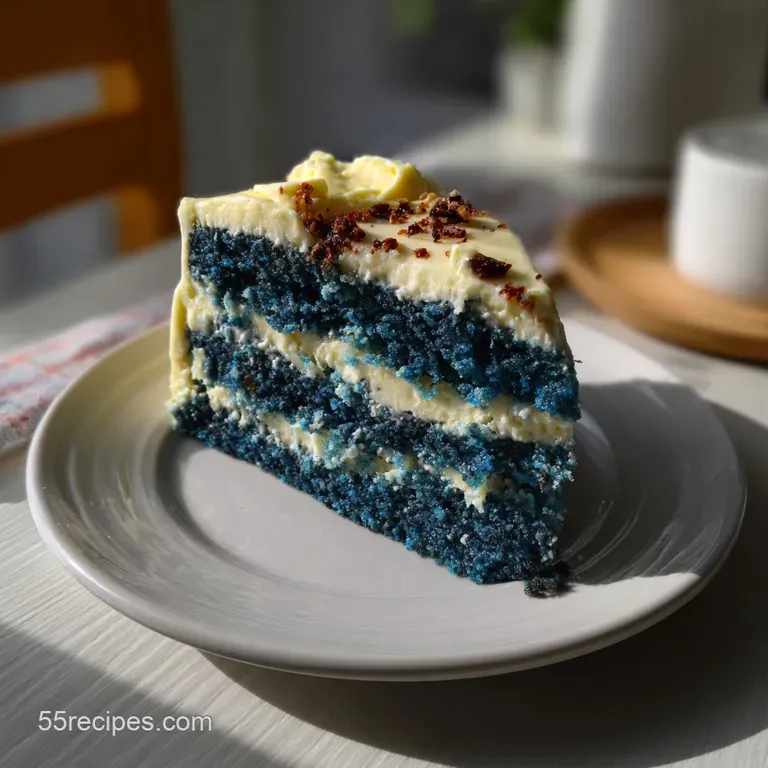
To serve, use a sharp knife dipped in hot water and wiped dry between every slice. This ensures the bright blue crumb isn't smeared by the white frosting, keeping the contrast sharp and the presentation masterclass level.
Whether it's for a family gathering or a quiet weekend treat, this blue velvet cake is the ultimate easy yet flavorful way to impress.
Recipe FAQs
how to make blue velvet cake?
Use buttermilk, oil, vinegar, and high-quality blue gel coloring. The acid activates the baking soda, weakening gluten for the signature melt-in-your mouth texture. If you enjoyed controlling cookie spread here, the same fat ratio logic applies to our How to Bake Chocolate Almond Cake with Zesty Orange: An Amazing Delight!
how to make blue velvet cake from scratch?
Sift cake flour, cocoa, and soda precisely for best results. Combining dry ingredients separately ensures even distribution of leavening agents and flavor molecules. Aim for a batter temperature of 70°F before pouring into pans for ideal rise dynamics.
how to make blue velvet cake from the box?
Myth: Boxed cake mix yields an authentic velvet crumb.Reality: Box mixes lack the necessary acid (buttermilk/vinegar) and fat profile (oil + butter) required to mimic the true tender texture.
how to make blue velvet cake from the box?
Myth: Using liquid food dye is acceptable for vibrant color.Reality: Liquid dyes add too much water, diluting the batter's chemistry and resulting in a dull, often grayish hue.
how to make blue red velvet cake?
Blue velvet is simply red velvet dye swapped for blue. The flavor profile remains the same: subtle cocoa interacting with acidic buttermilk and vinegar.
how to make blue velvet cake with cake mix?
Substitute buttermilk for water and add extra oil for moisture. Adding the acid content helps initiate the necessary gluten weakening, though the final texture will remain closer to standard cake than true velvet. If you struggle with dairy substitutes, see our guide on How to Make Fluffy Pancakes with Lactose Free Dry Milk.
how to make blue velvet cake from scratch?
Use room temperature ingredients for successful emulsification. Cold eggs or dairy introduced into soft fat will cause the emulsion to break, resulting in a curdled, greasy batter that bakes unevenly.
- Ensure butter and eggs are 70°F
- Stream liquid slowly into creamed fat
- Use a paddle attachment, not whisk
Blue Velvet Cake From Scratch
Ingredients:
Instructions:
Nutrition Facts:
| Calories | 817 kcal |
|---|---|
| Protein | 5.4 g |
| Fat | 47 g |
| Carbs | 89 g |
| Fiber | 1 g |
| Sugar | 68 g |
| Sodium | 360 mg |
