Mei Fun Noodles: the Perfect Wok-Tossed Classic
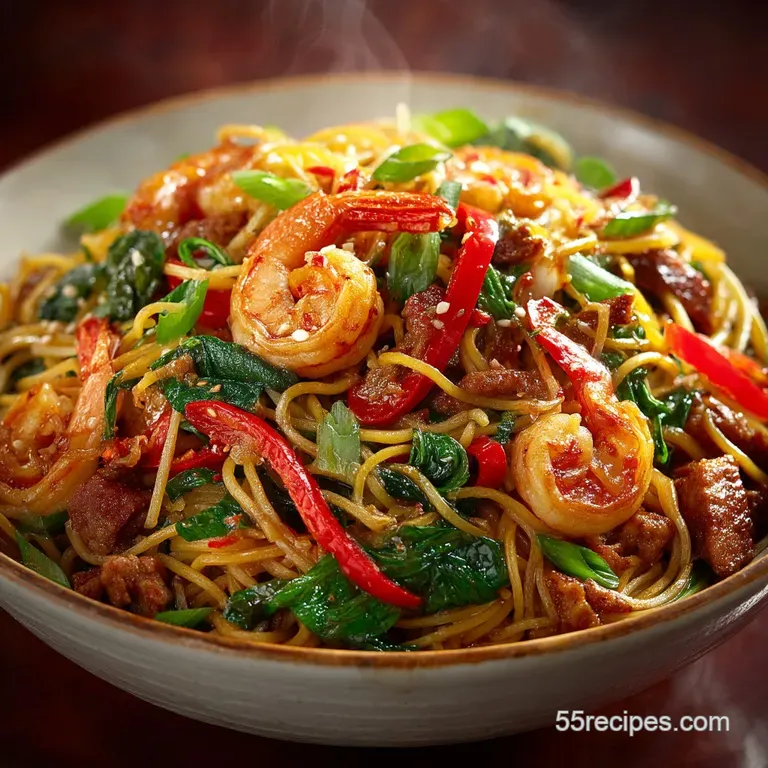
- Unlocking the Secret to Authentic Cantonese Stir-Fried Noodles
- Flavor Engineering: Why This Stir-Fry Achieves Perfect Balance
- Essential Components for Your Shrimp and Pork Vermicelli
- The Stir-Fry Sequence: Achieving Professional Results in Your Kitchen
- Achieving 'Wok Hei' at Home: Expert Tips and Troubleshooting
- Managing Leftovers: Reheating and Storage of Rice Vermicelli
- Perfect Pairings for Your Classic Shrimp and Pork Noodles
- Recipe FAQs
- 📝 Recipe Card
Unlocking the Secret to Authentic Cantonese Stir Fried Noodles
When that incredible, smoky, deeply savoury aroma hits you the kind that promises sizzling rice vermicelli tossed with juicy prawns and crisp cabbage you know you’re about to have the best stir fry of your life. We are talking about classic Cantonese Mei Fun Noodles .
This dish isn't complicated, but it is deceptively precise, demanding respect for high heat and rapid execution.
Forget the soggy, sauce drenched versions you get from mediocre takeaway spots that call themselves ‘Singapore Noodles’ without a shred of authenticity. This specific Mei Fun Noodles recipe, focusing on the clean, bright flavours of Cantonese cooking, is a total lifesaver for busy weeknights.
It’s faster than delivery, cheaper than dining out, and tastes infinitely better because you control the texture and the seasoning.
I’ve made all the rookie mistakes steaming the vegetables, soaking the noodles too long, using a pan that wasn’t hot enough. Today, we skip the learning curve. We are going straight to the gold standard, unlocking the secrets to achieving that elusive Wok Hei (the breath of the wok) right on your home stove.
Let’s get cooking the best Mei Fun Noodles you’ve ever had.
Flavor Engineering: Why This Stir Fry Achieves Perfect Balance
The genius of traditional Cantonese cooking is its reliance on balancing freshness and depth without heavy cream or overly complex sauces. When making Mei Fun Noodles , success is found in prep work and discipline.
We don’t just dump everything in a pan and hope for the best; we build layers of flavor through rapid, sequential steps.
What is Mei Fun? Defining the Delicate Rice Vermicelli.
The term Mei Fun specifically refers to thin, dried rice vermicelli noodles. They are incredibly delicate and cook almost instantly when exposed to heat, which is why proper soaking is non-negotiable.
Unlike thick, chewy wheat noodles (like Lo Mein or Chow Mein), Mei Fun Noodles are gluten-free and absorb sauce quickly without becoming gloppy provided you manage the moisture correctly.
They are the perfect vehicle for over high heat stir fries because they offer a wonderful lightness and slight springiness when cooked right.
The Essence of 'Wok Hei': Achieving the Breath of the Wok.
Wok Hei is the smoky, slightly caramelised, charred flavour imparted when ingredients hit a blisteringly hot wok. It’s what separates a good stir fry from a great one. You cannot achieve this if your wok is crowded or your heat is too low.
For our Mei Fun Noodles , we focus on quick cooking of the protein first, ensuring that maximum smoky flavor is infused into the oil before the noodles even touch the pan. This technique makes all the difference in achieving that authentic restaurant taste.
Classic Versus Curry: Understanding the Clean Cantonese Approach.
Many people confuse this dish with Singapore Mei Fun. I totally get it! They use the same thin vermicelli. However, traditional Cantonese Mei Fun Noodles focus on a savoury, clean profile using only soy sauce, white pepper, sesame oil, and ginger.
Singapore style, while delicious, is defined by its vibrant yellow curry powder. We are intentionally avoiding that here to let the flavour of the perfectly seasoned shrimp and Char Siu shine through. We want clarity, not complexity.
The Marinade Advantage: Tenderizing the Pork for Rapid Cooking.
Wait, we are using pre-cooked pork (Char Siu) and raw shrimp, so why the marinade? We only marinate the shrimp, which tenderizes it significantly and creates a tiny protective coating of cornstarch. This barrier helps the shrimp retain moisture during the extreme heat of the wok, preventing it from turning rubbery.
This step, though quick, ensures the protein stays juicy when tossed with the dry Mei Fun Noodles .
High Heat Harmony: Contrasting Textures of Shrimp and Crisp Veggies.
The magic of great Mei Fun Noodles lies in the textural contrast. We want springy noodles, tender shrimp, and vegetables that are still fiercely crisp. High heat achieves this.
By cooking the proteins, removing them, and then blasting the vegetables (carrots, onions, cabbage) for just a minute or two, we get tender crisp results before combining everything for the final toss.
The Clean Finish: Balancing Soy and Sesame Without Overpowering.
The sauce for these Mei Fun Noodles is delicate. It relies on a perfect ratio of light soy (for salt), dark soy (for colour), and a touch of sugar (to round out the saltiness).
The sesame oil is reserved mostly for the very end or for coating the initial noodles, ensuring its aroma doesn’t burn off. Trust me: never use more dark soy than light soy ; you want flavour, not murky brown gloop.
Essential Components for Your Shrimp and Pork Vermicelli
Preparation is 80% of stir frying success. Seriously. If you’re not prepared, you will inevitably end up with a sticky mess. Get everything chopped, measured, and placed in small bowls ( mise en place ) before you turn on the burner.
That's the secret to killer Mei Fun Noodles .
Selecting the Right Vermicelli: Thickness and Pre-Soaking Notes.
Look for rice vermicelli specifically labeled as "thin" or "Mei Fun." There are thicker rice sticks (like Pad Thai noodles) that are lovely, but they are not the right texture for this delicate dish. You absolutely must follow the soaking directions. I made the mistake once of boiling them because I was impatient.
The result? Total mush.
Chef’s Note: The goal of soaking is to fully hydrate the noodle without cooking it. It should be pliable but still have a bit of chew what Italians call al dente .
Immediately after draining, toss the noodles with a teaspoon of sesame oil and lay them out on a sheet pan to air dry. The drier the noodles, the better the stir fry.
Building the Protein Base: Preparing the Shrimp and Marinated Pork.
We are using pre-cooked Char Siu (Chinese BBQ Pork), sliced thinly. This saves time and provides that signature sweet salty flavour base. If you can’t find Char Siu, a simple roast pork loin sliced thin works just as well. For the shrimp, ensure they are peeled and deveined.
Marinating them briefly in cornstarch and wine is non-negotiable for texture.
Aromatics and Sauce Staples: Securing Quality Soy Sauce and Oil.
Your basic ingredients matter here because the flavor profile is so clean. Use a good neutral oil (peanut, groundnut, or canola) with a high smoke point do not use olive oil! Invest in quality soy sauce; a cheap soy sauce will taste purely salty, whereas a good light soy sauce provides necessary umami.
Emergency Swaps: Navigating Ingredient Adjustments.
We all run into issues mid-week. No Char Siu? No problem. No Napa cabbage? We can adapt! Here are the swaps I rely on when cooking Mei Fun Noodles at home:
| Original Ingredient | Acceptable Substitution |
|---|---|
| Char Siu (BBQ Pork) | Thinly sliced and flash fried firm tofu (for vegetarian) or fully cooked sliced ham. |
| Shaoxing Rice Wine | Dry sherry or even a splash of dry vermouth works in a pinch. |
| Oyster Sauce | Mushroom based vegetarian oyster sauce (identical texture) or a teaspoon of thick hoisin sauce. |
| Napa Cabbage | Shredded green cabbage or finely julienned zucchini for quick cooking. |
The Stir Fry Sequence: Achieving Professional Results in Your Kitchen
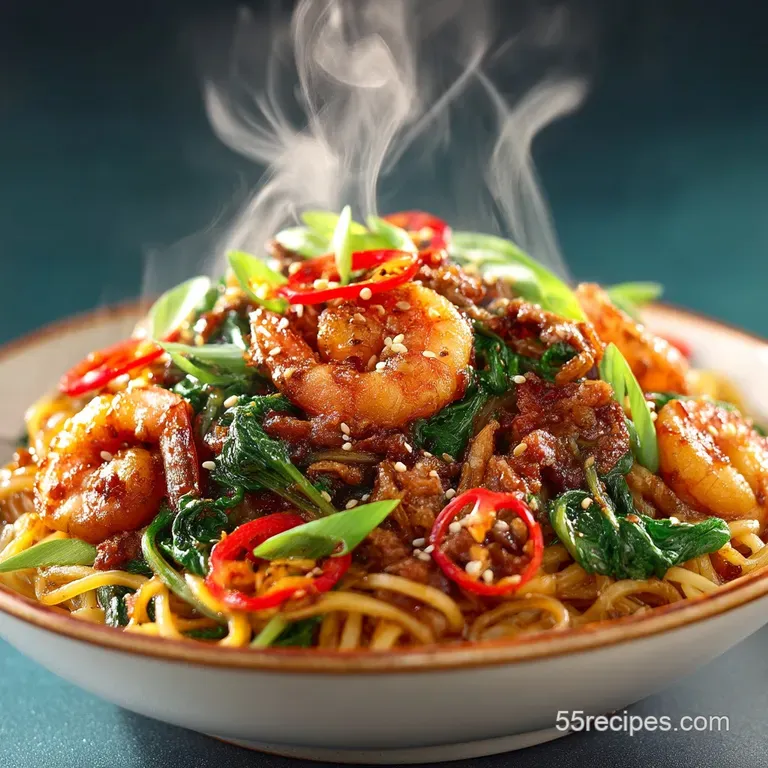
This is where the rubber meets the road. Remember, stir frying is fast and loud. This isn't a leisurely simmer; this is high octane cooking.
Stage Zero: Mastering Mise en Place for High Speed Stir Frying.
Seriously, if your aromatics are minced, your carrots are julienned, your sauce is mixed, and your noodles are dry and ready, you are 90% of the way there. Do not begin stir frying until absolutely everything is prepped and sitting next to the stove.
If you have to turn away to chop an onion, your wok is losing heat, and your dinner is failing.
Phase One: Sear the Protein (Pork First, Then Shrimp) for Maximum Flavor.
- Heat your wok until it’s smoking hot I mean really smoking. Add two-thirds of your oil. Swirl it around.
- Add the garlic and ginger. Sauté for about 10 seconds until fragrant; you should smell that incredible nutty aroma.
- Add the marinated shrimp and the Char Siu slices. Stir fry rapidly for 60 to 90 seconds until the shrimp is mostly pink (about 80% done). You must move fast here.
- Remove the proteins immediately and set them aside. Leave any residual oil and flavour base in the wok.
Phase Two: Introducing the Aromatics and Vegetables.
- Add the remaining oil if the wok looks dry.
- Add the onions and carrots. Stir fry for 1 minute. They should sizzle intensely, starting to slightly soften but remaining crisp.
- Add the Napa Cabbage and half of the spring onions. Cook for only 30 seconds until they start to wilt. You are trying to retain crunch!
The Grand Finale: Tossing the Noodles and Incorporating the Sauce Mix.
- Push the vegetables to the edges of the wok, creating space in the centre.
- Add the dried, pre-soaked Mei Fun Noodles into the center of the wok.
- Pour the whisked Stir Fry Sauce evenly over the noodles.
- Grab your tongs and spatula. Toss, toss, toss! Use a vigorous, lifting, and flipping motion to ensure the noodles are coated and the moisture from the sauce evaporates immediately. This prevents steaming. Keep this up for 90 seconds. The noodles should feel light and separated, not heavy.
- Return the reserved shrimp and Char Siu to the wok, along with the bean sprouts. Toss for one final minute, just until the proteins are heated through and the bean sprouts are barely wilted. You want them fresh.
- Serve your perfect Mei Fun Noodles immediately.
Achieving 'Wok Hei' at Home: Expert Tips and Troubleshooting
If your stir fry is coming out sticky or bland, chances are you are committing one of these cardinal sins. We need to fix that immediately if you want truly spectacular Mei Fun Noodles .
The Temperature Test: Why Your Wok Must Be Smoking Hot.
This is the number one failure point for home cooks. If you add oil to a cool wok, the food will slowly heat up and steam in its own juices. You need to pre-heat the wok until it's literally smoking before adding the oil.
Then, add the oil, and the oil should shimmer and almost instantly cover the surface. If your ingredients don't sizzle violently upon contact, your temperature is too low.
The Overcrowding Pitfall: Cooking in Batches for Crispness.
I get it; you want dinner now. But if you try to squeeze six servings of Mei Fun Noodles into a 12 inch pan, you will fail. Overcrowding drops the temperature instantly and traps moisture, creating that dreaded steamed texture.
If you are cooking for more than four people, cook the proteins and noodles in separate batches . Combine them at the very end in the wok just long enough to heat everything together.
Preventing Sticky Vermicelli: Hydration and Heat Management.
Sticky noodles are a clear sign of too much moisture. The fix? Two steps: 1) Ensure those vermicelli are truly dry after soaking , tossed with sesame oil, and allowed to air for 5- 10 minutes.
2) Cook the noodles quickly over high heat, allowing the sauce moisture to evaporate. If you see liquid pooling in the bottom of your wok when you add the Mei Fun Noodles , your heat is too low or your noodles are too wet. Keep tossing!
Managing Leftovers: Reheating and Storage of Rice Vermicelli
You managed to make an extra large batch of Mei Fun Noodles because they were so delicious? Brilliant. But does this specific stir fry hold up? Absolutely, provided you treat the leftovers correctly.
Short Term Refrigeration: Keeping the Dish Fresh.
Like most rice based dishes, you need to cool the Mei Fun Noodles quickly and store them in an airtight container in the fridge. They will keep perfectly well for 3 to 4 days. I would advise against freezing, however. The thin vermicelli noodles tend to break down and become mushy when thawed.
Best Practice for Reheating Stir Fried Noodles.
Do not, under any circumstances, use the microwave if you can avoid it! The microwave cooks from the inside out and dries out the shrimp and pork, turning the noodles brittle. The best way to reheat is on the stovetop.
Add a teaspoon of water or stock to a hot non-stick pan or wok, add the chilled Mei Fun Noodles , and stir fry over medium high heat until they are warmed through and the moisture has evaporated. This revitalizes the texture and keeps everything moist.
Perfect Pairings for Your Classic Shrimp and Pork Noodles
These clean and savoury Mei Fun Noodles are the perfect main event, but a good meal requires balance. You need something refreshing, or perhaps something fun to follow it up with.
Complimentary Side Dishes: Balancing the Meal.
Because this dish is primarily rich in protein and carbohydrates, serving a simple, crisp side salad tossed with a rice vinegar dressing is always a good idea. Alternatively, if you want something that also offers a bit of crunch and freshness, stir fried garlic broccoli is a classic companion. If you’re feeling bold and fun, these Mei Fun Noodles go surprisingly well before a dessert that offers contrasting texture, like my recipe for Ultimate Monster Cookie Dough Bites: A Fun No-Bake Treat for Everyone .
If you loved mastering this authentic Cantonese style, you might also enjoy comparing it to other rice based dishes. For a change of pace, you could check out my guide on making Easy & Flavorful Trader Joe's Thai Wheat Noodles Recipe for Any Night! — it uses a totally different noodle but focuses on speed, just like this recipe. Enjoy the process, and I promise you, once you master the dry noodle and the hot wok, you’ll never look at takeout Mei Fun Noodles the same way again.
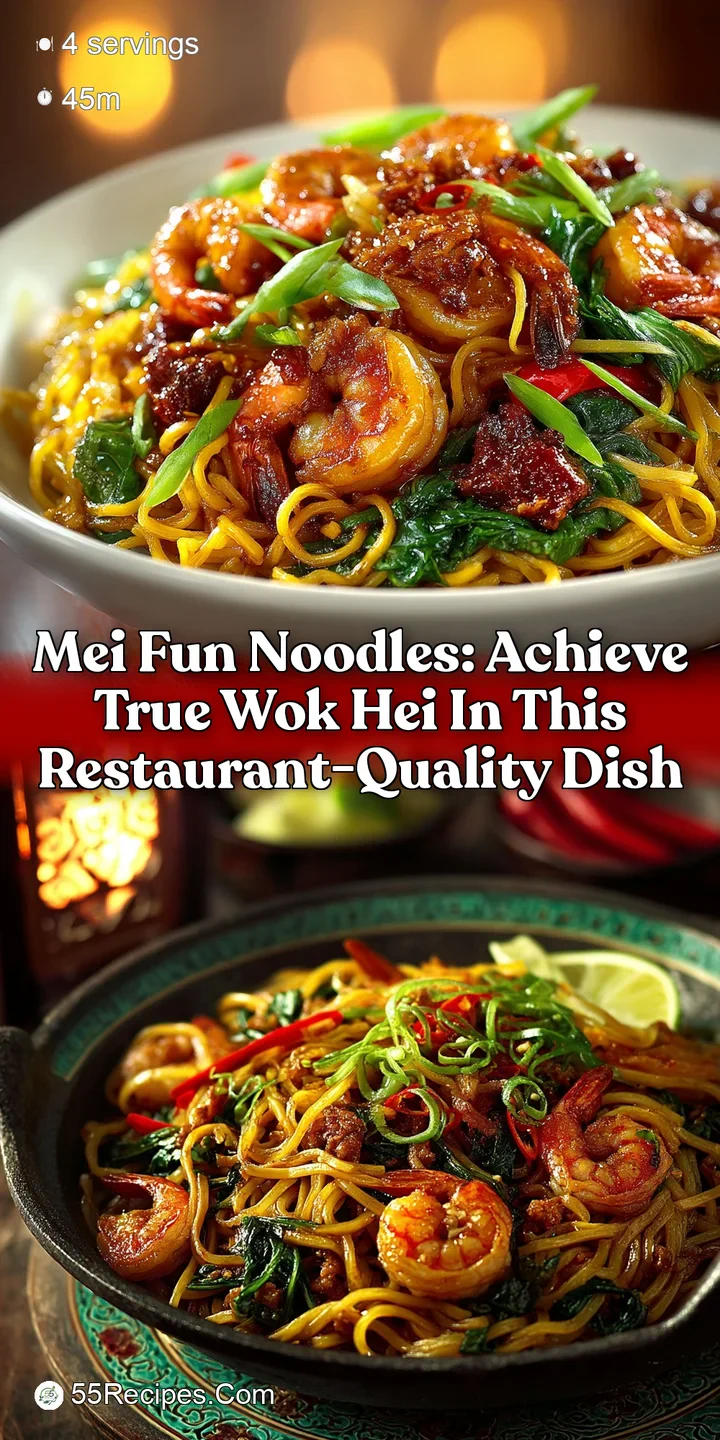
Recipe FAQs
How do I prevent the Mei Fun noodles from sticking together or becoming mushy?
Mushy or sticky noodles usually result from over soaking. Mei Fun only needs to be soaked in hot (but not boiling) water for about 6 8 minutes until pliable, then immediately drained and rinsed thoroughly with cold water to halt the cooking process.
Ensure the noodles are completely dry before they enter the hot wok, which prevents clumping during the high heat stir fry.
I don't have a commercial burner. How can I achieve the 'Wok Hei' smoky flavor at home?
To replicate 'Wok Hei' (the breath of the wok) on a standard home stove, use the highest heat possible and work in extremely small batches. Use a carbon steel or cast iron wok, allowing it to get scorching hot before adding oil, and maintain constant, aggressive movement to ensure ingredients char quickly without steaming.
Never overcrowd the wok.
Can I make this classic Mei Fun recipe vegan or vegetarian?
Absolutely; this dish adapts beautifully. Substitute the shrimp and pork with crispy pan-fried tofu, rehydrated shiitake mushrooms, or shredded pressed bean curd. Ensure you replace the oyster sauce with a high-quality mushroom based vegetarian oyster sauce to maintain the deep umami flavor.
My finished noodles seem very dry and lack the savory coating. What troubleshooting steps should I take?
Rice vermicelli absorbs liquid rapidly, especially if cooked too long or if the soaking method was insufficient. Ensure your sauce mixture (soy, oyster sauce, etc.) is pre-mixed and added rapidly to the noodles as soon as they are combined with the other ingredients.
Tossing quickly and ensuring the noodles are slightly underdone when added prevents them from drying out.
Can I substitute a different type of noodle if I cannot find thin rice vermicelli (Mei Fun)?
While the texture of authentic thin rice vermicelli is crucial, you may substitute with thin cellophane noodles or even angel hair pasta in a pinch. However, be aware that substitutes require different cooking times and will absorb the sauce differently, changing the overall profile of the dish.
How should I store leftover Mei Fun noodles, and can I freeze them?
Store leftovers in an airtight container in the refrigerator for up to three days. It is strongly advised not to freeze Mei Fun, as the delicate rice starch will break down upon thawing, resulting in a very mushy texture.
Reheat leftovers quickly in a hot skillet, adding a few tablespoons of water or broth to restore moisture.
Do I need to marinate the pork and shrimp, or is seasoning in the wok sufficient?
A quick marinade is essential for achieving tender meat and maximizing flavor absorption. Marinate the pork slices with cornstarch, soy sauce, and a touch of sesame oil for at least 15 minutes to lock in moisture. The shrimp only need a brief dusting of salt and pepper before cooking.
Classic Wok Tossed Mei Fun Noodles
Ingredients:
Instructions:
Nutrition Facts:
| Calories | 620 kcal |
|---|---|
| Protein | 37.1 g |
| Fat | 13.4 g |
| Carbs | 91.9 g |
