How to Cook Rice Noodles: Al Dente Strands
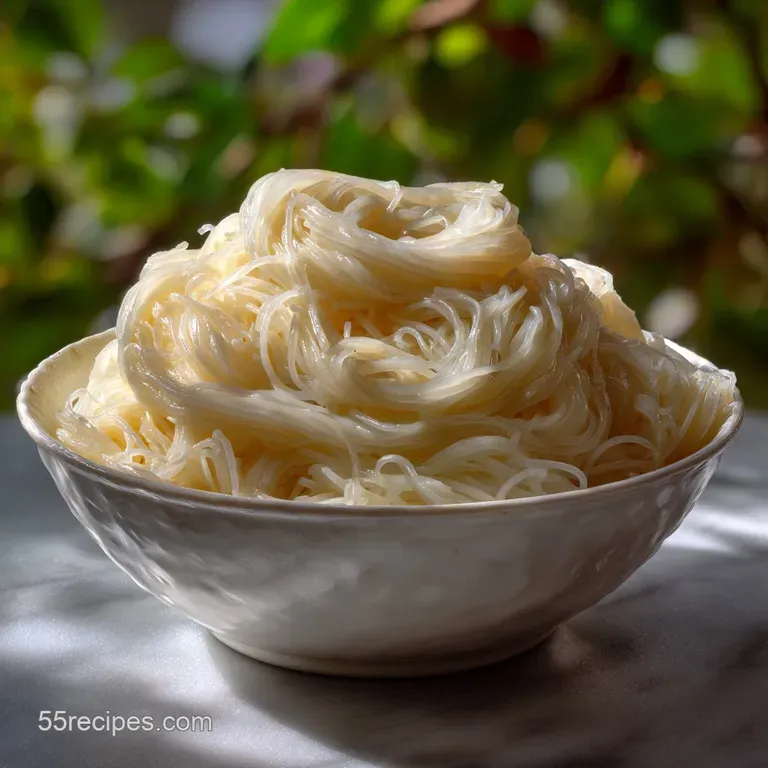
- Time: Active 5 minutes, Passive 20 minutes, Total 25 minutes
- Flavor/Texture Hook: Silky, slithery strands with a perfect al dente snap
- Perfect for: Quick weeknight stir fries and fresh Asian inspired salads
- How to Cook Rice Noodles for Success
- Why This Simple Method Always Wins
- Component Analysis and Starch Behavior
- Ingredients for Silkier, Better Noodles
- Must Have Tools for the Best Results
- Simple Steps for Perfect Noodle Texture
- How to Prevent Sticky Noodle Messes
- Creative Ways to Season Your Noodles
- Best Storage and Waste Reduction Tips
- What to Serve with Your Noodles
- Scaling the Recipe
- Noodle Legends Debunked
- Decision Shortcut for Noodle Success
- Recipe FAQs
- 📝 Recipe Card
How to Cook Rice Noodles for Success
Have you ever stood over a wok, heartbroken, because your beautiful dinner turned into one giant, sticky brick of starch? We have all been there. It is the most common frustration in the kitchen when you are trying to recreate your favorite takeout dish at home.
One minute the noodles are too hard, and the next, they have dissolved into a mushy mess that sticks to everything but your chopsticks.
The secret I found out after years of kitchen trials is that we have been treating them too much like Italian pasta. Rice flour is a completely different beast than wheat flour. It does not need a rolling, aggressive boil to become tender. In fact, that high heat is exactly what ruins the delicate starch structure.
We want them to be slithery and translucent, not gummy.
I am going to show you how to master this once and for all. We will use a "conditioning soak" method that gently hydrates the strands from the outside in. This keeps the exterior firm while the inside gets soft.
It is a total lifesaver for busy families who want a flavorful meal without the stress of timing a boiling pot. Trust me on this, once you try the soaking method, you will never go back to the old way.
Why This Simple Method Always Wins
- Starch Control: Gentle heat prevents the surface starches from over gelatinizing and becoming sticky.
- Uniform Hydration: Slow soaking allows water to penetrate the core of the noodle at the same rate as the surface.
- Acid Strengthening: Adding vinegar to the water tightens the protein bonds, helping the noodles hold their shape during a hot stir fry.
- Carryover Management: Cold rinsing stops the residual heat immediately, which prevents the noodles from softening further while they sit.
Component Analysis and Starch Behavior
| Ingredient | Science Role | Pro Secret |
|---|---|---|
| 8 oz dried rice noodles | Provides the structure through amylopectin starches. | Choose a brand like Thai Kitchen for consistent thickness. |
| 1 tsp neutral oil | Creates a microscopic barrier between strands to prevent clumping. | Use a high smoke point oil like avocado or grapeseed. |
| 1 tsp rice vinegar | Lowers the pH of the water to firm up the outer starch layer. | This keeps noodles from breaking into tiny pieces when tossed. |
Ingredients for Silkier, Better Noodles
- 8 oz dried rice noodles - Why this? Provides the essential chewy base for any authentic Asian noodle dinner recipes. (Substitute: Brown rice noodles for a nuttier flavor and more fiber)
- 2 quarts water - Why this? Gives enough volume to maintain a steady temperature during the long soak. (Substitute: Low sodium chicken broth for infused savory flavor)
- 1 tsp Diamond Crystal sea salt - Why this? Seasons the noodle from the inside out so the dish isn't bland. (Substitute: 1 tsp soy sauce for an umami boost)
- 1 tsp neutral oil - Why this? Acts as a lubricant to keep the strands from fusing together. (Substitute: Toasted sesame oil for a rich, nutty aroma)
- 1 tsp rice vinegar - Why this? Helps the noodles stay white and prevents them from becoming overly soft. (Substitute: Fresh lime juice for a bright, citrusy finish)
Must Have Tools for the Best Results
Right then, let's talk gear. You do not need anything fancy, but a few specific items make this much easier. I always use my Lodge Cast Iron Dutch Oven to heat the water because it holds onto heat so well.
A large, heat proof glass bowl like a Pyrex Prep Bowl is also great so you can see when the noodles turn from opaque to translucent.
You will definitely want an OXO Good Grips Colander ready in the sink. The most important tool, though, is a pair of long KitchenAid Silicone Tongs. These allow you to gently lift and separate the strands without snapping them.
If you use a fork, you risk tearing the delicate noodles as they soften.
Simple Steps for Perfect Noodle Texture
Step 1: Prepare the water base
Bring 2 quarts water to a full boil in your heavy pot. Note: Using a large volume of water ensures the temperature doesn't drop too fast when the noodles are added.
Step 2: Season the soaking liquid
Stir in 1 tsp sea salt, 1 tsp neutral oil, and 1 tsp rice vinegar until dissolved. Note: The vinegar is the secret weapon for keeping the strands firm and distinct.
Step 3: Remove from heat
Turn off the stove and move the pot to a cool burner. Note: We want to "steep" the noodles, not boil them, to protect the starch structure.
Step 4: Submerge the noodles
Add the 8 oz dried rice noodles to the water, pushing them down with tongs until fully covered. Note: Make sure they aren't all bunched together at the bottom.
Step 5: Monitor the hydration
Let the noodles sit for 15 to 20 minutes until they are flexible and tender with a slight bite. Note: Thinner vermicelli may only need 5 to 8 minutes, so check early.
Step 6: Test the texture
Pull one strand out and taste it; it should be soft but not mushy. Note: It should feel "al dente," similar to how you would cook pasta.
Step 7: Drain immediately
Pour the noodles into a colander in the sink to remove the hot water. Watch for the steam to clear as the water drains away.
Step 8: Perform the cold shock
Rinse the noodles under cold running water for 30 seconds until they feel cool to the touch. Note: This stops the cooking process and washes away excess surface starch.
Step 9: Final oil coating
Toss the drained noodles with a tiny drop of extra oil if you aren't using them right away. Note: This prevents them from drying out or sticking into a block.
How to Prevent Sticky Noodle Messes
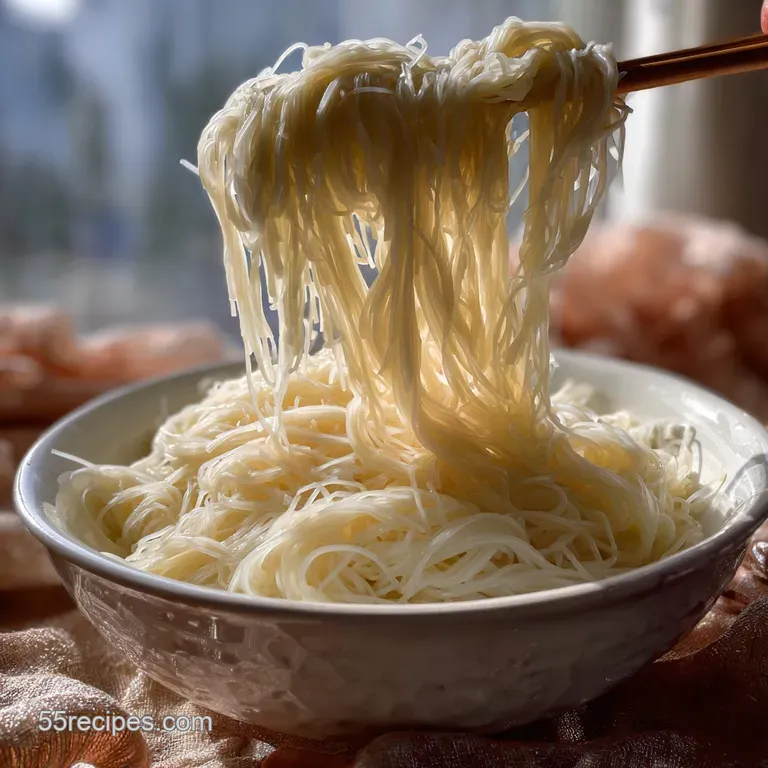
Why Your Noodles Turned Mushy
If your noodles feel like mashed potatoes, they were likely left in the water too long or the water was kept at a rolling boil. Rice noodles are very sensitive to heat. Once the starch granules burst, there is no saving them. If you're looking for a simpler side while you practice, you might try a different starch like my How to Cook recipe for corn.
Why Your Noodles Are Crunchy
Sometimes the very center of the noodle stays hard even after 20 minutes. This usually happens if the water wasn't hot enough when you added the noodles, or if you didn't submerge them fully.
Always make sure the water is at a "fish eye" simmer or a full boil before you turn off the heat and add the dry strands.
| Problem | Cause | Fix | Pro Tip |
|---|---|---|---|
| Brittle strands | Not enough soaking time | Soak for 5 more mins in warm water | Use a lid on the pot to trap heat |
| Excessive sticking | Too much surface starch | Rinse longer with cold water | Use a spray nozzle for better rinsing |
| Bland taste | No salt in water | Season the final sauce heavily | Add a splash of fish sauce to the soak |
Creative Ways to Season Your Noodles
Once you know how to cook rice noodles, the world of Asian noodle dinner recipes opens up to you. For a classic feel, try Cooking Rice Noodles for Stir Fry by tossing them with a mixture of soy sauce, ginger, and garlic.
If you want something refreshing, thin vermicelli are perfect for healthy rice noodle recipes like Vietnamese Bun Bo Nam Bo, where the noodles are served cold with fresh herbs and a lime dressing.
Chef's Note: For a deeper color and flavor, add a tablespoon of dark soy sauce to the soaking water. The noodles will absorb the pigment and seasoning as they hydrate, giving them a beautiful mahogany hue before they even hit the pan.
If you are a fan of thick rice noodles cooking, you can use this same soaking method for the wide, flat variety used in Pad See Ew. Just increase the soaking time by about 5 minutes. If you want to finish the meal with something sweet, these noodles don't quite work for dessert, but my Oatmeal Cookies recipe certainly does!
Best Storage and Waste Reduction Tips
Store any leftover cooked noodles in an airtight container in the fridge for up to 3 days. To keep them from becoming a solid mass, toss them with a teaspoon of oil before refrigerating. When you are ready to eat, don't microwave them dry.
Instead, dip them in a bowl of hot water for 30 seconds to loosen the strands and restore their silky texture.
For zero waste, save any broken noodle bits at the bottom of the bag. You can fry these small pieces in a little oil until they puff up like crackers. They make an excellent crunchy topping for salads or soups.
If you have extra soaking water, it is actually full of rice starch and makes a great thickener for gravies or a base for a simple vegetable broth.
What to Serve with Your Noodles
These noodles are the ultimate blank canvas. For a hearty Asian noodle dinner recipes vibe, serve them alongside crispy tofu or thinly sliced flank steak. If you are doing a stir fry, wait until the very end to toss the noodles in. They only need about 60 seconds in the hot pan to absorb the sauce and heat through.
Which sauces work best with this texture?
Thinner noodles love light, vinegar based dressings or thin broths. Thicker noodles are built for "clinging" sauces made with oyster sauce, hoisin, or peanut butter. If you want a bit of crunch on the side, you could serve a salad topped with nuts. My How To Toast Walnuts recipe is a great guide for getting that perfect toasted flavor.
Fresh vs. Dried: Which is better for storage?
Dried noodles are much better for the home pantry as they last for months. Fresh rice noodles, often found in the refrigerated section of Asian markets, have a superior "slap" and chew, but they must be used within 2 days.
If you buy fresh ones, don't soak them; just blanch them in boiling water for 30 seconds to separate the layers.
Scaling the Recipe
Downsizing for Two
If you only need 2 servings, use 4 oz of noodles and 1 quart of water. You don't need to change the soaking time, but do keep the pot covered to ensure the smaller volume of water stays warm enough to soften the strands.
Feeding a Crowd
When doubling the recipe to 16 oz of noodles, use 4 quarts of water. Increase the salt and oil to 1.5 times the original amount (don't double the oil or they will be too greasy). You might need an extra 2 to 3 minutes of soaking time because the large mass of cold noodles will drop the water temperature more significantly.
Noodle Legends Debunked
Myth: You must boil rice noodles just like spaghetti. Truth: Boiling rice noodles often leads to a gummy exterior and a raw middle. The "conditioning soak" provides a much more controlled and even texture.
Myth: Rinsing noodles washes away the flavor. Truth: Rinsing rice noodles is mandatory. It removes the excess surface starch that causes them to stick together in the pan. You want to season the noodles with your sauce later, not rely on the starch for flavor.
Myth: Oil in the water doesn't do anything. Truth: While oil in pasta water is debated, for rice noodles, it helps lubricate the strands as they soften, preventing them from fusing into a block while they drain.
Decision Shortcut for Noodle Success
- If you want a stir fry texture: Soak the noodles until they are just barely flexible (slightly undercooked) so they finish perfectly in the hot pan.
- If you want a cold salad: Soak the noodles until they are fully tender, then rinse with ice cold water to lock in the "snap."
- If you want a soup (Pho): Do not cook the noodles in the broth. Soak them separately, place them in the bowl, and pour the boiling broth over them right before serving.
I hope this helps you feel more confident in the kitchen! There is nothing like a bowl of perfectly cooked, slithery noodles to make a meal feel special. Honestly, once you get the soak right, you will be looking for excuses to make these every single night. Let's crack on and get cooking!
Recipe FAQs
how to make cook rice noodles?
Yes, by soaking, not boiling aggressively. The best method is to bring the water to a boil, turn off the heat, submerge the noodles, and let them steep for 15 20 minutes until pliable. This gentle hydration prevents the starch from breaking down and becoming gummy.
how to make rice noodles cook faster?
No, speeding up the soak is not recommended for quality. If you must reduce the time, use hot water that has just come off a rolling boil and cover the pot tightly to retain heat, but thinner noodles (vermicelli) will always cook faster than thicker ones.
how to prepare cooked rice noodles?
Rinse immediately under cold water after draining hot water. This crucial step shocks the noodles, instantly halting residual cooking and washing off surface starch that causes clumping. Toss lightly with oil if you are storing them.
how to cook rice noodles?
Use the conditioning soak method with added acid. After soaking, add a teaspoon of rice vinegar to the water; this lowers the pH, which helps tighten the exterior starch structure and keeps the strands firm during tossing. This texture control is similar to the precision needed when balancing fats in our guide on How to Make Tahini Silky Smooth Ready in 15.
how to make rice noodles from scratch?
While possible, it is rarely worth the effort over store-bought dried. Making them requires combining rice flour with water into a slurry, steaming it into thin sheets, and then cutting them, which is highly technical. For simple starch cooking, mastering grains is easier; check out the basic technique in How to Boil Rice on Stovetop Perfectly Fluffy Every Time.
Why are my rice noodles sticking together after cooking?
You missed the cold rinse or didn't use enough oil. The stickiness comes from excess surface starch that hasn't been washed off. Ensure you rinse thoroughly until the water runs clear and then toss with a small amount of neutral oil before resting.
Can I reheat leftover cooked rice noodles?
Yes, but do not use dry heat like a microwave. Submerge the cold noodles in a bowl of hot (but not boiling) water for about 30 seconds to gently loosen them and rehydrate the strands before adding them to a sauce or stir fry.
Cook Rice Noodles Soak Serve
Ingredients:
Instructions:
Nutrition Facts:
| Calories | 215 calories |
|---|---|
| Protein | 3.4 g |
| Fat | 1.4 g |
| Carbs | 46.1 g |
| Fiber | 0.9 g |
| Sugar | 0.1 g |
| Sodium | 603 mg |
