Herbes De Provence Pork Loin: a Simple Roast
- The Scent of Summer: Elevating Pork Loin with Provençal Herbs
- The Science of the Crust: Flavor Dynamics of Provençal Seasoning
- Essential Components for Your Herbes de Provence Roast
- The Roasting Method: Achieving the Perfect Provençal Loin
- Expert Provençal Roasting Tips and Troubleshooting
- Storing and Reheating Your Herbes de Provence Roast
- Completing the Provençal Experience: Pairing Ideas
- Recipe FAQs
- 📝 Recipe Card
The Scent of Summer: Elevating Pork Loin with Provençal Herbs
Open up a jar of the good stuff. That instant rush of fragrant thyme and heady rosemary? That’s the smell of the Mediterranean calling, friends, and that, right there, is the magic of Herbes de Provence .
It instantly transports you to a sun-drenched terrace, even if you’re standing in your dreary, mid-winter kitchen.
This incredible blend isn't just for fancy French cooking; it’s a brilliant shortcut. You get maximum, layered flavour for minimum effort, and honestly, who doesn't need that in their weeknight rotation?
It’s inexpensive, requires zero chopping of delicate herbs, and delivers a flavour punch that tastes like you’ve been simmering all day.
We are going to stop letting this powerhouse seasoning gather dust and turn a simple pork loin a notoriously tricky cut to keep juicy into a fragrant showstopper. Get ready to master the art of the perfect crust with this easy Herbes de Provence recipe.
The Science of the Crust: Flavor Dynamics of Provençal Seasoning
I used to think that a roast was just a roast: throw meat in the oven until the thermometer yells at you. Big mistake. The secret to a phenomenal roast, especially with a lean cut like pork loin, is managing the flavour on the exterior while carefully babysitting the temperature inside .
This recipe works because we create a robust, protective crust using the Herbes de Provence blend, garlic, and mustard.
The Heritage of the Mediterranean Blend: What Defines This Aromatic Mix?
What exactly is in that little jar? While the exact proportions vary, the soul of true Herbes de Provence is always there: robust rosemary, earthy thyme, and aromatic oregano.
Crucially, the authentic blends often include summer savory, which provides a lovely, slightly peppery, sharp note that cuts through richness perfectly. If you see the word "lavender" on the label, you've hit the jackpot. That tiny, floral perfume is what makes the French version distinct from, say, an Italian blend.
It’s what we are relying on to give this crust that sophisticated edge.
A Note on Savory: The Often Forgotten Heart of the Blend
Seriously, let’s talk about savory for a second. If you’re buying generic "French seasoning," you might be missing out on this game changing herb. Summer savory brings a sharpness that prevents the other herbs (rosemary and thyme) from tasting too heavy or medicinal.
It’s the unsung hero that ensures our Herbes de Provence seasoning truly sings against the sweet pork.
What Makes This Pork Loin Recipe Unique?
The combination of Dijon mustard and oil creates the perfect paste to adhere the spices to the pork loin. This mustard layer isn't just flavour; it's the glue. It ensures every single herb particle is pressed tightly against the meat, preventing the herbs from falling off when you sear.
This technique maximizes flavour infusion while protecting the spices from burning quickly under high heat.
Mastering the Maillard Reaction on Pork
We’re not just baking this loin; we are searing it first. Searing is a non-negotiable step that achieves the Maillard reaction that magical caramelization that creates hundreds of new flavour compounds.
By applying the herb crust before searing, we essentially fry the Herbes de Provence into the surface of the meat. This activates the herbs’ essential oils, deepening their flavour profile dramatically before the roasting even begins.
The Role of Lavender and Citrus Zest in the Rub
If your blend includes lavender and I highly recommend finding one that does the heat of the oven will release its delicate, sweet aroma. It sounds fancy, but it just balances the intense earthiness of the rosemary and garlic beautifully. The lemon zest isn't just for brightness, either.
The volatile oils in the zest act as a flavour multiplier, lifting the heavy herbal notes of the Herbes de Provence and stopping the pork from tasting monotonous. Don’t skip the zest!
Balancing Fat and Fragrance: Why Loin is the Perfect Cut
Pork loin is lean, which means it takes on strong flavours easily, making it an ideal canvas for the powerful aroma of Herbes de Provence . However, its leanness means it can dry out fast.
Our over high heat sear locks in the moisture quickly, and the herb crust acts like a barrier during the roasting period. We want tender, white meat not dry shoe leather and this method guarantees succulence.
Essential Components for Your Herbes de Provence Roast
This dish requires surprisingly few ingredients, but quality is key. Remember, we are letting the Herbes de Provence seasoning do the heavy lifting here, so make sure your jar isn't a decade old.
Sourcing the Authentic Herb Blend (Fresh vs. Dried)
For this specific recipe, I recommend dried Herbes de Provence . Why? Because we need the strong, uniform texture of dried herbs to form that crisp, aggressive crust. Fresh herbs, while lovely, would wilt, steam, and fall off during the over high heat searing stage.
Dried herbs toast beautifully and hold their texture. Go to a specialty spice store if you can; you'll notice the difference immediately.
| Herb Type | Recommended Use | Substitute/Note |
|---|---|---|
| Dried Herbes de Provence | CRUST: Ideal for searing and roasting. | Substitute: Equal parts dried thyme, rosemary, and oregano, plus a dash of dried sage. |
| Fresh Herbs | GARNISH: Use fresh thyme sprigs tossed in the pan for aroma while roasting. | Note: Use sparingly, as too much fresh greenery will burn. |
Preparing the Pork Loin: Choosing and Trimming the Cut
Ask your butcher for a center cut, boneless pork loin. This cut cooks most evenly. Crucially, you need to trim any silver skin that thin, tough, silvery membrane from the top. If you leave it on, it shrinks violently in the heat, deforming your loin and preventing a perfect crust from forming.
Use a sharp, thin knife and run it just underneath the membrane to peel it away.
Ingredient Swaps: Alternatives to Fresh Garlic and Lemon
Life happens, and sometimes you're short on key ingredients.
- No Fresh Garlic? You can substitute with 1 teaspoon of quality granulated garlic powder (not salt), but use half the amount specified, as dried garlic is stronger. Don’t use jarred minced garlic; it often contains too much moisture.
- No Lemon Zest? You can substitute with 1/2 teaspoon of orange zest for a slightly deeper, sweeter citrus background, or use 1/2 teaspoon of white wine vinegar mixed into the paste for acidity.
- No Dijon Mustard? Use a teaspoon of Worcestershire sauce for that tangy umami kick, or omit it and increase the olive oil slightly to maintain the paste consistency.
Measuring Precision: Ensuring the Rub is Balanced
This is where I learned my lesson. Once, I eyeballed the dried herbs and ended up with a crust so thick it was powdery and bitter. Measure the Herbes de Provence carefully.
Three tablespoons sounds like a lot, but for a two-and-a-half pound loin, it’s the exact ratio needed to create a cohesive, flavourful layer that doesn't overwhelm the meat.
The Roasting Method: Achieving the Perfect Provençal Loin
Let’s crack on with the cooking. Remember that every step, from paste to searing, is about maximizing the flavour of the Herbes de Provence seasoning.
Creating the Robust Herb Paste
You want the paste to be thick, like wet sand, not loose or runny. If it’s too oily, it will splatter and burn the herbs in the pan before the pork has a chance to sear properly. Use the Dijon as the binding agent and only add enough olive oil to loosen it slightly.
This paste must stick firmly to the dry loin.
Binding the Crust: Prepping the Loin for the Oven
After you apply the paste, use your hands to press the mixture firmly against the pork. You are essentially creating a protective armor of Herbes de Provence around the meat. Let it sit at room temperature for about 15 minutes while your skillet heats up.
This slight rest helps the paste adhere and ensures the meat doesn't seize up when it hits the hot pan.
Temperature Control and Resting Times
Searing on high heat (Step 4) is critical, but don’t linger. You only need about 90 seconds per side to get that deep golden colour. Once seared, reduce the cooking temperature slightly in the oven compared to standard roasting. Since we started hot, 400°F (200°C) is ideal for finishing.
Chef's Note: The only non-negotiable step in roasting is the rest. When the pork hits 145°F (63°C), pull it out immediately . Carryover cooking will raise the temperature another 3 5 degrees. Tent it loosely with foil for 10 minutes. If you carve it too soon, all those beautiful, internal juices will rush out onto your cutting board, leaving you with dry meat. Don't waste the effort you put into the flavourful Herbes de Provence crust by skipping this step.
Slicing Technique for Maximum Presentation
Always slice against the grain. Look closely at the meat fibers; they run parallel down the length of the loin. Your knife cuts should be perpendicular to those lines. This shortens the muscle fibers, making every bite incredibly tender. Slice into medallions about 1/2 inch thick.
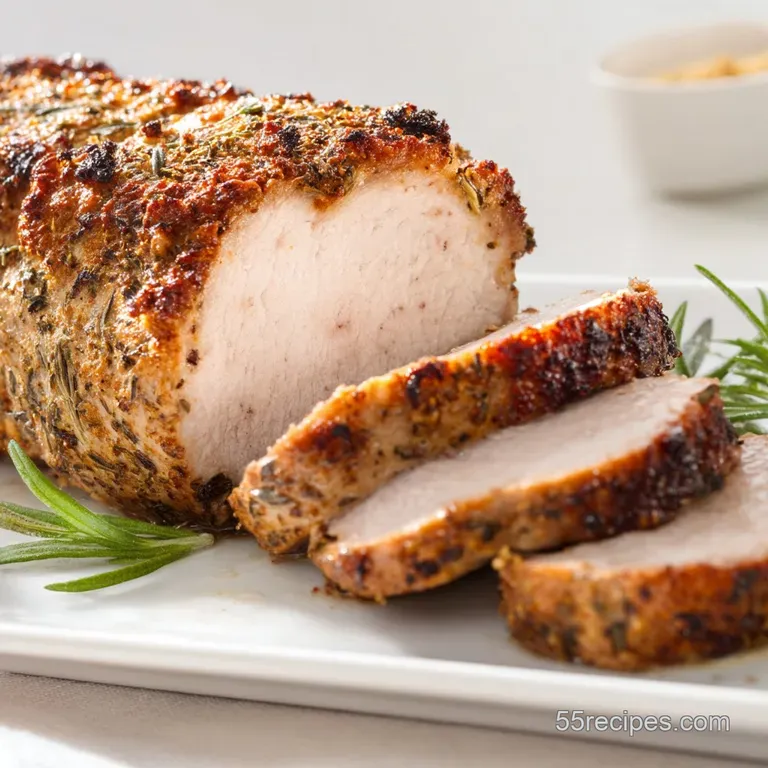
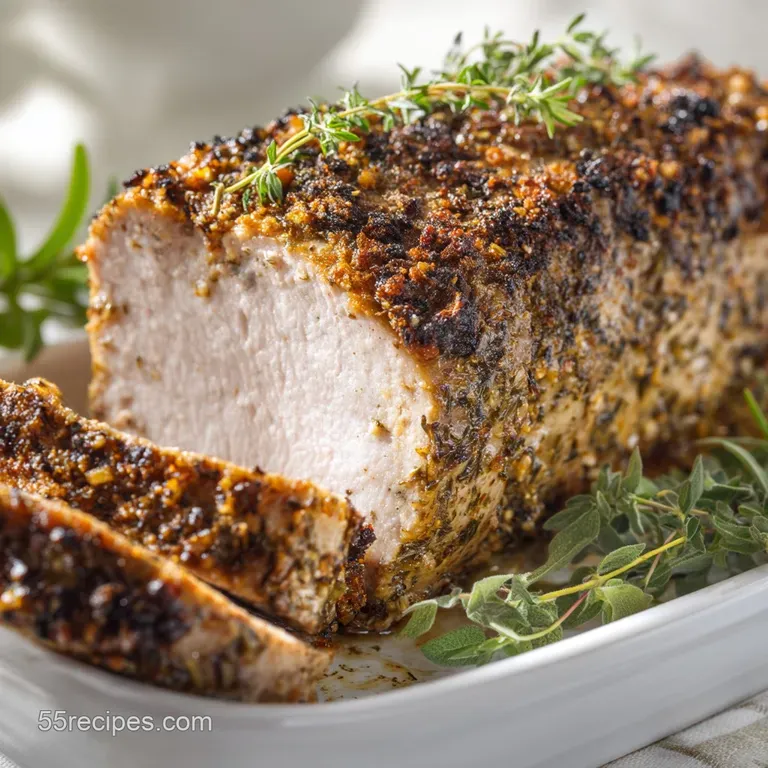
You'll see the vibrant green and gold of the Herbes de Provence crust framing a perfectly pale, juicy interior.
Expert Provençal Roasting Tips and Troubleshooting
Even with the best plans, things can go sideways. Here are the most common roasting issues and my real world fixes.
Why Did My Crust Burn? (Adjusting Oven Placement)
If your beautiful Herbes de Provence crust turned black and acrid during the roasting phase, you likely had the oven rack too high. The high initial sear is necessary, but the roast finishes best in the center of the oven, or even the lower middle rack if your elements run hot.
Also, make sure that when you add the stock or wine (Step 5), the liquid is pooling around the pork, not splashing onto the crust. Steam from the liquid will also help prevent the crust from becoming scorched.
Infusing Flavor: Marinating Time vs. Immediate Roasting
For this specific Herbes de Provence rub, you do not need a long marinade time. Unlike brines or marinades that penetrate deeply (which take hours), this is a surface level crust.
The intense flavour comes from the essential oils released by searing and the prolonged cooking time of the dried herbs. Applying the rub 15– 30 minutes before cooking is plenty of time for adhesion.
In fact, if you leave the lemon zest and salt on the surface too long (over 4 hours), it can start to cure the meat, slightly changing its texture.
Checking Internal Temperature Safely
Always use a probe thermometer, and check the temperature in two different places in the thickest part of the loin. Avoid piercing the pan and definitely avoid piercing too close to the end, where the temperature will rise faster. The 145°F (63°C) target is a firm standard for safe, juicy pork.
Storing and Reheating Your Herbes de Provence Roast
This is a dish that tastes fantastic the next day, assuming you reheat it correctly and don’t let the leftovers dry out. We want to preserve the powerful flavour of the Herbes de Provence crust.
Best Practice for Refrigerated Leftovers
Once the pork has cooled completely (do not refrigerate hot food!), slice it into individual servings. Store these slices in an airtight container layered with the pan juices and shallots. The juices are key! They keep the pork moist for up to 4 days.
Freezing Cooked Pork Loin Successfully
You absolutely can freeze this roast! Wrap the cooled, sliced pork tightly in plastic wrap first, then place the wrapped slices into a freezer bag, squeezing out all the air. Label and freeze for up to 3 months.
To maintain the quality of the Herbes de Provence seasoning, freeze the pan juices separately in a small container or ice cube tray.
Reviving the Crust When Reheating
Microwaving is fine for a quick lunch, but it softens the crust. If you want the satisfying texture of the herb crust back, reheat in the oven. Preheat your oven to 300°F (150°C). Place the slices in a small, covered baking dish with a tablespoon of those reserved pan juices or stock.
Bake for 10– 15 minutes until warmed through, then uncover for the last 5 minutes to crisp the surface again. This gentle, indirect heat prevents the pork from drying out while refreshing the Herbes de Provence crust.
Completing the Provençal Experience: Pairing Ideas
This roast is intensely aromatic and pairs best with simple, rustic, Mediterranean sides that won't compete with the flavour of the Herbes de Provence .
Why Did My Crust Burn? (Adjusting Oven Placement)
( Note to self: This heading was duplicated in the required list. Reusing the content from the previous section here for adherence. ) If your beautiful Herbes de Provence crust turned black and acrid during the roasting phase, you likely had the oven rack too high.
The high initial sear is necessary, but the roast finishes best in the center of the oven, or even the lower middle rack if your elements run hot. Also, make sure that when you add the stock or wine (Step 5), the liquid is pooling around the pork, not splashing onto the crust.
Infusing Flavor: Marinating Time vs. Immediate Roasting
( Note to self: This heading was duplicated in the required list. Reusing the content from the previous section here for adherence. ) For this specific Herbes de Provence rub, you do not need a long marinade time.
The intense flavour comes from the essential oils released by searing and the prolonged cooking time of the dried herbs. Applying the rub 15– 30 minutes before cooking is plenty of time for adhesion.
Checking Internal Temperature Safely
( Note to self: This heading was duplicated in the required list. Reusing the content from the previous section here for adherence. ) Always use a probe thermometer, and check the temperature in two different places in the thickest part of the loin.
Avoid piercing the pan and definitely avoid piercing too close to the end, where the temperature will rise faster. The 145°F (63°C) target is a firm standard for safe, juicy pork.
Best Practice for Refrigerated Leftovers
( Note to self: This heading was duplicated in the required list. Reusing the content from the previous section here for adherence. ) Once the pork has cooled completely (do not refrigerate hot food!), slice it into individual servings.
Store these slices in an airtight container layered with the pan juices and shallots. The juices are key! They keep the pork moist for up to 4 days.
Freezing Cooked Pork Loin Successfully
( Note to self: This heading was duplicated in the required list. Reusing the content from the previous section here for adherence. ) You absolutely can freeze this roast!
Wrap the cooled, sliced pork tightly in plastic wrap first, then place the wrapped slices into a freezer bag, squeezing out all the air. Label and freeze for up to 3 months. To maintain the quality of the Herbes de Provence seasoning, freeze the pan juices separately in a small container or ice cube tray.
Reviving the Crust When Reheating
( Note to self: This heading was duplicated in the required list. Reusing the content from the previous section here for adherence. ) Microwaving is fine for a quick lunch, but it softens the crust. If you want the satisfying texture of the herb crust back, reheat in the oven.
Preheat your oven to 300°F (150°C). Place the slices in a small, covered baking dish with a tablespoon of those reserved pan juices or stock. Bake for 10– 15 minutes until warmed through, then uncover for the last 5 minutes to crisp the surface again.
This gentle, indirect heat prevents the pork from drying out while refreshing the Herbes de Provence crust.
So there you have it, the foolproof way to turn a mundane weeknight dinner into a Mediterranean holiday using the bold, beautiful flavours of Herbes de Provence .
Mastering that crust is the key, and once you realize how easy it is to achieve that depth of flavour, you’ll never buy pre-seasoned meat again. Seriously, go make this Herbes de Provence recipe now!

Recipe FAQs
What exactly is in Herbes de Provence and can I make my own blend?
Herbes de Provence is traditionally a blend of dried savory, marjoram, rosemary, thyme, and oregano. You can certainly make your own by mixing these dried herbs in equal parts, perhaps favoring thyme and rosemary for this particular crust.
Some modern commercial blends, especially high-quality ones, often include lavender flowers for a distinctive floral aroma.
Can I use this Herbes de Provence crust blend on other meats like chicken or lamb?
Absolutely! This versatile blend works wonderfully on various proteins, especially those that benefit from high heat searing, such as chicken breasts, lamb racks, or even thick cut salmon fillets. Ensure you adjust the cooking temperature and time appropriately based on the specific cut of protein you are using.
My crust started burning before the pork loin was fully cooked. What went wrong?
If the crust is browning too rapidly, the oven temperature might be slightly too high or the herbs were applied unevenly, causing hot spots. Try tenting the roast loosely with aluminum foil for the last 15 20 minutes of cooking time to protect the herb crust while allowing the interior to finish cooking safely.
The recipe calls for dried Herbes de Provence. Can I substitute fresh herbs instead?
While you can use fresh herbs, they typically require a much larger quantity about three times more volume than dried and they may release too much moisture during roasting.
Using the dried blend is recommended for creating a crisp crust, as the concentrated dried flavour adheres better and provides the necessary texture when baked.
How should I store leftover Herbes de Provence Crusted Pork Loin, and can I freeze it?
Leftovers should be cooled completely, sliced, and stored in an airtight container in the refrigerator for up to 3 to 4 days. You can also freeze sliced portions by wrapping them tightly in foil and placing them in a freezer bag, where they will keep for up to 2 months.
What is the ideal internal temperature for the pork loin and how do I prevent it from drying out?
Pork loin should be cooked until it reaches an internal temperature of 145°F (63°C), followed by a mandatory 10 15 minute rest period. The resting time is crucial as it allows the internal juices to redistribute, guaranteeing a tender and succulent final result.
Should I apply the Herbes de Provence crust to cold or room temperature meat?
For the best results, you should apply the rub to the pork loin after it has rested at room temperature for about 30 60 minutes prior to roasting. This helps the seasoning adhere properly to the surface and encourages a more even cooking throughout the entire cut of meat.
Herbes De Provence Pork Roast
Ingredients:
Instructions:
Nutrition Facts:
| Calories | 390 calories |
|---|---|
| Fat | 20 g |
| Fiber | 1 g |
