Smoked Ribs: Low Slow St. Louis Cut
- Setting the Stage: Why Low & Slow is the Only Way
- The Science Behind Tender, Flavorful Ribs
- Sourcing Your Ingredients: Quality Matters Most
- Ingredient Notes and Quick Swaps
- Preparation: Mastering the Rib Rack
- The Low & Slow Cooking Phase (The 3 2-1 Adaptation)
- Resting and Serving Perfect Ribs
- Troubleshooting and Achieving Competition-Level Ribs
- Handling Leftovers and Advanced Meal Prep
- Ultimate Pairings for Your St. Louis Ribs
- Recipe FAQs
- 📝 Recipe Card
Setting the Stage: Why Low & Slow is the Only Way
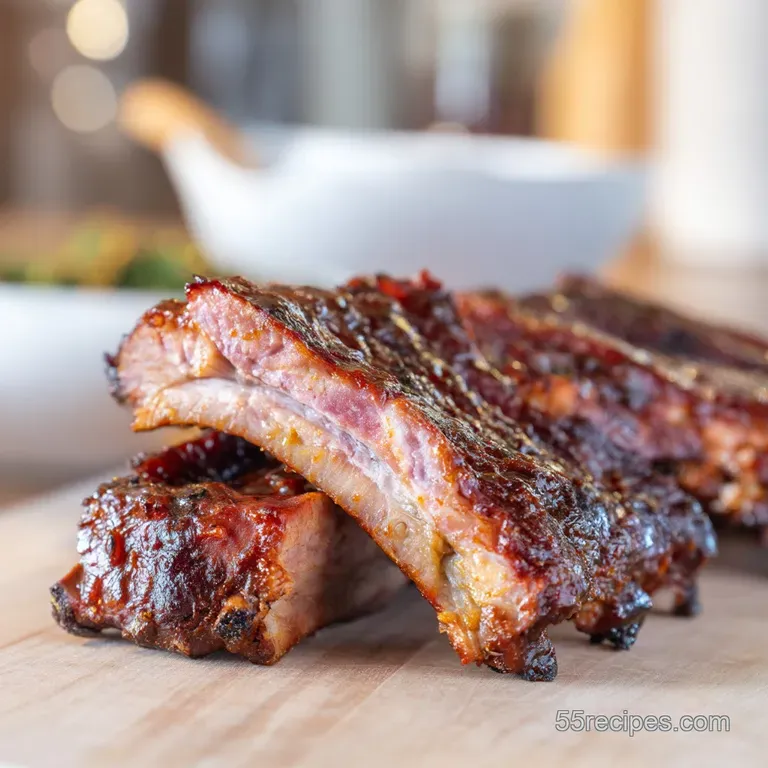
You know that smell, right? That deep, sweet, smoky aroma that pulls you into the backyard the moment the smoke hits the air. That promise of juicy, tender meat beneath a mahogany crust. We are talking about the absolute peak of backyard cuisine: perfect, fall off-the-bone tender Smoked Ribs .
(SR: 1)
Look, cooking ribs seems intimidating, but it’s actually incredibly straightforward. This recipe is less about high level technique and more about patience and temperature control.
It’s the ultimate weekend project that pays off hugely, proving that restaurant quality barbecue is totally achievable in your own setup, even if you’re new to the smoker life.
I've made all the rookie mistakes dry meat, rubbery membrane, bark that flakes right off. But after years of trial and error, I’ve locked down the exact low and slow method that guarantees success every time. Get ready to cook the best Smoked Ribs you’ve ever had. (SR: 2)
The Science Behind Tender, Flavorful Ribs
The secret to truly great barbecue isn't speed; it’s patience. You need to respect the process. High heat turns ribs into leather, plain and simple. We want that tough connective tissue collagen to melt into luxurious gelatin, not seize up and dry out.
This requires maintaining a consistent, low temperature for many hours. This foundational rule is what separates passable grilled ribs from championship Smoked Ribs . (SR: 3)
Barbecue is basically magic chemistry, right? We aren't just heating meat; we are transforming it. Understanding three key areas will demystify the entire process of making perfect, competition style Smoked Ribs . (SR: 4)
Defining the St. Louis Cut Advantage
The St. Louis cut is essentially a trimmed spare rib. They are rectangular, uniform, and slightly fattier than the popular baby back ribs. That extra fat is crucial for retaining moisture during the long, hot smoke session. If you want juicy, rich Smoked Ribs , always choose St.
Louis when available; the uniform shape also cooks more evenly, which is a massive bonus.
Understanding the 'Smoke Ring' Phenomenon
That beautiful pink ring just under the bark? That's the smoke ring. It’s visual proof that nitric oxide and carbon monoxide from your wood smoke have reacted with the myoglobin in the meat.
While it doesn't dramatically change the flavour, it signals you’ve maintained excellent smoke quality (thin blue smoke) throughout the initial cooking phase.
Essential Equipment for Great Barbecue
You absolutely need two thermometers. One to track the cooker temperature (ambient temp), and one quick read probe for the internal meat temperature. Don't cheap out here! A reliable temperature reading is the single most important factor in making truly tender, Low and Slow Smoked Ribs .
(SR: 5) If you are just starting out, a wireless probe set is a lifesaver.
Collagen Breakdown and Temperature Control
Collagen starts turning into gelatin around 160°F, but it needs sustained heat to truly complete the process. We push the meat up toward 200°F because that long exposure time ensures every piece of connective tissue breaks down.
This results in those famous fall off-the-bone characteristics we look for in amazing Smoked Ribs . (SR: 6)
Balancing the Dry Rub (Salt, Sugar, Spice)
The rub is the primary flavour driver. Salt penetrates and seasons the meat deeply, essentially curing the exterior. Sugar, usually dark brown sugar, helps build that deep mahogany bark because it caramelises beautifully during the smoke. Spices, like paprika and chili powder, add complexity and heat.
I use a slightly high paprika ratio for maximum colour.
The Role of the Spritz in Keeping Moisture
What's the spritz for? It keeps the surface of the ribs cool and moist, promoting smoke adherence and preventing the exterior from drying out before the interior is cooked. A mix of apple cider vinegar and apple juice is my go-to for making sure my Smoked Ribs stay tender and pick up all that lovely smoke flavour.
(SR: 7)
Sourcing Your Ingredients: Quality Matters Most
You can't make magic from subpar ingredients. Start with quality meat and fresh spices, and you are halfway there. Buying better quality smoked paprika, for instance, makes a huge difference in the final taste and colour of your homemade Smoked Ribs .
(SR: 8) Don't settle for dusty, years old spices hidden at the back of the cupboard, please.
Ingredient Notes and Quick Swaps
Selecting the Best Rack of St. Louis Spare Ribs
Look for racks that have a nice layer of fat but are uniformly trimmed into that neat rectangle shape. Avoid racks with large, ragged edges or exposed sections of bone that might dry out quickly during the long cook.
Building the Ultimate BBQ Dry Rub
If you’re missing smoked paprika, substitute regular paprika and add a touch more liquid to your wrap but honestly, try to find the real deal; it’s non-negotiable for that deep, smoky colour.
CRITICAL SWAP: If you run out of coarse kosher salt, use table salt, but remember to reduce the volume by about 25%, as it’s much denser. Always check the freshness of your black pepper, too.
The Perfect Acidic Spritz Mixture
My standard is a 2:1 vinegar to apple juice ratio. If you don't have apple juice, water works just fine, but the juice adds a slight sweetness that balances the rich pork fat on your Smoked Ribs beautifully.
(SR: 9) Some cooks even use beer or bourbon, but the vinegar provides the necessary acidity to break down the surface proteins.
Alternative Wood Smoke Flavors (e.g., Apple vs. Hickory)
Hickory is the classic, strong barbecue flavour. If you want something milder for your Smoked Ribs , try Applewood or Pecan they offer a sweet, subtle smoke that pairs incredibly well with pork. (SR: 10) I often blend Hickory and Cherry for a rich base and a hint of fruitiness.
Substituting Rack Types (From Spare Ribs to Baby Backs)
If you can only find Baby Back ribs, great! They cook faster because they are smaller and leaner, which means less time on the smoker. Just anticipate knocking about 90 minutes off the total cook time.
They still make delicious Smoked Ribs , they just aren't quite as rich or meaty as the St. Louis cut. (SR: 11)
Do You Need a Binder? (Mustard vs. Oil)
I always use a thin coat of regular yellow mustard. Why? It helps the massive amount of rub stick flawlessly to the meat, and the mild acidity evaporates completely during the smoke.
If you hate mustard, you can use plain cooking oil, but it won’t hold the rub quite as well, or you can skip the binder entirely if your rub is mostly sugar.
Preparation: Mastering the Rib Rack

The prep work is quick, but absolutely necessary. You cannot skip these steps if you want truly premium results from your Smoked Ribs . (SR: 12) We want a perfect canvas for that flavourful smoke.
Removing the Membrane (Why and How)
This is the number one rookie mistake I see. Flip the rack bone side up. Use a small knife to lift the membrane, then grip it firmly with a paper towel it’s slippery! Once you get a grip, pull it off slowly and deliberately.
If you leave it, the texture of the finished Smoked Ribs will be impossibly tough and chewy, like eating plastic. (SR: 13)
Trimming for Uniform Cooking
St. Louis ribs are usually well trimmed, but look for any loose flaps or tiny pieces of meat (the skirt). These will burn long before the rest of the rack is cooked. Trim them off now; you can toss them on the smoker separately for a tasty, crunchy snack later (chef’s treat!).
Applying the Rub for Maximum Adhesion
Be aggressive! Press the rub into the meat firmly on all sides. You want a thick coating, almost like sandpaper. Letting the rub rest overnight in the fridge (uncovered) creates a dry, tacky surface that helps develop an amazing, deep, durable bark during the smoke.
The Low & Slow Cooking Phase (The 3 2-1 Adaptation)
The famous 3 2-1 method is a guideline, not a law. It stands for 3 hours smoking, 2 hours wrapped, 1 hour unwrapped finish. I adapt it slightly depending on the thickness of the St.
Louis Smoked Ribs I am cooking and how they feel during the bend test. (SR: 14)
Phase 1: Deep Smoking and Bark Formation
Maintain that crucial 225°F (107°C) temperature and keep the smoke clean (thin blue smoke, remember?). This is where 90% of your flavor develops. Spritz every 45 minutes, keeping the door closed between spritzes.
Trust me: peeking is the enemy of consistent heat and great Smoked Ribs . (SR: 15) After three hours, the colour should be deep mahogany.
Phase 2: The Foil Boat (Wrap) for Tenderness
This is often called the "Texas Crutch," and it’s brilliant. Wrapping in foil (or butcher paper) steams the ribs, forcing them past the temperature stall and tenderizing the collagen rapidly. The apple juice and butter in the wrap add moisture and flavor, guaranteeing succulent results.
After two hours wrapped, the ribs should be pliable and the internal temp around 190°F.
Phase 3: Setting the Glaze and Finishing Temperature
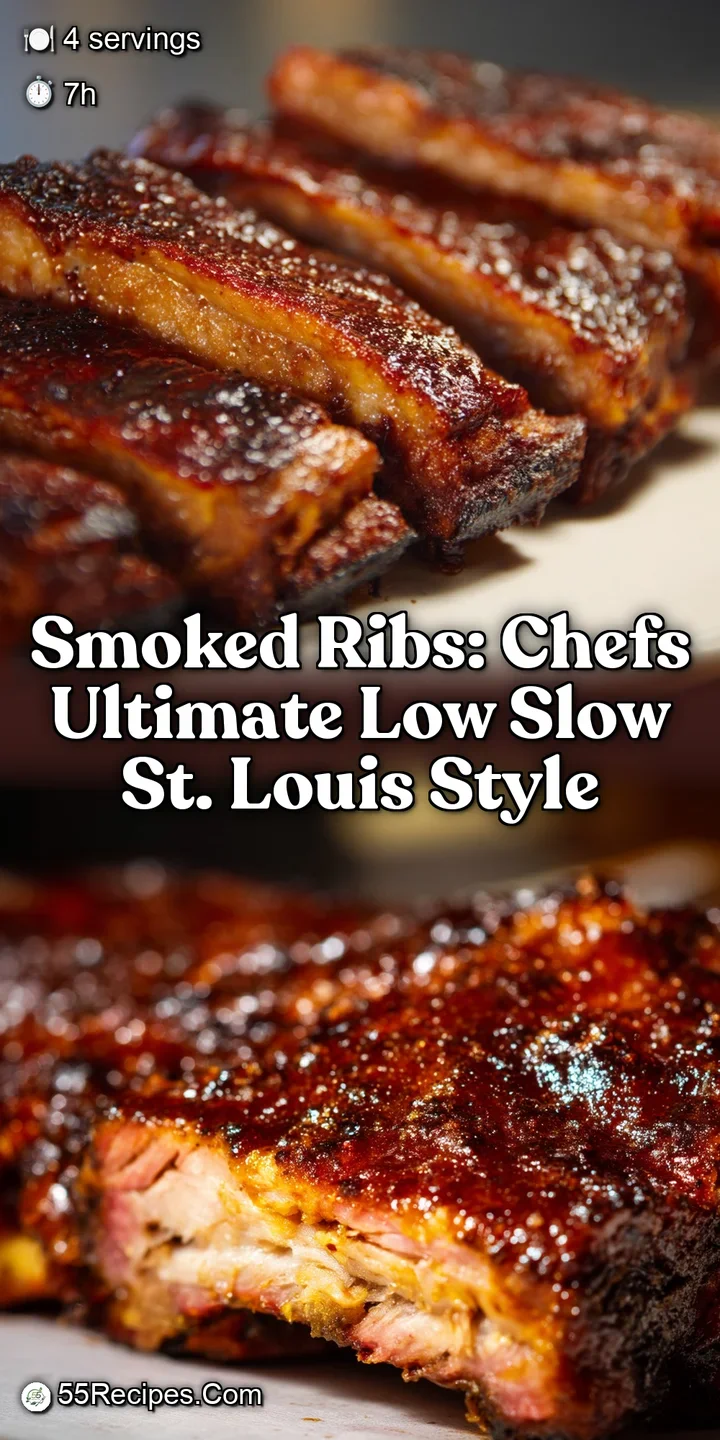
Unwrap them, discard the liquid (it's too salty and fatty), and put the ribs back on the grate. This final hour allows the beautiful bark, softened by the steam, to tighten up again. Apply a thin layer of sauce, wait 15 minutes for it to tack up, then apply a final, thicker layer.
This makes your Smoked Ribs shiny, caramelized, and finger licking delicious. (SR: 16)
Resting and Serving Perfect Ribs
We have come this far. Don’t ruin perfect Smoked Ribs by slicing them immediately. That rest period is absolutely non-negotiable for max juiciness; it allows all the internal moisture to settle back into the muscle fibers. (SR: 17)
Chef’s Note: I once cut into a rack immediately after pulling it off the smoker because my in-laws were starving. All the juices ran out onto the cutting board. It was dry, tough, and frankly, embarrassing. Never again. Let those beautiful Smoked Ribs rest!
(SR: 18)
Troubleshooting and Achieving Competition Level Ribs
Preventing Dry Ribs (The Crutch Method)
The wrap (or crutch) is the best defense against dryness. If you find your ribs drying out during the initial smoke, pull them early (around 145°F internal) and wrap them tightly with extra liquid. Also, ensure your cooker has a water pan to maintain humidity within the smoking chamber.
Diagnosing Underdone Meat (The Bend Test)
Doneness isn't just a number, it's a feeling. If you lift the center of the rack with tongs and the meat barely cracks, it needs another 30- 45 minutes. When they are ready, they will sag dramatically, and the bark will begin to break apart slightly that's the sweet spot for amazing Smoked Ribs .
(SR: 19)
Dealing with Too Much Smoke (Creosote Taste)
If your ribs taste acrid, bitter, or like an ashtray, you were using "dirty smoke" (thick white smoke). Next time, ensure your fire is burning clean and hot, not smoldering. If you use a pellet grill, check your pellets for freshness. This ruins homemade Smoked Ribs faster than anything else.
(SR: 20)
Handling Leftovers and Advanced Meal Prep
While Smoked Ribs are best served immediately, sometimes you just have too many (lucky you!). Here is exactly how to manage those leftovers and keep them delicious. (SR: 21)
How to Properly Cool and Refrigerate Smoked Ribs
Cool the ribs rapidly. Don’t leave them sitting out at room temp for hours. Wrap them tightly in fresh foil or use vacuum seal bags to prevent oxygen exposure. Refrigerated Smoked Ribs usually last safely for 3 4 days. (SR: 22)
Freezing Methods for Long Term Storage
Wrap individual half racks tightly in plastic wrap, then an outer layer of foil, or vacuum seal them whole. Frozen ribs are great for up to 3 months. When you are ready to use them, always thaw them completely in the fridge overnight before reheating.
Best Way to Reheat Smoked Meat Without Drying It Out
This is the critical step. Preheat your oven to a low 250°F (120°C). Wrap the thawed ribs tightly in foil with a few tablespoons of liquid (water, juice, or cider). Reheat until the internal temperature reaches 160°F (71°C), about 45 minutes to an hour.
For a crispy finish, unwrap them for the last 10 minutes, maybe even under the broiler briefly.
Ultimate Pairings for Your St. Louis Ribs
What should you serve alongside your perfectly cooked Smoked Ribs ? (SR: 23)
Sides must complement the rich, smoky flavor without overpowering the meat. A classic vinegar based coleslaw cuts through the richness beautifully, providing the necessary acidity and crunch. Smoked baked beans, dripping with molasses and bacon, are another absolute must have. If you want another great backyard recipe but your smoker is tied up, you might want to check out my guide on making Gas Grilled Ribs Best Low Slow Recipe for Tender Perfection for a solid alternative method.
This recipe is truly the gold standard for backyard barbecue. It takes time, patience, and a little attention to detail, but the payoff is immense, I promise. You'll master temperature control, understand the importance of the rub, and learn how to achieve that perfect bark and tenderness every time.
Stop stressing about barbecue myths; embrace the low and slow method, and you’ll be serving up fantastic Smoked Ribs that your friends and family will rave about all summer long. (SR: 24)
Recipe FAQs
Why are my smoked ribs tough or dry?
Dryness usually results from cooking at too high a temperature or not wrapping the ribs correctly to retain moisture during the crucial rendering stage. Toughness often indicates that the collagen in the meat has not fully broken down, meaning they need more time cooking slowly in the 195°F to 205°F range.
Trust the "bend test" or the "probe tender" test rather than relying solely on the clock.
Do I really need to remove the membrane (silver skin) from the bone side?
Yes, absolutely. The tough, thin membrane on the back of the ribs is impermeable, preventing the dry rub and smoke flavour from reaching the meat properly. If left on, it cooks into a rubbery texture that makes the ribs unpleasant to eat.
What is the ideal internal temperature for finished ribs?
While pork is technically safe at 145°F, ribs require high temperatures (195°F 205°F) to dissolve the connective tissue and achieve that fall off-the-bone tenderness. The most reliable indicator is when a thermometer probe slides into the meat between the bones with almost no resistance.
Can I apply the dry rub the night before I plan to smoke the ribs?
Yes, this is highly recommended for deeper flavour penetration, a process known as dry brining. Apply the rub evenly, wrap the ribs tightly in plastic wrap, and refrigerate them for 8 to 12 hours. Just be sure to remove them from the fridge about an hour before smoking to let them temper slightly.
I don't have a dedicated smoker. Can I use a gas grill or oven?
You can achieve tenderness in a conventional oven, but you will miss the characteristic smoke flavour. If using a gas grill, keep the ribs on indirect heat (burner off directly below them) and use a smoke tube or a packet of soaked wood chips placed directly on a hot burner to generate smoke.
What is the "3-2-1 method" and should I follow it strictly?
The 3-2-1 method suggests 3 hours smoking unwrapped, 2 hours wrapped in foil, and 1 hour unwrapped (usually glazed). While it's a great guideline for achieving tenderness, it often overcooks St.
Louis or Baby Back cuts; adjust it to 2-2-1 or simply cook to tenderness based on the look and feel of the meat rather than rigid timing.
How do I achieve that desirable pink "smoke ring"?
The pink smoke ring is created by nitric oxide gases reacting with myoglobin in the meat during the initial cooking phase. To maximize it, ensure your smoker generates thin, clean blue smoke, and keep the meat below 140°F for the first 2-3 hours of the cook, as the reaction slows down significantly once the meat heats past that threshold.
Low Slow Smoked Ribs

Ingredients:
Instructions:
Nutrition Facts:
| Calories | 567 kcal |
|---|---|
| Protein | 43.8 g |
| Fat | 34.1 g |
| Carbs | 17.9 g |
