T-Bone Recipe on the Stove with Garlic and Butter
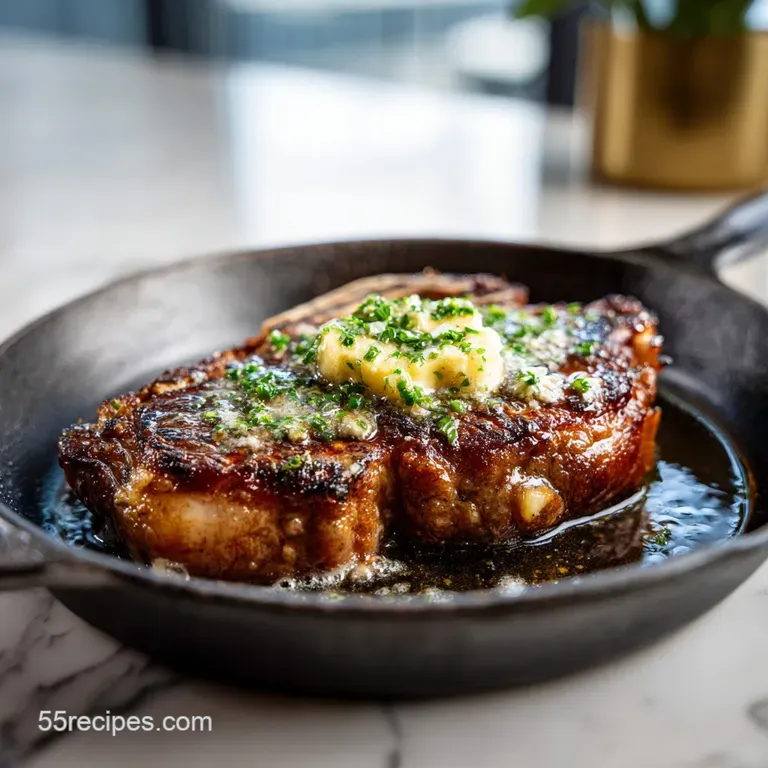
- Time: Active 10 minutes, Passive 20 minutes, Total 30 minutes
- Flavor/Texture Hook: Sizzling brown butter and a shatter crisp garlic crust
- Perfect for: A special date night or a family reward dinner
- A Simple T Bone Recipe on the Stove with Garlic and Butter
- Reasoning Behind This Flavorful Stovetop Steak Success
- The Chemistry of These Flavorful Components
- Essential Elements for Your Steak Dinner
- Tools Required for the Perfect Sear
- Simple Steps for Pan Searing Success
- Solving Common Stovetop Steak Problems
- Adjusting for Family Size or Portions
- Kitchen Truths Debunked
- Managing Your Leftovers and Scraps
- Ideal Pairings for Your T Bone
- Critical in Sodium
- Recipe FAQs
- 📝 Recipe Card
A Simple T Bone Recipe on the Stove with Garlic and Butter
There is something visceral about the sound of a heavy steak hitting a hot pan. That immediate, rhythmic sizzle tells you everything you need to know about the meal you're about to have. I used to think the only way to get a thick steak right was to finish it in the oven, but I was wrong.
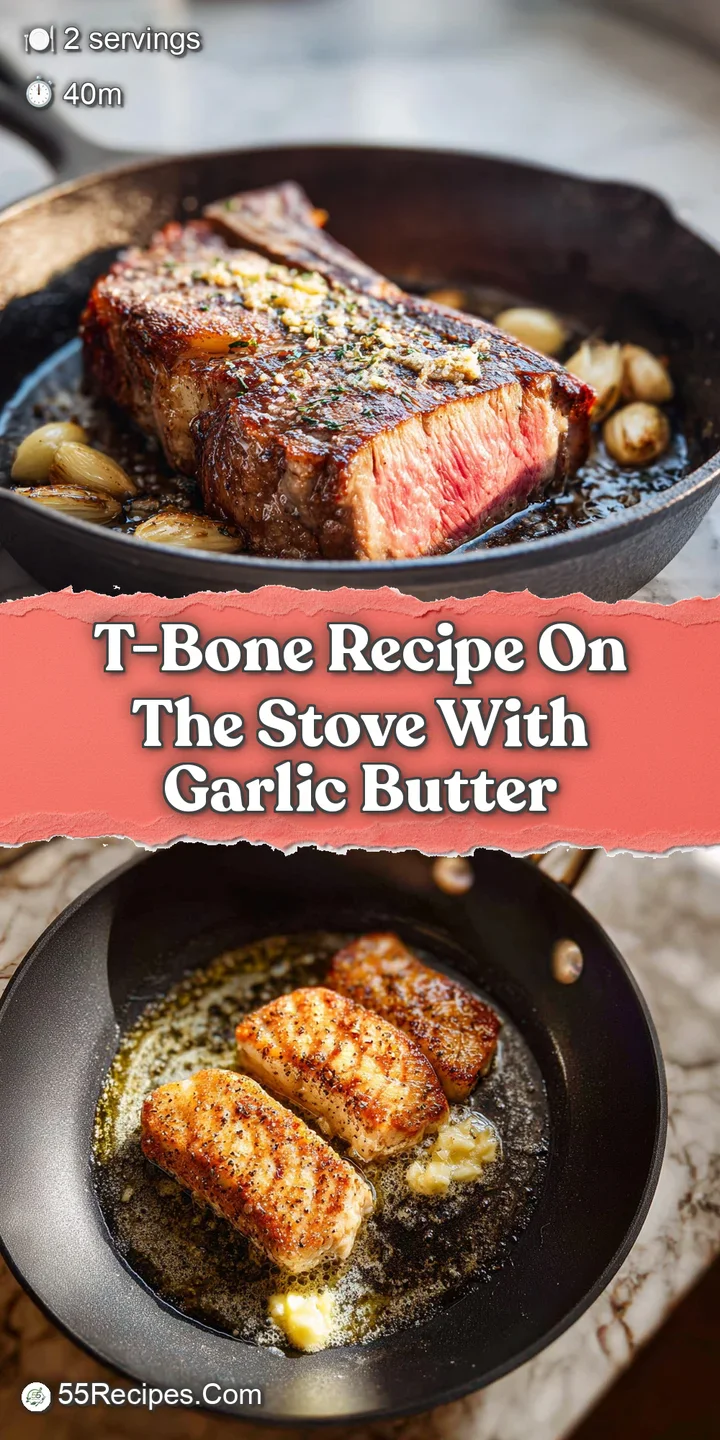
This T Bone recipe on the stove with garlic and butter delivers a truly unforgettable steakhouse experience at home.
The first time I tried this, I was terrified of the smoke and the potential for a raw center. But after years of trial and error in my own kitchen, I realized that the secret isn't a fancy grill or a high tech oven; it's all about managing the heat right there on your stovetop.
You get that beautiful, dark crust while the bone keeps the meat near it incredibly tender.
We are going for a meal that feels fancy but is actually incredibly affordable compared to eating out. It's the kind of dish that makes the whole house smell like roasted garlic and savory herbs. Right then, let's get into how we can make this happen in your own kitchen with just a few basic tools.
Reasoning Behind This Flavorful Stovetop Steak Success
- Thermal Conductivity: The large T shaped bone acts as a heat conductor, helping to cook the meat from the inside out while the exterior sears.
- Maillard Reaction: High surface heat transforms the proteins and sugars into a savory, brown crust that provides the signature deep flavor.
- Basting Emulsification: Spooning hot butter over the steak creates a velvety coating that carries the aromatics of garlic and herbs into every crevice.
- Fat Insulation: The avocado oil has a high smoke point, allowing for a violent sear without the oil breaking down or tasting bitter.
| Steak Thickness | Target Internal Temp | Rest Time | Visual Finished Cue |
|---|---|---|---|
| 1.5 inches | 130°F (Medium Rare) | 8 minutes | Deep brown, slightly yielding |
| 1.75 inches | 135°F (Medium Rare+) | 10 minutes | Firm but still some spring |
| 2 inches | 140°F (Medium) | 12 minutes | Very firm with mahogany crust |
It is vital to remember that the steak continues to cook after you take it out of the pan. This carryover cooking can raise the temperature by 5 or even 10 degrees, so always pull it off the heat just before it reaches your "perfect" number.
The Chemistry of These Flavorful Components
| Key Ingredient | Culinary Science Role | Pro Secret |
|---|---|---|
| Kosher Salt | Protein Denaturation | Salt 45 mins early to let moisture reabsorb |
| Avocado Oil | High Heat Stability | Use only enough to coat, not to deep fry |
| Unsalted Butter | Flavor Carrier | Add only at the end to prevent burning |
| Fresh Thyme | Volatile Oil Release | Bruise the sprigs before adding to release oils |
Essential Elements for Your Steak Dinner
For this recipe, we are keeping things focused on quality. You will need 1 Large T Bone Steak, which should be about 21 oz and roughly 1.5 to 2 inches thick. To season it properly, grab 2 tsp Kosher Salt and 1 tsp Coarsely Ground Black Pepper.
For the cooking fat, we use 1 tbsp Avocado oil because it handles the heat better than olive oil.
The finishing touches are where the magic happens. You'll need 3 tbsp Unsalted Butter, 4 Garlic Cloves that you've simply smashed with the side of your knife, and 3 Sprigs of Fresh Thyme or Rosemary. If you are looking for more ways to use these aromatics, you might love the technique used in my Sautéed Garlic Butter recipe.
| Original Ingredient | Substitute | Why It Works |
|---|---|---|
| T Bone Steak | Porterhouse | Same cut, just a larger fillet section |
| Avocado Oil | Grapeseed Oil | Both have high smoke points for searing |
| Fresh Thyme | Dried Thyme | Use 1/3 the amount. Note: Lacks the fresh floral punch |
| Kosher Salt | Sea Salt | Similar flake size for even coverage |
Tools Required for the Perfect Sear
You don't need a kitchen full of gadgets for this. A heavy cast iron skillet is the gold standard here because it holds heat like a champion. If you don't have one, a heavy bottomed stainless steel pan will work, but stay away from non stick as they can't handle the high heat required for a proper sear.
You'll also need a pair of sturdy tongs, a large spoon for basting, and most importantly, a digital meat thermometer.
Simple Steps for Pan Searing Success
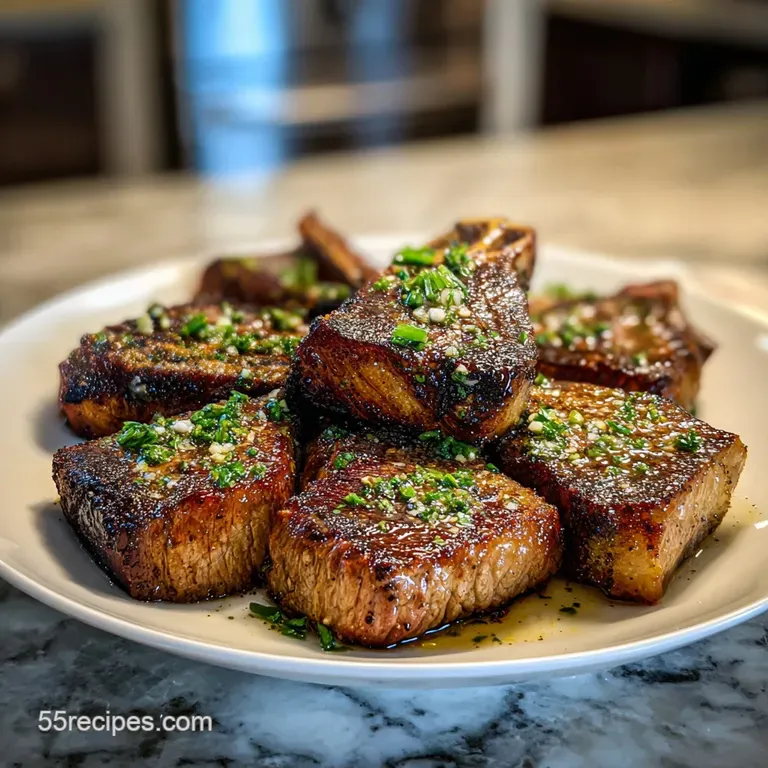
- Prep the meat. Remove the 21 oz T Bone from the fridge 30 minutes before cooking. Note: This ensures the steak cooks evenly and doesn't stay cold in the middle.
- Dry and season. Pat the steak completely dry with paper towels then rub with 2 tsp Kosher salt and 1 tsp black pepper. Until the surface feels tacky and matte.
- Heat the pan. Place your skillet over high heat and add 1 tbsp avocado oil. Wait until the oil is shimmering and just starting to smoke.
- Initial sear. Lay the steak into the pan, laying it away from you to avoid splashes. Cook for 4 minutes without moving it to build a crust.
- Flip the steak. Turn the meat over using tongs. Note: Avoid using a fork, which pierces the meat and lets juices escape.
- Add aromatics. Reduce heat to medium high and toss in 3 tbsp unsalted butter, 4 smashed garlic cloves, and 3 sprigs of herbs. Wait until the butter begins to foam and turn golden.
- Start the baste. Tilt the pan slightly so the butter pools with the garlic and herbs. Spoon the hot butter over the steak repeatedly for 3 minutes.
- Check the temp. Insert the thermometer into the thickest part, avoiding the bone. Pull at 130°F for medium rare.
- Rest the meat. Move the steak to a warm plate and pour the remaining pan butter over it. Rest for 10 minutes to allow juices to redistribute.
The basting technique is very similar to what I describe in my Brown Butter Sauce recipe, where the milk solids in the butter toast to create a nutty, savory profile.
Solving Common Stovetop Steak Problems
Why Your Steak Lacks a Crust
If your steak looks grey instead of brown, the pan wasn't hot enough or the meat was too wet. Moisture is the enemy of the sear. If there is water on the surface, it has to evaporate before the browning can start, which effectively steams the meat. Always use paper towels to get it as dry as possible.
Dealing with the "Grey Band"
The "grey band" is that overcooked layer of meat between the crust and the pink center. This usually happens if the heat is too high for too long. To fix this, flip the steak more often after the initial sear is established. This distributes the heat more gently through the meat.
| Problem | Root Cause | Solution |
|---|---|---|
| Burnt Garlic | Added too early | Add garlic only when you add the butter |
| Tough Meat | No resting period | Rest the steak for at least 8-10 minutes |
| Smoky Kitchen | Low smoke point oil | Use avocado or grapeseed oil, not butter for the start |
Common Mistakes Checklist
- ✓ Never cook a steak straight from the fridge; let it temper.
- ✓ Always pat the meat dry; even a little moisture ruins the crust.
- ✓ Don't skimp on the salt; a thick T Bone needs a lot of seasoning.
- ✓ Use a timer for the resting phase; it's just as important as the cooking.
- ✓ Ensure the exhaust fan is on high before the steak hits the pan.
Adjusting for Family Size or Portions
When scaling down for a smaller appetite, you can use this same method for a thick cut ribeye or even a New York Strip. Just keep in mind that thinner steaks will cook much faster, so start checking the temperature at the 5 minute mark.
If you are scaling up to feed a family, don't try to cram two T Bones into one pan. The temperature of the skillet will drop too fast, and you'll end up steaming the meat. Instead, cook them one at a time.
Keep the first steak on a wire rack over a baking sheet in a warm (175°F) oven while the second one cooks.
Kitchen Truths Debunked
One common myth is that you should only flip a steak once. In reality, flipping more frequently after the initial crust forms helps the meat cook more evenly and reduces the grey band. Another myth is that the bone doesn't add flavor.
While the bone doesn't "leak" flavor into the meat during a short cook, it does insulate the meat around it, keeping it juicier and more tender than a boneless cut.
Managing Your Leftovers and Scraps
Storage: You can keep leftover T Bone in an airtight container in the fridge for up to 3 days. I don't recommend freezing cooked steak as the texture becomes spongy upon thawing. To reheat, do it gently in a pan with a splash of beef broth or more butter to keep it from drying out.
Zero Waste: Don't throw away that T shaped bone! Even if you've eaten all the meat, the bone is packed with marrow and collagen. Toss it into a pot with some water, onion scraps, and carrots to make a quick, rich beef stock.
Any leftover steak fat in the pan can be strained and used to roast potatoes the next day it’s liquid gold!
Ideal Pairings for Your T Bone
This steak is heavy and rich, so it needs something to cut through the fat. A crisp green salad with a vinaigrette or some steamed asparagus works beautifully. If you're going for the full steakhouse vibe, a baked potato or creamy mashed potatoes are the way to go.
For something a bit more unique, this steak pairs incredibly well with the light, buttery flavors found in a Dover Sole Recipe if you're doing a "surf and turf" night. The lemon butter from that dish complements the garlic butter on the steak perfectly. For a drink, a bold red wine like a Malbec or a simple sparkling water with lime provides a nice contrast to the savory herbs.
Critical in Sodium
1180 mg mg of sodium per serving (51% of daily value)
The American Heart Association recommends limiting sodium intake to about 2,300mg per day.
Tips to Reduce Sodium
-
Reduce Salt by Half-25%
Reducing the Kosher salt from 2 teaspoons to 1 teaspoon will significantly lower the sodium content. This change could reduce sodium by approximately 25% without drastically altering the flavor.
-
Skip the Salt Entirely-20%
Eliminating the added Kosher salt will result in the most significant sodium reduction. Rely on the natural flavors of the steak and other ingredients. This will cut out a significant amount of sodium from the recipe.
-
Limit Butter-5%
While unsalted butter is used, reducing the amount from 3 tablespoons to 1 tablespoon will marginally decrease the overall sodium due to the inherent sodium found in butter. This will also help reduce the overall fat content. Reduce by approximately 5%.
-
Increase Garlic & Herbs
Enhance the flavor with additional garlic, thyme, or rosemary. Using more herbs and spices will give a stronger flavor and help reduce the need for salt. This adjustment makes 0% impact on sodium levels but boosts flavor!
Recipe FAQs
Can I cook a T-bone steak on the stove?
Yes, absolutely. The high, focused heat of a cast iron skillet on the stovetop creates a superior sear and crust ideal for thick cuts like the T-Bone.
How to cook steak with butter and garlic?
Sear the steak first in high smoke point oil until a crust forms on both sides. Reduce the heat, add the butter, smashed garlic, and herbs, then tilt the pan and spoon the foaming butter mixture over the steak repeatedly (basting).
What is the best cooking method for T-bone steak?
The pan-sear and baste method is optimal for stove cooking. This technique maximizes the Maillard reaction on the exterior while the internal basting ensures even moisture retention.
What is the 3 3 2 2 rule for steak?
No, there isn't a universal 3 3 2 2 rule for steak cooking times. Specific timing depends heavily on the steak’s thickness and initial temperature; use a meat thermometer for precision.
Why is my garlic burning before my steak is done?
False. Garlic burns easily because it is added too early during the high heat searing phase. Only add the garlic and butter after you have established a deep brown crust on both sides of the steak to prevent scorching.
Do I need to rest a T-bone steak after cooking?
Yes, resting for 8 to 12 minutes is crucial. This allows the tightened muscle fibers to relax and redistribute the internal juices throughout the meat, preventing them from running out when sliced.
Can I use olive oil instead of avocado oil for the initial sear?
No, standard olive oil has a low smoke point and will burn under the high heat needed for a great crust. Use avocado or grapeseed oil for the sear; you can introduce butter later when the heat is reduced.
Stove T Bone Steak With Butter 2
Ingredients:
Instructions:
Nutrition Facts:
| Calories | 758 kcal |
|---|---|
| Protein | 49.5 g |
| Fat | 61.2 g |
| Carbs | 2.4 g |
| Fiber | 0.6 g |
| Sugar | 0.2 g |
| Sodium | 1180 mg |
