The Ultimate Creamy Threecheese Cauliflower Gratin
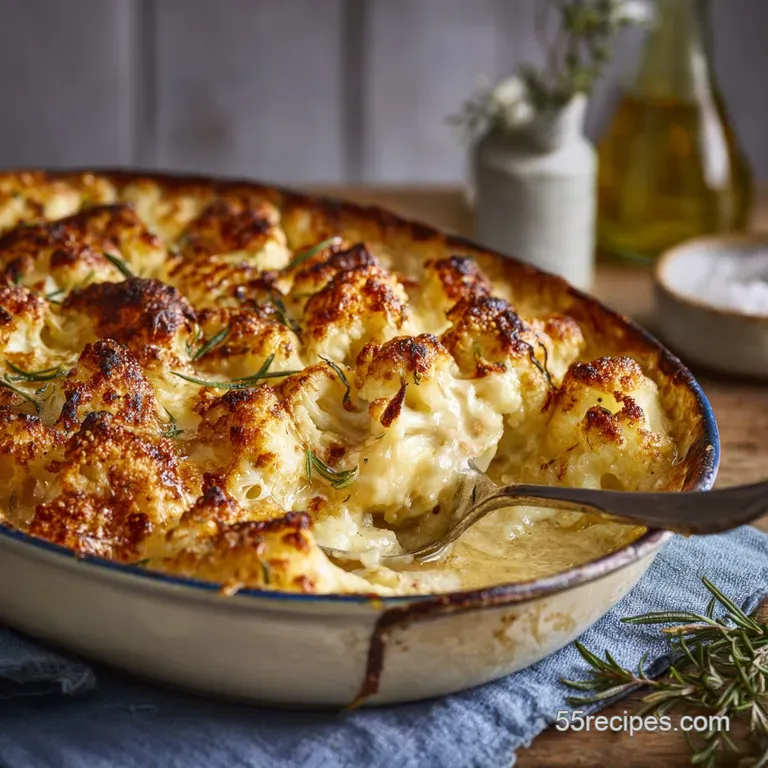
- Elevating the Classic: Why This Cauliflower Gratin Reigns Supreme
- Sourcing Your Components: Essential Ingredients for the Perfect Gratin
- The Professional Kitchen Setup: Tools Required for Gratin Mastery
- Building Blocks: Prepping the Cauliflower and Crafting the Roux Base
- Assembly and The Golden Finish: Baking Your Ultimate Cauliflower Gratin
- Making This Gratin Work for You: Tips, Storage, and Adaptations
- Recipe FAQs
- 📝 Recipe Card
Elevating the Classic: Why This Cauliflower Gratin Reigns Supreme
This is not simply a side dish; this is the definitive, ultimate cauliflower gratin recipe, meticulously designed to bypass all common pitfalls like watery sauce or mushy vegetables. We integrate classic French technique with modern flavour profiling to create a dish worthy of being the star of any table.
Achieving a truly creamy cauliflower gratin requires careful attention to ingredient temperatures and cooking precision.
The Culinary Difference: Perfecting the Cauliflower Texture
Soggy cauliflower is the enemy of a great gratin, which is why we employ a rapid blanching method to maintain structure. The florets are boiled in heavily salted water for precisely three to four minutes, ensuring they remain perfectly al dente.
This crucial step softens the cauliflower just enough for tender baking while preventing excess moisture from weeping into your beautiful sauce later on.
The brief cooking time ensures the final texture is soft yet structurally sound after thirty minutes in the oven. Immediate draining and cooling also halts the cooking process, guaranteeing the freshest possible flavour.
Understanding Mornay: The Secret to Silky, Stable Sauce
The rich heart of this cheesy cauliflower gratin is the luxurious Mornay, which is simply a Béchamel sauce enriched with cheese. We start with a properly cooked roux, allowing the flour and butter mixture to become slightly nutty before adding the milk.
The inclusion of Dijon mustard and freshly grated nutmeg are essential flavour agents that deepen the savoury profile beyond simple cheese.
This rigorous method ensures a silky, stable sauce that clings beautifully to every floret, never breaking or separating during the baking process. We incorporate both Sharp Cheddar and nutty Gruyère to achieve complexity and exceptional meltability.
More Than a Side: Making the Dish a Meal
While traditionally served as the quintessential Sunday Roast side dish, this recipe is hearty enough to command attention as a main course. The combination of dense cauliflower and rich, cheesy sauce provides substantial satisfaction even for committed carnivores.
It offers four generous servings as a main meal, or six opulent servings when supporting a full roast dinner.
The rich decadence and golden, crunchy crust elevate this simple cauliflower side dish recipe far above everyday fare. Serving this gratin proves that comfort food can also achieve true culinary sophistication.
Sourcing Your Components: Essential Ingredients for the Perfect Gratin
Choosing quality ingredients is non-negotiable when crafting a truly spectacular dish, especially one with few components like cauliflower gratin. Start with the freshest, largest head of cauliflower you can find, ensuring the florets are tight and creamy white.
For the sauce, whole milk provides the necessary fat content for maximum richness and body.
The quality of the butter and flour for the roux is equally important to building a stable base. Finally, source authentic Gruyère cheese; its distinct, pungent nuttiness provides a complex flavour layer that domestic Swiss cheeses simply cannot replicate.
Using these high-quality elements ensures the final ultimate cauliflower gratin will have unparalleled flavour.
The Professional Kitchen Setup: Tools Required for Gratin Mastery
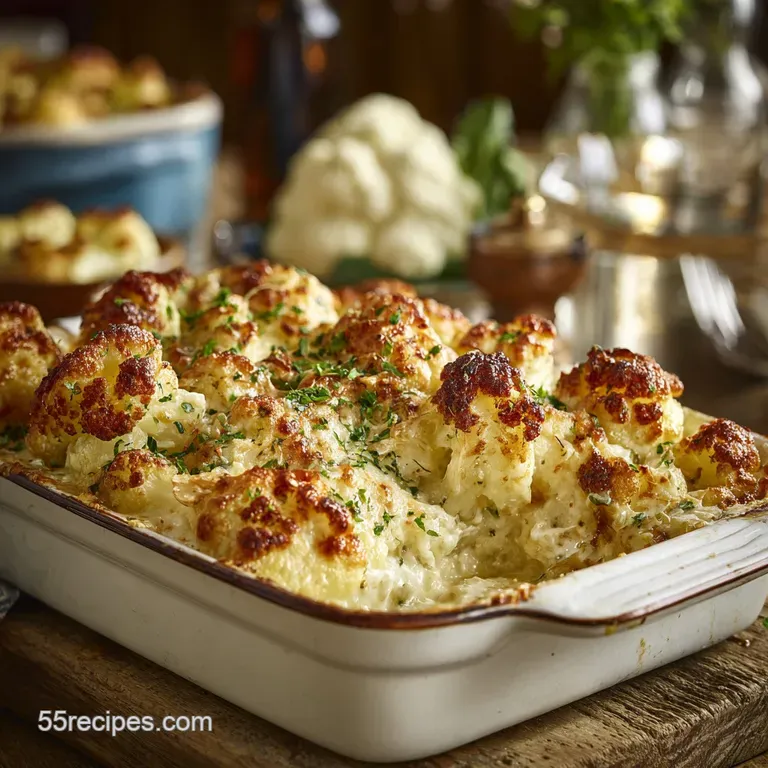
Executing this creamy cauliflower gratin recipe requires surprisingly few specialized tools, but having the right ones ensures success. A sturdy, wire whisk is essential for smoothing the roux and preventing lumps during the crucial milk incorporation stage.
You will also need two appropriately sized saucepans: one large for blanching and one medium for crafting the Mornay.
The most important item is the baking dish itself, which needs to be large enough to allow maximum surface area for the topping to brown. We recommend a 9x13 inch or equivalent 3-quart vessel to deliver maximum golden coverage.
Preparation is quick, requiring only about 20 minutes of active work before assembly.
Selecting the Tri-Cheese Blend: Sharpness vs. Meltability
The secret to our cheesy cauliflower gratin lies in balancing the deep sharpness of mature Cheddar with the exceptional melting qualities of Gruyère. We reserve 100 grams of grated Sharp Cheddar, using a portion for the sauce base and reserving the rest for the crunchy topping.
Gruyère contributes a profound, earthy flavour that cuts through the richness of the butter and milk.
This specific blend ensures the sauce is both aggressively flavourful and beautifully velvety without becoming oily during the baking process. Using this thoughtful cheese pairing transforms this from a good recipe into the ultimate cauliflower gratin.
Beyond Butter: Choosing the Right Fat for Your Roux
Unsalted butter is the traditional and preferred fat source for building a classic French roux, offering a pure flavour base. The initial cooking of the butter and flour, known as the roux , must develop a slightly nutty aroma without browning significantly.
This precise cooking of the 50 grams of butter is what allows the flour to absorb the fat fully before the milk is added.
A successful roux is fundamental to the stability of the final Mornay sauce, guaranteeing it remains thick and lump free. For dietary reasons, high-quality, flavourless plant based butters can substitute, but standard dairy butter delivers the richest texture.
Achieving Crunch: The Panko and Parmesan Crust
A perfectly crunchy topping is non-negotiable for any excellent gratin, providing necessary textural contrast to the soft interior. We utilize Panko breadcrumbs because they are lighter and absorb less fat than standard breadcrumbs, delivering superior crispness.
Tossing the Panko with a small amount of melted butter or olive oil is essential before baking, guaranteeing they toast instead of simply drying out.
The remaining sharp Cheddar cheese is mixed into the Panko, melting into the crust as it bakes to form a golden, shatteringly crisp layer. This specific topping elevates the dish, making this cauliflower gratin with gruyere truly stand out.
Dish Dimensions: Sizing Your Vessel for Maximum Golden Coverage
The depth and width of your baking dish dramatically impact the ratio of creamy interior to crunchy topping. A shallower 9x13 inch dish ensures that more of the gratin’s surface is exposed to the intense oven heat.
This maximum exposure is key to achieving a uniform golden brown, bubbling crust across the entire top layer.
If the dish is too deep, the sauce at the bottom may remain too liquid, and the baking time will increase significantly. Using a wider vessel ensures an even bake and the superior textural variation we desire in this easy cauliflower gratin.
Related Recipes Worth Trying
- The Unbeatable Braised Fennel Gratin Simple Fennel Recipes — Tired of boring fennel This cheesy gratin transforms bulbs into a comforting bake Try these simple fennel recipes today for a sophisticated side Covers...
- Cauliflower Mac & Cheese: Secretly Healthy Comfort Food! — Craving creamy mac & cheese? This Cauliflower Mac and Cheese sneaks in veggies for a healthy twist! Kid-friendly and easy to make. Get the recipe now!
Building Blocks: Prepping the Cauliflower and Crafting the Roux Base
Successful execution of this cauliflower gratin recipe relies on parallel cooking, mastering both the vegetable preparation and the sauce base simultaneously. First, ensure your large head of cauliflower is uniformly chopped into medium florets, about 1.5 inches each, to promote even cooking.
While the cauliflower blanches, you should begin the precise process of crafting the roux, the foundation of your creamy sauce.
The Mornay sauce preparation begins by whisking 50 grams of flour into 50 grams of melted butter over medium heat until a smooth paste forms. This mixture must cook for one to two minutes until it loses its raw, floury smell and achieves a blonde colour.
This careful attention to the roux ensures maximum flavour extraction and a perfectly thickened final sauce.
Assembly and The Golden Finish: Baking Your Ultimate Cauliflower Gratin
Once the individual components are prepared, the assembly process is swift and requires strategic layering to ensure success. The prepared, blanched florets are arranged first in the baking dish, creating a level foundation for the sauce.
Pouring the warm, velvety Mornay sauce over the cauliflower immediately allows the sauce to seep down and fully coat every crevice.
The final step before baking involves scattering the Panko and Cheddar topping evenly across the surface, ensuring edge-to-edge coverage. The dish then bakes in a preheated 200° C ( 400° F) oven until it achieves that signature golden, bubbling finish.
Technique Deep Dive: Pre-Cooking the Florets for Tenderness
Pre-cooking the cauliflower is the most critical technique for preventing a watery gratin. We boil the florets for just three to four minutes, achieving the precise al dente texture that yields tender results without turning mushy.
Overcooking at this stage leads to mushiness, while skipping it results in crunchy, underdone cauliflower.
Crucially, the blanched cauliflower must be spread out immediately to cool and release steam, eliminating residual moisture. Any water trapped on the florets will leak out during baking, diluting and weakening your luxurious creamy cauliflower gratin sauce.
Troubleshooting the Béchamel: Preventing Lumps and Scorching
Lumps in Béchamel are easily avoided by following the rule of temperature contrast: always combine cold milk with the hot roux, or vice versa. After whisking the flour into the melted butter, take the pan off the heat before slowly pouring in the cold whole milk while whisking vigorously.
This rapid emulsification prevents the formation of any starchy clumps.
Once the milk is incorporated and smooth, return the pan to medium heat and whisk constantly, ensuring the bottom doesn't scorch while the sauce thickens. This constant agitation over seven minutes ensures the sauce is glossy and thick enough to properly coat the back of a spoon.
Layering Strategy: Ensuring Every Piece is Coated
A successful gratin means every piece of cauliflower is completely submerged in the cheesy sauce, not just dusted on top. After placing the dried florets into the dish, pour the warm Mornay sauce slowly from the centre outwards.
Gently shake the dish slightly to encourage the thick sauce to settle into the gaps between the pieces.
This comprehensive coating is necessary because the sauce protects the cauliflower from drying out during the intense baking period. Achieving this even saturation guarantees a decadent bite with every scoop of your cheesy cauliflower gratin.
Achieving That Signature Gratin Bubble and Browning
The high oven temperature of 200° C ( 400° F) is necessary for two vital purposes: quickly heating the interior and achieving a dramatic crust. The sauce must come to a rolling simmer within the dish, resulting in the desired bubbly appearance around the edges.
This vigorous simmering ensures the cheese is fully melted and the flour is completely cooked out.
The final thirty five minutes of baking allows the Panko and Cheddar topping to transform into a deep golden, crisp shield. Allowing the baked dish to rest for ten minutes after removal is equally important, enabling the sauce to firm up slightly before serving.
Making This Gratin Work for You: Tips, Storage, and Adaptations
This ultimate cauliflower gratin is versatile and surprisingly manageable, making it an excellent choice for entertaining or meal preparation. Understanding how to adapt the timing and ingredients ensures this cauliflower side dish recipe fits seamlessly into any dinner plan.
make-ahead Mastery: Preparing the Gratin 24 Hours in Advance
This entire easy cauliflower gratin can be fully assembled up to the topping stage and refrigerated a full day ahead of time. Prepare the blanched cauliflower and pour the Mornay sauce over it, then cover the dish tightly and store it cold.
When you are ready to bake, add the Panko and cheese topping immediately before placing it in the oven.
You may need to add an extra five to ten minutes to the baking time since the gratin is starting from a chilled state. Allowing it to warm slightly on the counter while the oven preheats helps ensure a smooth, even bake.
Customizing Your Comfort: Vegetarian and Meat Add-in Variations
While exquisite in its classic form, this cauliflower gratin with gruyere serves as a fantastic foundation for experimentation. For meat lovers, incorporating crispy, smoked bacon lardons directly into the cauliflower layer adds a salty depth of flavour.
Vegetarians can boost the complexity by adding blanched celeriac or roasted garlic cloves to the mix.
Substituting half the cauliflower with pre-cooked broccoli florets creates a colourful and equally delicious Broccoli and Cauliflower Gratin. Always ensure any added vegetables are blanched and dried to maintain the integrity of the creamy sauce.
Shelf Life and Reheating Best Practices
Leftovers of this creamy cauliflower gratin can be stored in an airtight container in the refrigerator for up to three days. The sauce will thicken considerably upon chilling, so gentle reheating is necessary to restore its texture.
The best method for reheating involves covering the dish loosely with foil and warming it in a 160° C ( 325° F) oven.
Avoid microwaving large portions, as this tends to dry out the edges and makes the sauce rubbery. Reheating smaller individual servings in the microwave is acceptable, but be prepared for a slightly less crisp topping.
Calorie Count and Dietary Notes (The Reality of Cheesy Sides)
As this cauliflower side dish recipe is built upon a foundation of butter, whole milk, and generous cheese, it is decidedly a decadent option. Each of the six side servings contains an estimated 380 to 420 calories, driven primarily by the dairy and fat content.
It is important to view this dish as a treat or an integral component of a hearty meal.
If attempting to reduce the calorie count, substitutions like skim milk are not recommended as they compromise the velvety texture of the Mornay sauce. Focus instead on enjoying smaller portions when serving alongside a heavy Sunday Roast side dish.
Recipe FAQs
Crikey, my sauce has gone all lumpy! How do I fix a split or grainy Béchamel?
If you've got unfortunate lumps, remove the pan from the heat and vigorously whisk in a tablespoon of cold milk or water to shock it back into submission; if the sauce has truly split, try whisking in a small, cold knob of butter to re-emulsify it.
Is it possible to prep this Cauliflower Gratin ahead of time, say, the night before Sunday lunch?
Absolutely, you can assemble the whole dish (coating the cauliflower in the Mornay sauce) and chill it for up to 24 hours; just add the crispy breadcrumb topping immediately before it goes into the oven, allowing an extra 5 10 minutes baking time.
I don't want a soggy bottom! Why does my gratin always turn out watery?
This is usually down to residual water on the florets; ensure your blanched cauliflower is properly drained and spread out to steam dry completely before you pour over the luxurious sauce.
What are the best cheese choices for a proper creamy Cauliflower Gratin?
A strong, mature Cheddar is essential for that lovely tangy flavour, but mixing it with Gruyère or Emmental delivers that gorgeous, silky melt and nutty complexity, giving it real oomph.
Can I freeze the leftovers, and how long does the gratin keep in the fridge?
Leftovers keep brilliantly in an airtight container in the fridge for 3 4 days; while you can freeze portions, the texture of the sauce may become slightly grainy upon reheating, though it will still be perfectly edible.
Ultimate Creamy Cauliflower Gratin
Ingredients:
Instructions:
Nutrition Facts:
| Calories | 2195 kcal |
|---|---|
| Protein | 20.3 g |
| Fat | 78.0 g |
| Carbs | 49.8 g |
| Fiber | 5.7 g |
| Sodium | 7322 mg |
