Boulettes Grecques Et Orzo Citronné Avec Crème De Feta

- Time: Active 20 minutes, Passive 25 minutes, Total 45 minutes
- Flavor/Texture Hook: Zesty lemon meets velvety whipped feta and juicy herbed beef
- Perfect for: Busy weeknights when you want something that feels fancy but uses basic pantry staples
- Classic Boulettes Grecques et Orzo Citronné avec Crème de Feta à l'Aneth
- Why This Greek Dish Works
- Ingredient Deep Dive Analysis
- Gathering Your Simple Ingredients
- Kitchen Tools You Need
- Cooking the Whole Meal
- Fixing Common Cooking Errors
- Adjusting Your Recipe Portion Sizes
- Debunking Common Mediterranean Cooking Myths
- Smart Storage and Sustainability Tips
- Serving and Pairing Ideas
- Very High in Sodium
- Recipe FAQs
- 📝 Recipe Card
Classic Boulettes Grecques et Orzo Citronné avec Crème de Feta à l'Aneth
Whenever I smell dried oregano and lemon zest hitting a hot pan, I'm immediately transported back to a tiny family run taverna in Plaka. There’s something about the simplicity of Greek cooking taking humble ingredients like ground beef and tiny pasta shapes and turning them into a feast.
Discover the perfect way to make our standout Boulettes Grecques et Orzo Citronné with Crème de Feta à l'Aneth.
This dish isn't just about feeding people; it's about that specific Mediterranean balance of warmth and freshness. We're using lean beef but keeping it incredibly moist with a little Greek yogurt trick I learned from a friend's grandmother.
It's the kind of meal where you’ll find yourself scraping the last bits of the dill flecked feta cream off the plate with a piece of crusty bread.
The beauty of this recipe lies in the contrast. You have the savory, earthy notes of cumin and garlic in the meatballs playing against the bright, citrusy punch of the orzo. Then, the whole thing is tied together by a whipped feta cream that is so light it almost feels like a savory cloud.
Trust me, once you try this method of toasting the orzo, you'll never go back to just boiling it in water.
Why This Greek Dish Works
- Yogurt Tenderization: Adding Greek yogurt to the meatball mixture introduces lactic acid, which gently breaks down protein fibers for a softer, juicier bite.
- Starch Toasting: Searing the dry orzo in olive oil before adding liquid creates a protective coating that prevents the pasta from becoming a gummy mess.
- Thermal Emulsion: Using ice cold water in the feta cream helps stabilize the fats, resulting in a fluffier, more aerated texture that won't separate.
- Aromatic Layering: Adding lemon juice during the simmer and zest at the very end ensures you get both the tangy acidity and the bright floral oils of the fruit.
| Method | Time | Texture | Best For |
|---|---|---|---|
| Oven Roast | 20 minutes | Evenly browned, very juicy | Hands off cooking and easy cleanup |
| Air Fryer | 12 minutes | Extra crispy exterior, firm | Maximum crunch in half the time |
| Pan Sear | 15 minutes | Deeply caramelized crust | Richest flavor but requires more oil |
The choice of cooking method really depends on your mood, but I find the oven roasting method provided in the official steps gives the most consistent results without making a mess on your stovetop. It allows the meatballs to cook through perfectly while you focus on getting the orzo to that ideal al dente stage. If you're looking for other ways to use this versatile pasta, you might love my Mediterranean Orzo Salad which uses similar bright notes.
Ingredient Deep Dive Analysis
| Ingredient | Science Role | Pro Secret |
|---|---|---|
| Lean Ground Beef | Structural protein base | Use 90/10 ratio to prevent the meatballs from swimming in grease while roasting. |
| Panko Breadcrumbs | Moisture reservoir | These large flakes create "air pockets" that trap juices better than fine crumbs. |
| Orzo Pasta | Starch foundation | Always toast until it smells like popcorn to unlock a nutty flavor profile. |
| Feta Cheese | Tangy fat source | Buy the block in brine and crumble it yourself for a creamier, less chalky whip. |
Wait, why does the yogurt matter so much? In traditional Mediterranean cooking, dairy is often used as a marinade or binder because it doesn't just add moisture it changes the way the meat feels.
The calcium in the yogurt interacts with the meat proteins, preventing them from tightening up too much during the high heat of the oven. This is how we get that "melt in-your mouth" texture even with leaner cuts of beef.
Gathering Your Simple Ingredients
For the meatballs, you'll need 500g lean ground beef (90/10), which provides the right balance of protein and fat. We’ll bind it with 60ml plain Greek yogurt (2%), 50g Panko breadcrumbs, and 1 large egg.
The aromatics are key here: 3 cloves garlic (minced), 15ml dried oregano, 5g ground cumin, and 10g fresh parsley.
The base of the meal requires 250g orzo pasta and 500ml low sodium chicken broth. You'll also need 1 organic lemon, 1 small shallot, and 15ml extra virgin olive oil.
For that signature topping, grab 150g light feta cheese, 100g 0% Greek yogurt, 15ml fresh dill, and 15ml ice cold water.
| Original Ingredient | Substitute | Why It Works |
|---|---|---|
| Lean Ground Beef | Ground Lamb | More traditional flavor; adds a richer, gamier fat profile. |
| Panko Breadcrumbs | Rolled Oats | Great gluten-free binder; provides a slightly chewier, hearty texture. |
| Chicken Broth | Vegetable Broth | Lighter flavor; keeps the focus entirely on the lemon and herbs. |
| Shallot | Red Onion | Sharper bite; works well if you want a more aggressive onion flavor. |
If you find yourself with extra dill and lemon after this, it's the perfect excuse to whip up a Lemon Orzo Chicken Soup later in the week. The flavor profiles are so similar that you’ll have a head start on your meal prep without even trying.
Kitchen Tools You Need
You really don't need a professional kitchen to pull this off. A large mixing bowl is essential for getting the meatball mix just right without overworking it. You'll also need a standard baking sheet lined with parchment paper to ensure nothing sticks and the cleanup is a breeze.
For the orzo, a large skillet with a tight fitting lid is your best friend. The lid is crucial because it traps the steam, which is what actually cooks the pasta once the broth is added.
Finally, a high speed blender or food processor is the only way to get that feta cream truly smooth. If you don't have one, you can mash it by hand, but it will be "rustic" (chunky) rather than "velvety."
Cooking the Whole Meal
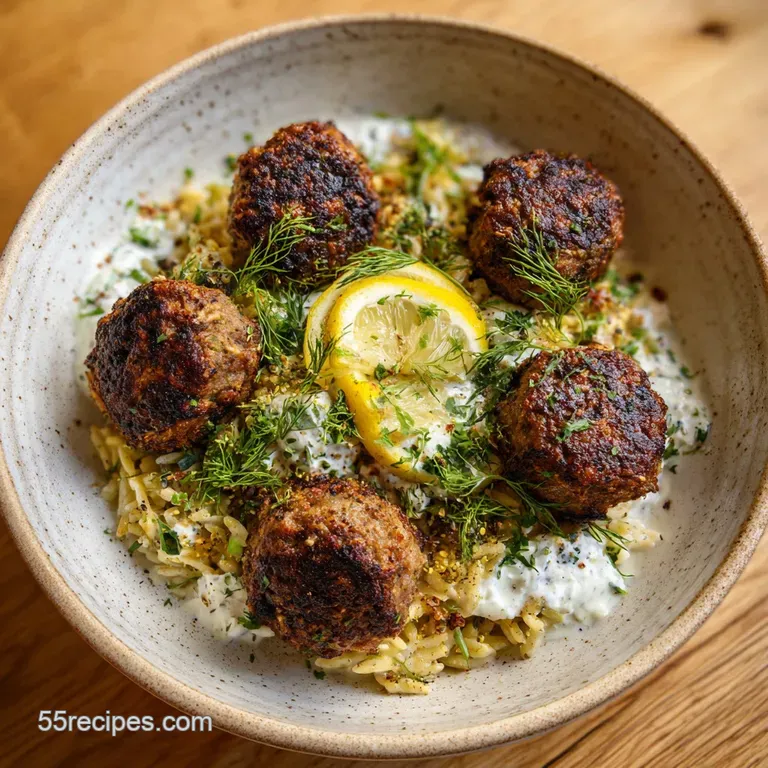
- Preheat oven to 200°C (400°F) and line a baking sheet with parchment paper. Note: This high heat ensures a good exterior sear without overcooking the inside.
- In a large bowl, combine the 60ml Greek yogurt, egg, and panko breadcrumbs. Allow to sit for 2 minutes until the crumbs are fully hydrated and soft.
- Add the ground beef, minced garlic, oregano, cumin, and parsley to the yogurt mixture. Gently mix by hand until just combined. Note: Overmixing leads to tough, rubbery meatballs.
- Form the mixture into 12-14 golf ball sized meatballs. Arrange on the baking sheet and roast for 18–20 minutes until the exterior is browned and sizzling.
- While meatballs roast, heat olive oil in a skillet over medium heat. Add orzo and toast for 2 minutes until it smells nutty and looks golden.
- Add the diced shallot and cook for 1 minute. Pour in the broth and half of the lemon juice. Bring to a simmer, cover, and cook for 8-10 minutes until the liquid is gone and orzo is tender.
- Prepare the feta cream by placing the crumbled light feta, 100g 0% Greek yogurt, dill, remaining lemon juice, and ice cold water in a high speed blender. Process until light, fluffy, and silky.
- Stir lemon zest into the finished orzo. Serve meatballs over the orzo and top with a dollop of the whipped dill feta cream.
Chef Tip: When forming the meatballs, wet your hands slightly with cold water. This prevents the meat from sticking to your palms and helps you get a perfectly smooth surface, which browns more evenly in the oven.
Fixing Common Cooking Errors
Why Your Orzo Is Sticky
If your orzo turned into a single solid clump, you likely skipped the toasting step or used too much liquid. Toasting the pasta creates a Maillard reaction on the surface of the grain, which hardens the outer starch layer. This means when the water hits it, the starch doesn't immediately dissolve into a sticky paste.
Also, make sure you aren't stirring it constantly while it simmers let the steam do the work.
Why Your Meatballs Are Dry
Dry meatballs are usually the result of two things: lean meat without enough binder, or overcooking. Since we are using 90/10 beef, that Greek yogurt binder is non negotiable. It provides the fat mimicking moisture needed. If you find they are still dry, check your oven calibration.
An oven that runs too hot will evaporate the internal juices before the outside is even brown.
| Problem | Root Cause | Solution |
|---|---|---|
| Gritty Feta Cream | Feta was too cold or dry | Add 1 tsp extra cold water and blend for another 30 seconds. |
| Bland Orzo | Not enough salt in broth | Taste the liquid before covering; it should taste like a seasoned soup. |
| Meatballs Falling Apart | Panko wasn't hydrated | Ensure the yogurt/panko mix sits for the full 2 mins before adding meat. |
Common Mistakes Checklist
- ✓ Never skip the 2 minute "soak" for the panko and yogurt; it's the secret to tenderness.
- ✓ Pat the shallots dry before adding to the oil to prevent them from steaming instead of sautéing.
- ✓ Use a thermometer to hit exactly 71°C (160°F) for the beef to avoid the "grey and dry" zone.
- ✓ Don't peek! Keeping the lid on the skillet is vital for even pasta hydration.
- ✓ Use fresh dill only; dried dill in the feta cream will taste dusty and lacks the "pop."
Adjusting Your Recipe Portion Sizes
If you are cooking for a crowd, doubling this recipe is fairly straightforward, but you need to watch your pan space. When doubling the meatballs, use two separate baking sheets. If you crowd them onto one, they will steam each other and turn grey instead of browning.
For the orzo, you'll need a much wider pot (like a Dutch oven) to ensure the heat distributes evenly through the larger volume of liquid.
For a smaller household, you can easily halve the recipe. When halving the egg, just beat it in a small bowl first and then measure out about 2 tablespoons. Using a whole egg for a half batch of meat might make the mixture too wet to form into balls.
The feta cream stores surprisingly well, so I usually make the full amount even if I'm halving the rest it's incredible on toast the next morning!
Debunking Common Mediterranean Cooking Myths
One big myth is that you must sear meatballs in a pan to get flavor. While pan searing is great, roasting at a high temperature (200°C) provides a remarkably similar "crust" through the Maillard reaction without the constant flipping and oil splatters.
It’s a cleaner, more efficient way to get that savory exterior while keeping the center tender.
Another misconception is that orzo should be cooked like risotto, with constant stirring and adding liquid in stages. While you can do that, the "pilaf method" we use here (toasting then simmering covered) is much more reliable for home cooks.
It ensures the grains stay separate and distinct, which is exactly what you want for this specific texture profile.
Smart Storage and Sustainability Tips
These meatballs and orzo will stay fresh in an airtight container in the fridge for up to 3 days. I actually think the flavors meld and improve after a night in the refrigerator. However, store the feta cream in a separate small jar.
When you're ready to eat, reheat the meatballs and orzo together in the microwave with a splash of water to loosen the pasta, then top with the cold cream.
For zero waste cooking, don't toss those parsley and dill stems! Finely chop the tender upper stems and throw them right into the orzo while it simmers for extra flavor. The lemon rinds can be tossed into a jar of white vinegar to make a natural kitchen cleaner.
If you have leftover feta cream, it makes a killer sandwich spread or a dip for raw cucumbers and carrots.
Serving and Pairing Ideas
If you want to turn this into a full Mediterranean spread, a simple cucumber and tomato salad with plenty of red wine vinegar is the perfect side. The acidity of the salad cuts through the richness of the beef and the creaminess of the feta.
You could also serve it with some charred pita bread to scoop up every last drop of that whipped feta.
- If you want a crunchier finish, top the dish with toasted pine nuts or crushed pistachios.
- If you want more greens, stir a handful of fresh baby spinach into the orzo during the last 2 minutes of cooking.
- If you want a spicy kick, add a pinch of red chili flakes to the meatball mixture before rolling.
This meal is all about comfort that doesn't leave you feeling heavy. It’s bright, it’s balanced, and it’s a total crowd pleaser. Whether you're making it for a weeknight family dinner or a casual get together with friends, it always feels like a special occasion. Happy cooking!

Very High in Sodium
920 mg of sodium per serving (40% of daily value)
The American Heart Association recommends limiting sodium intake to less than 2,300mg per day.
Tips to Reduce Sodium
-
Swap Chicken Broth-30%
Replace the 500ml of low-sodium chicken broth with no-salt added chicken broth or vegetable broth. This is the most significant source of sodium in your recipe.
-
Reduce Feta Cheese-15%
Lower the amount of light feta cheese from 150g to 75g. Feta is a concentrated source of sodium, and halving it will make a notable difference.
-
Amplify Aromatics and Herbs
Increase the fresh herbs like parsley and dill, and add more garlic and shallots. Utilize lemon zest and juice generously to boost flavor without salt.
-
Rinse Panko Breadcrumbs-5%
While Panko is generally lower in sodium, rinsing it briefly under cold water before using can remove some surface salt. Be sure to squeeze out excess water.
Recipe FAQs
Is it true I must brown the meatballs in a skillet before putting them in the oven?
No, this is a common misconception. You can achieve a beautiful crust by simply roasting them at 200°C (400°F) for 18 20 minutes on a parchment lined sheet.
How to ensure the meatballs remain juicy?
Allow the panko to hydrate in the Greek yogurt and egg mixture for 2 minutes before adding the meat. This ensures moisture is locked into the meatballs, and remember to mix gently to keep the texture tender.
Can I cook the orzo by boiling it in water instead of toasting it?
No, you will miss out on the essential flavor depth. Toasting the orzo in olive oil for 2 minutes provides a nutty, golden base that is far superior to boiling it in plain water.
How to tell when the meatballs are fully cooked?
Use a meat thermometer to check for an internal temperature of 71°C (160°F). This guarantees the beef is safely cooked while maintaining a juicy, tender bite.
How to get the feta cream perfectly smooth?
Process the feta, Greek yogurt, dill, lemon juice, and ice-cold water in a high speed blender until the texture is light and airy. The ice-cold water is key to emulsifying the mixture into a fluffy consistency.
Is it necessary to toast the orzo before adding the broth?
Yes, it is essential for the best texture. Toasting the dry orzo in olive oil for 2 minutes prevents the pasta from becoming mushy and gives it a professional, toasted flavor profile.
How to achieve the best flavor in the orzo?
Stir in the fresh lemon zest only after the orzo has finished cooking. Adding it at the very end preserves the bright, aromatic oils that define this dish.
Boulettes Grecques Orzo Feta
Ingredients:
Instructions:
Nutrition Facts:
| Calories | 642 kcal |
|---|---|
| Protein | 46 g |
| Fat | 20 g |
| Carbs | 58 g |
| Fiber | 3.5 g |
| Sugar | 4.2 g |
| Sodium | 920 mg |
