Chicken Fried Steak Gravy Recipe: Velvety & Peppered

- Time: Active 15 minutes, Passive 15 minutes, Total 30 minutes
- Flavor/Texture Hook: Shatter crisp breading paired with velvety, pepper laden cream
- Perfect for: Weekend family dinners or a nostalgic Sunday brunch
- Making a Real Deal Chicken Fried Steak Gravy Recipe
- The Physics of Flour and Fat
- Essential Pantry Staples and Swaps
- Essential Tools for Southern Success
- Component Deep Dive and Substitutes
- Crafting Your Southern Comfort Meal
- Solving Common Kitchen Roadblocks
- Smart Variations and Flavor Swaps
- Freshness Tips and Leftover Care
- Perfect Pairings and Comfort Platters
- High in Sodium
- Recipe FAQs
- 📝 Recipe Card
Making a Real Deal Chicken Fried Steak Gravy Recipe
The moment that heavy cast iron skillet hits the burner, something shifts in the kitchen. I remember standing on a stepping stool in my grandmother’s kitchen, watching her old, seasoned pan begin to shimmer with oil. The aroma of toasted flour and cracked black pepper would hit me before I even saw the meat.
It is a scent that promises warmth, a specific kind of culinary hug that only a chicken fried steak gravy recipe can provide. When that first piece of floured steak hits the fat, the sizzle is aggressive and rhythmic, a sound that tells you exactly when the crust is becoming that golden, craggy masterpiece we all crave.
We aren't just making dinner here, we're building a memory on a plate. This dish is about the contrast between the crunch of the steak and the silky, peppery richness of the gravy. It's a humble meal that requires a bit of technique to keep the breading from sliding off and the gravy from turning into a lumpy mess.
I’ve spent years tweaking this, realizing that the secret isn't just in the spices, but in the patience of the whisk. We’re going to walk through every crackle and pop together to make sure your kitchen smells just as nostalgic as mine did back then.
Forget those thin, flavorless versions you find at roadside diners. We are going for a hearty, mouthwatering finish that sticks to your ribs. The beauty of this recipe lies in the "fond," those little browned bits left in the pan after the steaks are done. That is where the soul of the gravy lives.
If you’ve ever struggled with a bland sauce or a soggy crust, you’re in the right place. Let’s get that skillet hot and start dredging.
The Physics of Flour and Fat
The Emulsion Bond: The starch in the flour granules swells and gelatinizes when whisked into the hot fat and milk, creating a stable, thickened network. This process, known as starch gelatinization, ensures your gravy remains velvety rather than separating into oil and water.
| Steak Thickness | Finished Internal Temp | Rest Time | Visual Cue |
|---|---|---|---|
| 1.5 cm | 71°C (160°F) | 5 minutes | Deep mahogany, craggy crust |
| 2 cm | 71°C (160°F) | 7 minutes | Bubbles around edges subside |
| 1 cm | 71°C (160°F) | 3 minutes | Breading is firm and rigid |
When you are preparing the meat, the thickness dictates how quickly that crust forms relative to the center cooking. I find that a consistent 1.5 cm thickness allows the breading to reach a perfect shatter point right as the interior hits its safe temperature.
If the steak is too thin, you risk drying it out before the flour has fully browned.
Essential Pantry Staples and Swaps
The heart of this meal is cube steak. It is a tough cut that has been mechanically tenderized, which is what gives it that signature "fork tender" feel after frying. Using high smoke point oil is non negotiable here.
I usually reach for canola or peanut oil because they can handle the heat without smoking you out of the house. For the gravy, whole milk is the standard, though I’ve seen some folks use half and half for an even more decadent finish.
| Original Ingredient | Substitute | Why It Works |
|---|---|---|
| Whole Milk (710ml) | Evaporated Milk (710ml) | Higher protein content creates a much creamier, more stable sauce. |
| All purpose flour | Cornstarch (half amount) | Provides a lighter, more brittle crunch, though less flavor than toasted wheat. |
| High smoke point oil | Lard | Traditional flavor profile with a very high smoke point for superior browning. |
If you find yourself out of cube steak, you can use a round steak and go to town on it with a meat mallet. Just make sure you pound it until it is thin and covered in those little indentations. Similar to the way we handle the breading in a Crispy Chicken Thighs recipe, the surface area is everything when it comes to flavor.
Essential Tools for Southern Success
You really need a heavy bottomed skillet for this, ideally cast iron. Cast iron holds heat like a champion, which is vital when you drop cold meat into hot oil. If your pan temperature drops too much, the breading will absorb the oil rather than searing, leading to a greasy mess.
You will also need two shallow bowls for your dredging station and a sturdy whisk for the gravy.
Chef's Tip: Freeze your flour for 15 minutes before dredging. This temperature shock when it hits the hot oil helps create tiny steam pockets, resulting in a lighter, crispier crust that "shatters" when you bite into it.
Another trick I swear by is using a wire cooling rack. Never, ever place your freshly fried steaks directly onto a flat plate or paper towel. The steam trapped underneath will turn your hard earned crust soggy in seconds. Set them on a rack over a baking sheet so air can circulate all the way around.
Component Deep Dive and Substitutes
- 4 pieces (approx. 680g) Cube Steak: Why this? Pre tenderized cut that stays tender during the rapid over high heat frying process.
- 2 cups (250g) All purpose flour: Why this? The protein content provides the structure needed for a rigid, crunchy exterior.
- 1/2 cup (120ml) Whole milk (for steak): Why this? Combined with eggs, it creates a "glue" that keeps the flour attached.
- 1/3 cup (40g) All purpose flour (for gravy): Why this? Toasts in the pan drippings to create a nutty flavored thickening roux.
- 3 cups (710ml) Whole milk (for gravy): Why this? The liquid base that transforms the roux into a silky, white country sauce.
- 2 tsp (10g) Cracked black pepper: Why this? Essential for that signature high contrast "peppered" look and pungent bite.
- 2 large Eggs: Used in the wet wash.
- 1 tsp (5g) Garlic powder: Adds savory depth to the breading.
- 1/2 tsp (2.5g) Cayenne pepper: Provides a subtle back of-the throat warmth.
- 1 cup (240ml) High smoke point oil: For frying the steaks.
- 1/4 cup (60ml) Reserved pan drippings: The flavor base for the gravy.
- 1 tsp (5g) Coarse black pepper (for gravy): Adds texture and heat.
- 1 pinch Salt: To balance the richness of the milk.
Crafting Your Southern Comfort Meal

1. The Dredging Station
Whisk 2 eggs and 120ml milk in one bowl. In a second bowl, combine 250g flour, 10g black pepper, 5g salt, 5g garlic powder, and 2.5g cayenne. This setup ensures a smooth workflow.
2. Preparing the Meat
Pat your 680g of cube steak completely dry with paper towels. Note: Moisture is the enemy of a crispy crust. Season the meat lightly with a little extra salt before dredging.
3. The Double Dip
Press each steak into the flour, then submerge in the egg mixture, and finally back into the flour. Press the flour into the meat firmly with the palms of your hands until no damp spots remain.
4. Heating the Pan
Pour 240ml of oil into your skillet and heat over medium high. Drop a pinch of flour in; it should sizzle and dance immediately if the oil is ready.
5. Achieving the Perfect Sizzle
Carefully lay the steaks in the hot oil. Fry for about 4 minutes per side until the crust is deep golden brown and rigid. Work in batches to avoid crowding the pan.
6. The Resting Phase
Transfer the steaks to a wire rack. Let them rest while you make the sauce. Note: This allows the juices to redistribute so they don't leak out and soften the crust.
7. Building the Foundation
Pour off all but 60ml of the pan drippings, keeping those tasty browned bits. Whisk in 40g of flour over medium heat until the mixture smells nutty and looks like wet sand.
8. Thickening the Creamy Gravy
Slowly pour in 710ml of whole milk while whisking constantly. Note: Adding milk slowly prevents lumps from forming.
9. The Velvety Finish
Simmer the gravy for 5-7 minutes, whisking often, until it is thick enough to coat the back of a spoon. Stir in 5g of coarse pepper and a pinch of salt.
10. Plating the Classic
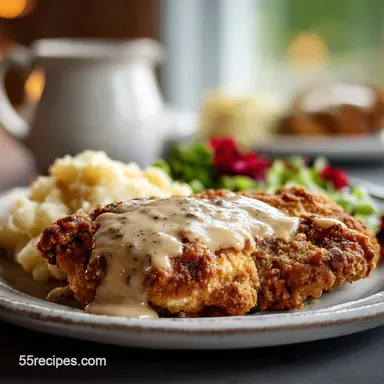
Place a steak on each plate and ladle a generous amount of the hot gravy over the center. Serve immediately while the contrast between hot gravy and crunchy steak is at its peak.
Solving Common Kitchen Roadblocks
Why My Breading Is Falling Off
This is the most frustrating part of a chicken fried steak gravy recipe. Usually, it happens because the meat was too wet before dredging, or you turned the steak too many times in the pan.
Another culprit is not letting the breaded meat sit for 5 minutes before frying, which helps the flour hydrate and "set" onto the steak.
Fixing Very Lumpy Gravy
If your gravy looks like a topographical map, don't panic. This happens when milk is added too quickly to the roux. The easiest fix is to pour the gravy through a fine mesh strainer into a clean pot.
If you don't want to wash another dish, an immersion blender can save the day in seconds, though it might make the gravy slightly more aerated.
Not Enough Pan Drippings
Sometimes the breading soaks up more oil than expected. if you don't have 60ml of drippings left, just add a tablespoon of butter or more oil. The butter actually adds a lovely richness that pairs beautifully with the black pepper. If you are looking for a totally different vibe, you might even consider a Chimichurri Recipe for a fresh steak topping, but for this classic, we need that fat for the roux.
| Problem | Root Cause | Solution |
|---|---|---|
| Greasy Crust | Oil temperature too low | Ensure oil reaches 175°C before adding meat. |
| Floury Taste | Roux didn't cook long enough | Whisk flour and fat for at least 2 mins before adding milk. |
| Thin Gravy | Too much milk or short simmer | Continue simmering; it thickens significantly as it cools. |
Common Mistakes Checklist - ✓ Forgetting to season the flour (bland crust is a tragedy) - ✓ Using a fork to turn the meat (piercing it releases steam that loosens the breading) - ✓ Adding cold milk too fast (guarantees a lumpy texture) - ✓ Overcrowding the skillet (drops the
temperature and leads to steaming instead of frying) - ✓ Skipping the wire rack (leads to a soggy bottom)
Smart Variations and Flavor Swaps
If you want to try a chicken fried steak sausage gravy recipe, simply brown about 100g of loose breakfast sausage in the pan before making the roux. Leave the sausage and its fat in the pan, then proceed with the flour and milk as directed.
It adds a chunky, meaty texture that is incredible for a heavy breakfast.
For those who prefer a country fried steak brown gravy recipe, substitute the milk with beef broth. The technique remains the same, but the result is a darker, more savory sauce. You can also add a splash of Worcestershire sauce to deepen the color and add that "umami" kick.
Making Decisions for Your Palate
- If you want a thicker, "stickier" gravy, use 500ml of milk instead of 710ml.
- If you prefer a spicy kick, double the cayenne and add a dash of hot sauce to the egg wash.
- If you are short on time, use a pre mixed "country gravy" packet but whisk it into the actual pan drippings for better flavor.
Freshness Tips and Leftover Care
Storage: Keep the steaks and gravy in separate airtight containers in the fridge for up to 3 days. If you store them together, the steak will become completely soft.
Reheating: The best way to revive the steak is in an air fryer or oven at 190°C for about 5-8 minutes. This brings back the crunch.
For the gravy, reheat it in a small saucepan over low heat, adding a splash of milk to loosen it up, as it will thicken significantly when cold.
Freezing: You can freeze the fried steaks (once cooled) for up to 2 months. Wrap them individually in foil and place in a freezer bag. I don't recommend freezing the dairy based gravy as it often separates and becomes grainy upon thawing.
Zero Waste Tip: If you have leftover gravy but no steak, it makes a world class topping for toasted sourdough or biscuits the next morning. You can even stir in some chopped sautéed mushrooms to give it a second life as a mushroom cream sauce for pasta.
Perfect Pairings and Comfort Platters
This dish practically begs for a side of garlic mashed potatoes. The "well" you create in the potatoes is the perfect vessel for extra gravy. I also love serving this with some buttery green beans or a crisp coleslaw to cut through the richness. If you are feeling extra indulgent, a side of BBQ Chicken Sliders recipe coleslaw works surprisingly well as a tangy contrast.
When serving, I like to keep it simple. A big white platter with the steaks lined up and the gravy served in a warm boat allows everyone to take as much (or as little) sauce as they like.
Just remember that the aroma of this meal is half the experience get it to the table while the steam is still rising and the pepper is fragrant. It’s hearty, it’s nostalgic, and it’s exactly what a home cooked meal should be.

High in Sodium
842 mg of sodium per serving (37% of daily value)
The American Heart Association recommends limiting sodium intake to about 2,300mg per day for optimal health.
Tips to Reduce Sodium in Your Cube Steak Recipe
-
Omit Added Salt-15%
Eliminate the pinch of salt added to the gravy. This simple step can significantly reduce the overall sodium content of the dish.
-
Choose Low-Sodium Broth-15%
Consider using low-sodium or no-sodium added broth in the gravy instead of relying on pan drippings. This provides flavor with considerably less sodium. Be sure to compensate for the flavor by adding in extra herbs and spices.
-
Use Unsalted Butter-10%
If butter is used at any point in the cooking process (even if not explicitly listed in the recipe), ensure it is unsalted butter to further minimize sodium intake. Even small amounts of salted butter contribute to sodium levels.
-
Spice it Up!
Enhance flavor with herbs and spices. Instead of relying on salt for flavor, experiment with a wider variety of herbs and spices, such as paprika, onion powder, or dried herbs to boost the flavor profile without adding sodium.
Recipe FAQs
What is the 3 2 1 rule for gravy?
No, there is no standard 3-2-1 rule for standard white country gravy. This ratio often applies to smoking ribs or barbecue rubs, not sauce thickening.
How to make a gravy for fried chicken?
Brown the flour in the pan drippings first, making a roux. After cooking the chicken, leave about 60ml of fat in the skillet, whisk in the flour, cook until nutty, then slowly whisk in milk until the mixture coats the back of a spoon.
How to make a nice gravy for steak?
Use the fond from the steak drippings and whisk constantly with cold milk. The key is scraping up all those flavorful browned bits (fond) left in the pan after frying the steak to build a deep savory base for your sauce.
What's the secret to a good gravy?
The secret is cooking your flour long enough to remove the raw, pasty taste. You need to cook the flour and fat mixture (the roux) until it smells nutty and toasts slightly before introducing the liquid, ensuring a rich flavor foundation.
Why is my chicken fried steak gravy lumpy?
False. Lumps form when cold liquid hits a hot roux too quickly. Add your milk very slowly at first while whisking aggressively to temper the starches; if it still lumps, strain it through a fine mesh sieve.
Can I use beef broth instead of milk for a brown gravy version?
Yes, substitute the milk with beef broth for a brown country gravy. This substitution creates a darker, more savory sauce profile, similar in principle to building flavor bases in a good French Onion Meatloaf recipe.
How do I prevent the crust from getting soggy when I serve?
Always rest the fried steaks on a wire rack, not flat on a plate. Allowing air circulation underneath prevents trapped steam from dissolving your hard earned crispy coating.
Chicken Fried Steak Gravy Recipe
Ingredients:
Instructions:
Nutrition Facts:
| Calories | 1012 kcal |
|---|---|
| Protein | 51.3 g |
| Fat | 58.2 g |
| Carbs | 66.4 g |
| Fiber | 2.1 g |
| Sugar | 10.4 g |
| Sodium | 842 mg |
