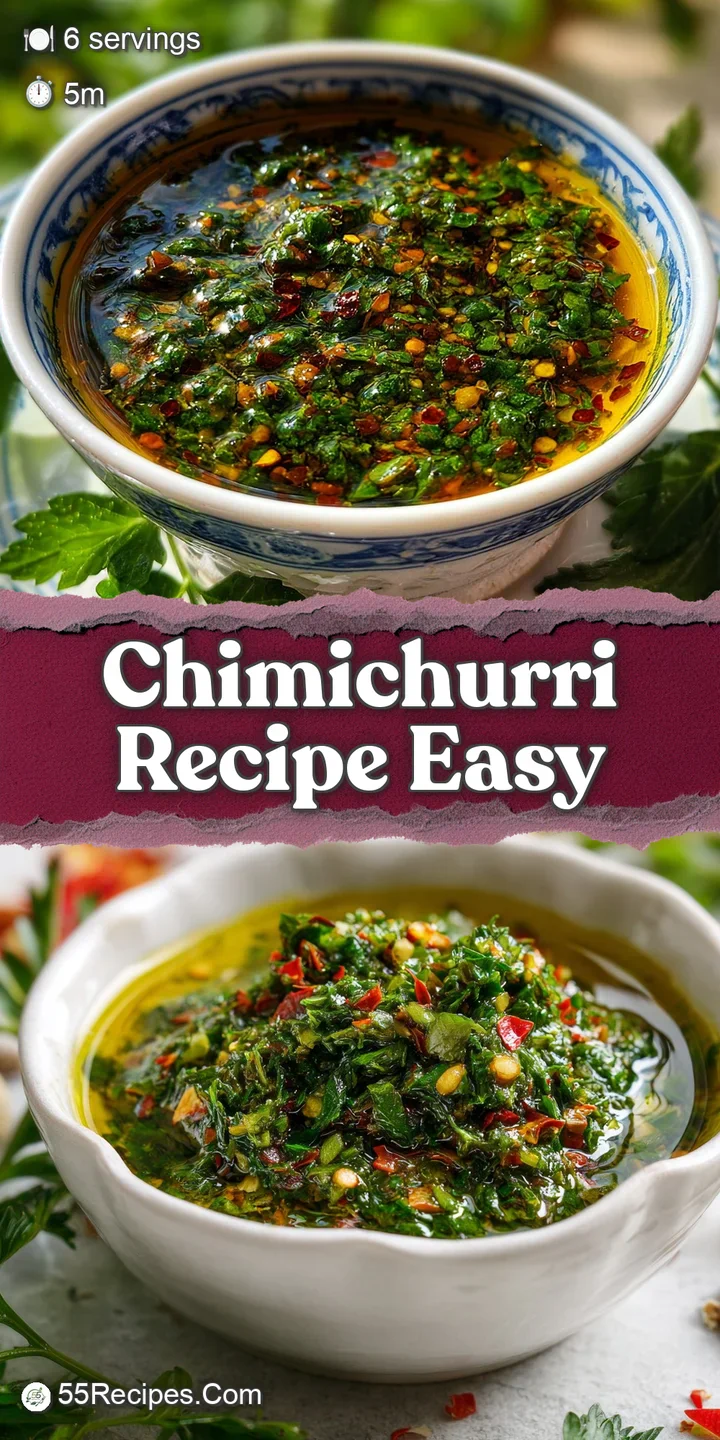
Chimichurri Recipe Easy: Bright and Garlicky
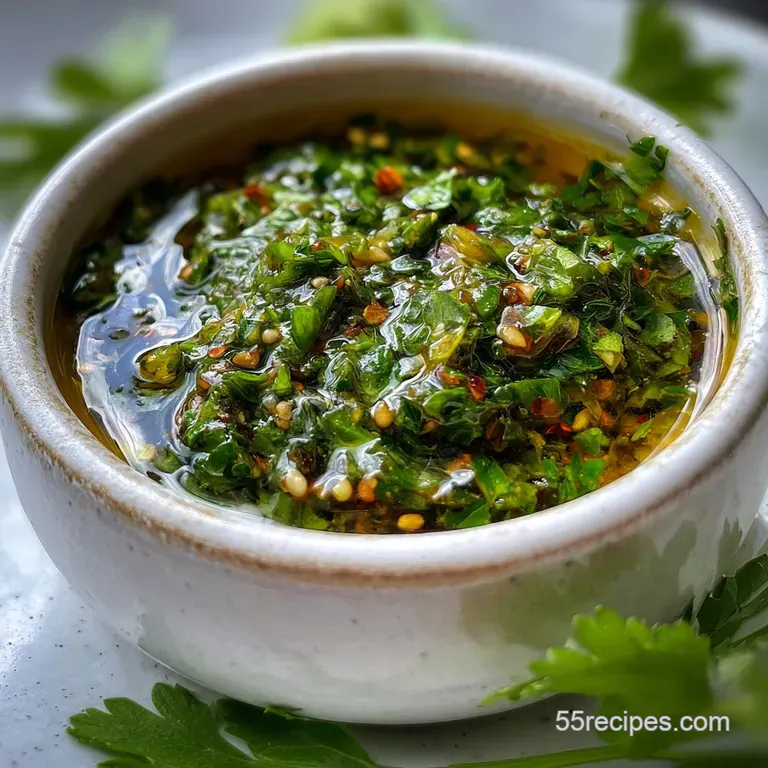
- Time: Active 5 minutes, Passive 0 minutes, Total 5 minutes
- Flavor/Texture Hook: Bright, herbaceous, and garlicky with a velvety oil finish
- Perfect for: Weeknight steak, grilled chicken, or dipping crusty bread
- Unlock Flavor With This Chimichurri Recipe Easy
- The Science of Herb Suspension and Acid
- Component Analysis and Ingredient Deep Dive
- Choosing the Best Elements for Vibrant Results
- Essential Tools for a Hand Chopped Texture
- Step-By-Step Prep for a Perfect Green Sauce
- Troubleshooting Common Errors for Brighter Flavor
- Creative Additions for a Personalized Flavor Profile
- Adjusting Ratios for Crowds or Couples
- Debunking Common Green Sauce Myths
- Preserving Freshness With Proper Storage Techniques
- Serving Suggestions for Every Meal and Occasion
- Recipe FAQs
- 📝 Recipe Card
Unlock Flavor With This Chimichurri Recipe Easy
The first time I tried to make a chimichurri, I made a massive mistake that I still laugh about today. I was in a rush, threw everything into a high powered blender, and hit "liquefy." Instead of the beautiful, flecked sauce I saw in pictures, I ended up with a frothy, neon green foam that tasted like bitter lawn clippings.
It was a total disaster, and my poor grilled chicken looked like it had been dunked in a swamp. That was the day I learned that the soul of this sauce lives in the knife work, not the motor.
Since that green foam incident, I've spent years obsessive about the "shatter" of the herbs and the way the oil carries the garlic’s bite. There is something so satisfying about the rhythmic thwack thwack thwack of a sharp chef’s knife against a wooden board, watching a mountain of fresh parsley transform into tiny, emerald jewels.
This chimichurri recipe easy is my go to because it doesn't try to be fancy; it just tries to be fresh. We are going for a texture that sits somewhere between a salsa and a vinaigrette, where you can actually see the individual leaves suspended in the golden oil.
Today, we are skipping the food processor entirely. Trust me on this one. You want those herbs to be cut, not crushed. When you crush herbs in a blender, you release all the bitter chlorophyll at once.
But when you hand chop, you keep the integrity of the leaf, which means every bite gives you a little pop of freshness rather than a muddy aftertaste. This is the version my family asks for every single time we fire up the grill, and honestly, it’s so fast you’ll wonder why you ever bought the bottled stuff.
The Science of Herb Suspension and Acid
The Physics of the Infusion
Lipid Extraction: The fat in the extra virgin olive oil acts as a solvent, pulling fat soluble aromatic compounds from the garlic and oregano to distribute flavor evenly throughout the sauce.
Stabilizing Chlorophyll with Acid
Color Preservation: Adding the red wine vinegar last prevents the acetic acid from breaking down the chlorophyll too quickly, keeping the sauce vibrant green rather than dull olive.
Managing Garlic’s Allicin Punch
Mellowing the Bite: Mincing garlic and letting it sit in the vinegar for two minutes before adding oil helps temper the harsh, raw "sting" of the allicin.
| Preparation Method | Texture Result | Flavor Intensity | Best Use Case |
|---|---|---|---|
| Hand Chopped (Classic) | Rough, distinct leaf fragments | Bright, clean, layered | Steaks and roasted meats |
| Food Processor (Fast) | Emulsified, smooth, uniform | Intense, slightly bitter | Marinades or sandwich spreads |
| Mortar and Pestle | Pasty, bruised, integrated | Deep, earthy, garlic heavy | Dipping bread or pizza crust |
If you love this flavor profile on crust, check out My Juicy Chimichurri recipe for a tomato based twist. The way the herbs interact with the acidity of the tomatoes is truly something special.
Component Analysis and Ingredient Deep Dive
| Ingredient | Science Role | Pro Secret |
|---|---|---|
| Flat Leaf Parsley | Primary aromatic base | Use only the leaves for a velvety mouthfeel; stems can be woody. |
| Red Wine Vinegar | Acidic brightener | Choose a high-quality aged vinegar to avoid a harsh, metallic "fake" sourness. |
| Extra Virgin Olive Oil | Flavor carrier | Use a "buttery" oil rather than a "peppery" one to let the herbs shine. |
| Red Pepper Flakes | Heat stimulant | Briefly toast them in a dry pan for 30 seconds to wake up the oils before adding. |
For the best results, always opt for flat leaf (Italian) parsley over the curly variety. Curly parsley has a much thicker cell wall that feels like chewing on paper in a sauce like this. We want that silky, almost melt in-the mouth texture that only the flat leaf variety can provide.
Choosing the Best Elements for Vibrant Results
To nail this chimichurri recipe easy, your shopping list is short but specific. We are looking for maximum freshness because there is nowhere for subpar ingredients to hide in a raw sauce.
- 2 cups (60g) fresh flat leaf parsley: Packed tight, with the thick stems removed. Why this? It provides the clean, grassy foundation without the bitterness of curly parsley.
- 1/4 cup (10g) fresh cilantro: Finely minced. Why this? Adds a citrusy high note that cuts through the richness of the oil.
- 2 tbsp fresh oregano leaves: Just the leaves, discarded stems. Why this? Adds an earthy, peppery depth that grounds the brighter herbs.
- 5 cloves garlic: Freshly peeled, never from a jar. Why this? Pre minced jarred garlic tastes acidic and loses the essential pungent oils.
- 1/2 cup (120ml) extra virgin olive oil: high-quality is a must here. Why this? It's the "body" of the sauce and carries all the other flavors.
- 1/4 cup (60ml) red wine vinegar: For that signature tang. Why this? It provides the necessary "zip" to balance the fat of the meat.
- 1 tsp red pepper flakes: For a gentle warmth. Why this? Provides background heat without overpowering the delicate herbs.
- 1 tsp coarse kosher salt: (Such as Diamond Crystal). Why this? The jagged crystals help "mill" the garlic into a paste during chopping.
- 1/2 tsp freshly cracked black pepper: Large cracks for texture. Why this? Adds a floral, spicy finish to every bite.
If you're planning a full Italian inspired night, this sauce works surprisingly well as a side to a Homemade Cocktail Sauce recipe if you're serving a massive seafood and steak platter.
Essential Tools for a Hand Chopped Texture
You don't need a pantry full of gadgets, but two things are non negotiable: a heavy wooden cutting board and the sharpest knife you own. A dull knife doesn't cut; it bruises. When you bruise parsley, it starts to oxidize (turn brown) almost instantly. We want clean, sharp "shatters" of green.
A large chef's knife is usually better than a paring knife because the curve of the blade allows for a rocking motion. This motion is what lets you get that fine mince without having to pick the knife up off the board constantly.
If you happen to have a mezzaluna (that curved, two handled herb chopper), now is its time to shine.
step-by-step Prep for a Perfect Green Sauce
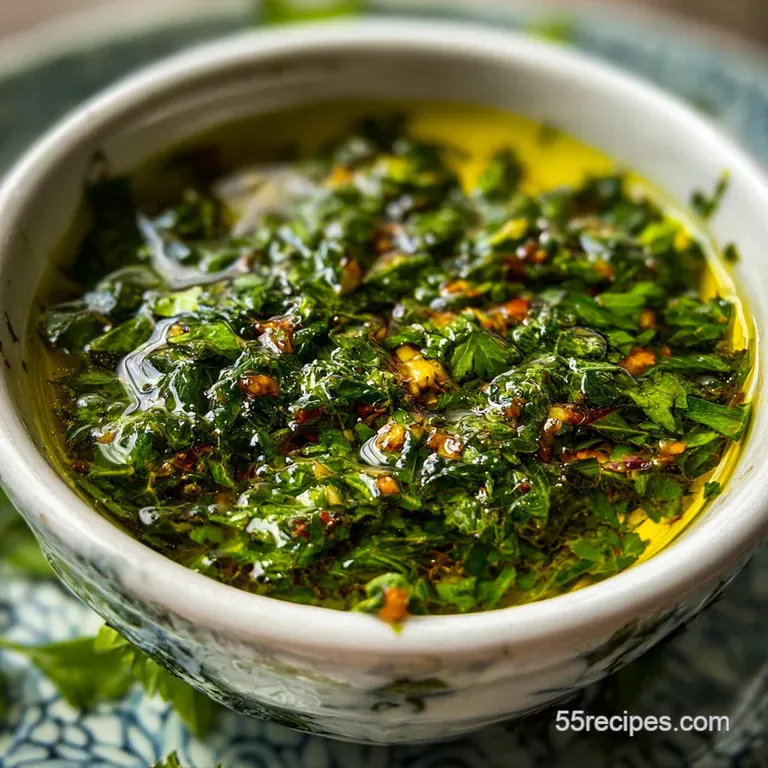
- Prep the parsley. Remove the thick, woody stems and pile the 2 cups of leaves on a large board. Note: A few tender stems are fine, but the big ones are bitter.
- Mince the aromatics. Finely chop the 5 cloves of garlic and 2 tbsp of oregano leaves until they form a rough paste.
- Shatter the greens. Use a rocking motion to chop the parsley and 1/4 cup of cilantro until the leaves are tiny but distinct.
- Combine solids. Place the chopped herbs, garlic, and red pepper flakes into a medium glass bowl.
- Season the base. Sprinkle the 1 tsp of kosher salt and 1/2 tsp of black pepper over the herbs.
- Add the acid. Pour in the 1/4 cup of red wine vinegar and stir until the herbs are slightly wilted.
- Emulsify with oil. Slowly stream in the 1/2 cup of olive oil while stirring with a fork.
- Incorporate air. Whisk vigorously for 30 seconds until the oil looks glossy and slightly thickened.
- Rest the sauce. Let it sit at room temperature for at least 20 minutes until the garlic fragrance fills the room.
- Final check. Taste a small spoonful and add a pinch more salt if the flavors don't "pop."
Chef's Tip: If you find your garlic is particularly "angry" or sharp, soak the minced cloves in the vinegar for 10 minutes before adding anything else. This cold pickling process takes the edge off the raw bite.
Troubleshooting Common Errors for Brighter Flavor
The Reason Your Sauce Tastes Bitter
Usually, this happens because the herbs were "pureed" rather than "chopped," or the olive oil used was of poor quality and has gone slightly rancid. If the bitterness is coming from the herbs, a tiny pinch of sugar can help mask it, though it won't fix the texture.
| Problem | Root Cause | Solution |
|---|---|---|
| Sauce is watery | Too much vinegar or wet herbs | Dry herbs completely after washing; add more oil. |
| Herbs turned brown | Oxidation from dull knife | Use a sharper blade and don't over chop; add acid last. |
| Garlic is too spicy | Garlic cloves were sprouted | Remove the green "germ" from the center of the garlic cloves. |
Common Mistakes Checklist
- ✓ Never wash herbs right before chopping; they must be bone dry to avoid a "soggy" sauce.
- ✓ Don't skip the resting period - the flavors need time to move from the herbs into the oil.
- ✓ Avoid using extra virgin oils that are too "grassy," as they compete with the parsley.
- ✓ Check your red pepper flakes for freshness; if they look gray, they won't provide any heat.
- ✓ Resist the urge to add lemon juice - the red wine vinegar is the traditional and better balanced choice here.
Creative Additions for a Personalized Flavor Profile
While this is a chimichurri recipe easy and traditional, there's always room to play. If you're looking for a no cilantro chimichurri recipe, simply replace that 1/4 cup of cilantro with more parsley or even some fresh mint for a Mediterranean twist.
For a chimichurri recipe for steak, I sometimes add a teaspoon of smoked paprika. It creates a subtle bridge between the charred crust of the meat and the brightness of the sauce.
If you're doing a quick chimichurri recipe for a weeknight dinner and you're out of red wine vinegar, apple cider vinegar is the best backup. It's a bit fruitier, but it still has that necessary punch.
For pizza lovers, using this as a base for & Juicy Chimichurri recipe is a total game changer. The 00 flour dough provides a soft, pillowy canvas for the sharp, oily sauce.
Adjusting Ratios for Crowds or Couples
Scaling a raw sauce is much easier than scaling a cake, but you still have to watch your seasonings.
- To Half (6 Servings): Use 1 cup of parsley and half of all other ingredients. You can use a small glass jar to shake everything together for a quick emulsion.
- To Double (24 Servings): Double the herbs and liquids, but only use 1.5x the salt and red pepper flakes. Taste and adjust at the end. It's very easy to over salt large batches of raw sauces.
- Batch Prepping: If you are making a massive amount for a BBQ, chop the herbs and garlic ahead of time, but don't add the vinegar and oil until about 2 hours before serving. This keeps the color that "electric green" that everyone loves.
| Servings | Parsley Amount | Oil Amount | Vinegar Amount |
|---|---|---|---|
| 4 People | 1/2 cup (20g) | 3 tbsp | 1.5 tbsp |
| 12 People | 2 cups (60g) | 1/2 cup | 1/4 cup |
| 24 People | 4 cups (120g) | 1 cup | 1/2 cup |
Debunking Common Green Sauce Myths
"Chimichurri must contain cilantro to be authentic." Actually, traditional Argentine chimichurri is almost always parsley based. Cilantro is a common addition in North American versions, but it's totally optional. If you hate cilantro, leave it out!
"You should always use a food processor for a smooth sauce." As we've discussed, a smooth chimichurri is actually a failed chimichurri. The beauty of this simple chimichurri sauce is the separation of oil and herb. A food processor creates an emulsion that hides the fresh flavors behind a wall of fat.
Preserving Freshness With Proper Storage Techniques
Storage: Keep your chimichurri in an airtight glass jar in the fridge. It will stay fresh and vibrant for up to 5 days. Note that the olive oil will likely solidify in the cold. Just take it out 30 minutes before you want to eat, and it will return to its silky, liquid state.
Freezing: You can actually freeze chimichurri! The best trick is to pour the sauce into an ice cube tray. Once frozen, pop the cubes into a freezer bag. They’ll stay good for 3 months.
These "flavor bombs" are perfect for dropping into a hot pan of sautéed shrimp or stirring into a soup at the last second.
Zero Waste: Don't throw away those parsley stems! While they are too woody for the sauce, they are packed with flavor. Toss them into your next pot of chicken stock or freeze them in a bag of "veggie scraps" for a rainy day.
Even the leftover oil at the bottom of the jar is liquid gold use it to fry an egg the next morning for the best breakfast of your life.
Serving Suggestions for Every Meal and Occasion
This homemade chimichurri sauce easy is most famous for its partnership with steak, specifically a flank or skirt steak. The high fat content of those cuts is perfectly cut by the vinegar. However, don't stop there.
This is also an easy chimichurri chicken recipe in the making just brush it on grilled thighs during the last 2 minutes of cooking.
I also love drizzling this over roasted sweet potatoes or even using it as a dressing for a cold pasta salad. If you have any left over, try swirling it into some Greek yogurt for a creamy, zesty dip for raw veggies. The possibilities are honestly endless once you have a jar of this sitting in your fridge.
It's the ultimate "secret weapon" for anyone who wants to cook like a pro without spending hours in the kitchen.
Recipe FAQs
What ingredients do you need for chimichurri?
Flat leaf parsley, cilantro, fresh oregano, garlic, red wine vinegar, olive oil, salt, pepper, and red pepper flakes. You need a high ratio of fresh herbs to liquid to ensure maximum flavor punch.
What is the secret to a great chimichurri?
Hand chopping the herbs finely, never using a blender or food processor. Blending releases bitter chlorophyll; hand chopping maintains texture and clean, layered flavor. If you enjoyed mastering this precise knife skill, see how the same principle of texture control applies when preparing vegetable bases for dishes like our Homemade Italian Seasoning recipe.
How do you make Gordon Ramsay's chimichurri sauce?
Follow the traditional hand chopped method using fresh herbs and high-quality oil. While Ramsay's precise recipe details vary, the core technique emphasizes aggressive mincing of garlic and herbs before gently stirring in the acid and oil at the end.
What are common chimichurri mistakes?
Using a food processor, failing to dry the herbs, or adding the acid too early. Over processing creates a bitter, oxidized paste rather than a bright, textured sauce. Also, avoid using aged oil, which dulls the vibrancy needed in a raw sauce like this.
Can I substitute cilantro in chimichurri?
Yes, but it’s entirely optional and not traditional for Argentine style. If you dislike cilantro, replace it with additional parsley or a small amount of fresh mint for a brighter, slightly different profile.
How long does fresh chimichurri last in the refrigerator?
Up to 5 days when stored airtight in the fridge. The oil will solidify when cold, so allow it to sit at room temperature for about 30 minutes before serving to return it to its proper liquid state.
Should I use fresh or dried herbs for this easy recipe?
Yes, use fresh herbs exclusively for the best flavor and texture. Dried herbs lack the necessary volatile oils and will result in a muted, dusty flavor rather than a bright sauce.
Easy Chimichurri Recipe
Ingredients:
Instructions:
Nutrition Facts:
| Calories | 87 kcal |
|---|---|
| Protein | 0.3 g |
| Fat | 9.1 g |
| Carbs | 1.1 g |
| Fiber | 0.4 g |
| Sugar | 0.1 g |
| Sodium | 196 mg |
