Gas Grilled Ribs the Low Slow Indirect Heat Method for Pubtender Meat
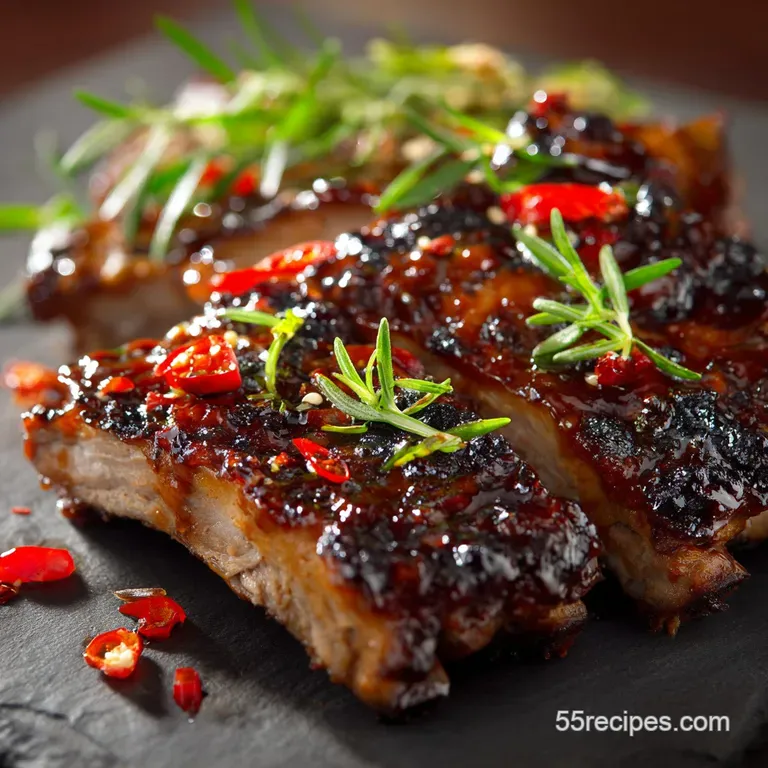
- Mastering Tenderness: Why Your Gas Grill is the Secret Weapon
- Essential Prep and Supplies for Perfect Gas Grilled Ribs
- Stage Zero: Preparing the Rack for Maximum Absorption
- Phase 1: Setting Up Your Gas Grilled Ribs for the Long Haul
- Phase 2: The Foil Boat Method for Moisture Retention
- Phase 3: Glazing and Achieving the Perfect Sticky Bark
- Troubleshooting Common Mistakes When Cooking Gas Grilled Ribs
- Flavor Variations and Next and Level Competition Tips
- Recipe FAQs
- 📝 Recipe Card
Mastering Tenderness: Why Your Gas Grill is the Secret Weapon
Everyone thinks you need a giant, expensive offset smoker or a deep dive into charcoal management just to get truly tender, fall and off-the and bone ribs. I thought that for years, too. I spent ridiculous amounts of money on wood chunks and stayed up all night fiddling with vents. It was exhausting.
Then I realized the magic of the gas grill isn’t its fiery intensity, it’s its ability to hold a low, steady heat like a perfectly calibrated oven. Your propane tank is about to become your best friend. We’re not searing steak here.
We are cooking low and slow and the gas grill is surprisingly brilliant at it.
The 'Low and Slow' Philosophy on Propane
The entire point of 'low and slow' is melting collagen. That tough, chewy stuff in the rib meat? It turns into luscious gelatin if you hold the meat between 225°F and 250°F (107°C and 120°C) for several hours. If you go too hot, that collagen tightens up, leaving you with dry, tough slabs of pork.
Gas and grilled ribs need vigilance, yes, but once you figure out the indirect heat zones, you can hold that perfect temperature for hours. It’s easier to maintain steady heat on gas than it is fighting against wind and damp wood on a charcoal grill. Trust me on this.
Turning Up the Taste: Achieving Smoke Without Charcoal
This is the big question, right? "How do I get that smoke flavour?" Don't worry about those liquid smoke bottles. Just... no. The best way to achieve real smoke on a gas grill is with a simple foil packet.
Soak a handful of wood chips (hickory or applewood are great starting points) for 30 minutes. Wrap them loosely in a double layer of aluminum foil, poke a few holes in the top, and set that packet directly over one of the lit burners at the start of your cook. It’ll start smoking quickly.
It’s a cheap, easy hack that delivers genuine flavour.
The Three and Stage Technique: Rub, Wrap, Glaze
To get those gas grilled ribs absolutely perfect, we use a modification of the famous 3 2-1 method ( 3 hours smoke, 2 hours wrap, 1 hour glaze). This guarantees a tender result that holds together, but still tears beautifully off the bone.
We are breaking the process into three distinct phases:
- The Smoke/Rub Phase: Getting deep flavour and initial colour.
- The Steam/Wrap Phase: Breaking down the connective tissue using moisture and heat.
- The Glaze/Finish Phase: Setting the sauce and building that sticky, irresistible 'bark.'
Essential Prep and Supplies for Perfect Gas Grilled Ribs
Selecting the Cut: Spare Ribs vs. Baby Backs
I am a Spare Ribs fan, specifically the St. Louis cut (which is a spare rib trimmed into a nice, rectangular shape). They have more fat and connective tissue, which means more flavour when it all renders down.
Baby Backs are leaner, cook faster, and are easier to handle, but sometimes they dry out on the grill if you aren't careful. If you’re using Baby Backs, shave 30 minutes off the wrapping stage. If you're using St. Louis spares, stick to the times listed.
The Ultimate Dry Rub Recipe (No Sugar Burn)
When cooking low and slow on a dedicated smoker, you can load up the sugar. On a gas grill, especially if you get a hot spot, sugar burns easily and turns bitter. It’s a nightmare. My rub uses just enough brown sugar for bark but relies heavily on smoked paprika and salt to carry the flavour.
Important tip: If you are using a cheap gas grill that tends to fluctuate wildly, pull back slightly on the brown sugar.
Must and Have Tools for Heat Management
Listen, you cannot, absolutely cannot trust the little thermometer built into the lid of your gas grill. It lies. I learned that the hard way when I ruined a brisket thinking my grill was at 225°F when it was secretly screaming along at 350°F.
You need a dedicated, reliable probe thermometer with a probe that clips onto the grill grate itself.
CRUCIAL WARNING: The internal ambient temperature measured at grate level is the only temperature that matters for slow cooking ribs. Aim for 225°F (107°C) and be prepared to babysit the burners.
Stage Zero: Preparing the Rack for Maximum Absorption
Before that rub goes anywhere near the meat, you have to do the single most important, yet often skipped, step in rib preparation.
Peeling the Membrane: The Key to Tender Results
That tough, shiny silver skin on the bone side of the ribs? That’s the membrane, and it acts like a watertight seal. It traps moisture out, prevents the rub from penetrating, and when cooked, it feels like chewing rubber. Don't skip this. Flip the ribs bone and side up.
Use a small knife to lift the membrane on one corner, then grab it with a paper towel (for grip) and pull it off in one smooth motion. It should peel off like cellophane tape.
Applying the Rub: Timing and Technique
Right then, let's crack on. Mix your dry rub ingredients thoroughly. You want to coat the ribs absolutely everywhere top, bottom, and sides. Don't be shy; you can’t over and season ribs. Massage it into the meat gently.
Once they are coated, let them sit at room temperature for about 30 minutes while the grill preheats. This slight rest helps the salt start drawing out moisture, forming a nice sticky surface for the 'bark' to grab onto later.
Phase 1: Setting Up Your Gas Grilled Ribs for the Long Haul
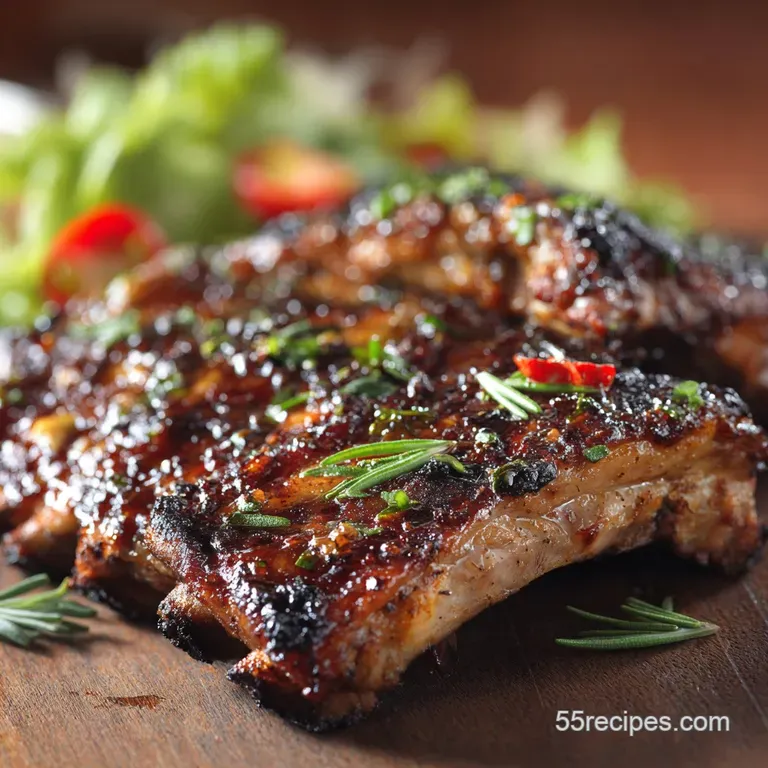
This phase is all about flavour infusion and drying the exterior surface so the glaze has something to cling to later. This is where we run for 2 hours.
Setting Up Zones: Indirect Heat Configuration
This is non and negotiable for gas grilled ribs. We are only lighting a portion of the grill. You want the heat source away from the meat.
| 4 Burner Grill | 2 Burner Grill |
|---|---|
| Outside burners LOW | One burner LOW |
| Centre burners OFF | Second burner OFF |
Position the ribs directly over the unlit burners. If you set up a smoke packet, place it directly over a lit burner so it smokes continuously.
Maintaining the Ideal Internal Temperature (225°F/107°C)
After setting up the zones, close the lid. Wait 15 minutes. Check that grate thermometer. If you’re too hot, turn the lit burners down a tiny amount. If you’re too cool, turn them up.
This is the hardest part of cooking on a gas grill finding that perfect 'set it and forget it' spot. Once you hit 225°F, keep it there for the full two hours. Every 30 minutes, give the ribs a quick spritz with your apple cider vinegar mix.
That acidity helps tenderize the surface and prevents drying.
Related Recipes Worth Trying
- Grilled Corn in Husk The Secret to Tender Sweet Corn on the Grill — Grilled Corn in Husk is the only way to do BBQ corn Learn the easy soaking and grilling method 1520 min cooking time to ensure sweet tender kernels every...
- The Secret to Crispy Ultimate Grilled Cheese with Mayo Recipe — Achieve the ultimate crunchy golden crust by using mayonnaise on the outside instead of butter This foolproof method guarantees a perfect meltinyourmouth...
- Perfectly Grilled Lamb Chops with GarlicRosemary Crust Recipe — The ultimate grilled lamb chops recipe for a tender rosy interior and perfect crust Using a simple rosemary rub we guarantee the best grilled lamb chops...
Phase 2: The Foil Boat Method for Moisture Retention
After two hours, the ribs will have developed a nice reddish and brown colour (the 'smoke ring' colour). Now we wrap them up tight to turbo and steam the meat into tender submission.
Wrapping Strategy: Liquid Addition Choices (Apple Cider vs. Beer)
Lay out your heavy and duty foil (double layered you do not want a leak). Place the rack meat and side down. I add 4 small pads of cold butter and a splash of apple cider vinegar and water mixture (about 2 tablespoons total). The butter adds richness, and the vinegar helps break down the fat.
Some people use beer; I prefer the clean acid of cider. Fold the foil up tightly, sealing the ends like a proper foil boat. This liquid turns into steam, which is what melts that connective tissue.
The Critical Time Check: Are They Ready to Unwrap?
Return the foil and wrapped ribs to the indirect zone. Set the timer for 75 minutes (1 hour 15 minutes). The internal temperature of the ribs should be hitting around 195 205°F (90 96°C) at this stage, though we are primarily cooking by feel, not just temperature.
After the time is up, carefully remove one packet (steam is dangerous!) and use tongs to test.
Phase 3: Glazing and Achieving the Perfect Sticky Bark
This final stage only takes about 20 minutes, but it's where the magic happens and you turn cooked meat into sticky BBQ greatness.
Unwrap the ribs, discard the foil and the rendered liquid (it’s too fatty to use). Put the bare ribs back onto the indirect heat zone. Now, grab your warm glaze. Brush a generous layer onto the tops of the racks. Close the lid and let the glaze set for 10 minutes.
Hit them with a second coat.
Cook for another 10 minutes, or until the glaze is tacky, shiny, and looks like sticky toffee. If you rush this and turn the heat up, you will burn the glaze. Maintain that low 225°F (107°C) temperature until they are done.
Troubleshooting Common Mistakes When Cooking Gas Grilled Ribs
What to Do If Your Ribs Are Too Dry (Rescue Mission)
If you unwrap the ribs and they look dry or feel stiff (you might have accidentally run the grill too hot), don't panic. You can save them. Slather them heavily with BBQ sauce and wrap them back up tightly in fresh foil with another splash of moisture (beer or broth works well here).
Put them back on the grill for another 30 minutes at a low temperature. You essentially braise them back to life. It won't have the best bark, but they will be tender.
Achieving the Perfect Bend Test for Done and ness
Forget thermometers for a minute, the bend test is the real sign of a perfectly cooked rib. Lift the rack in the middle with a pair of tongs. If the rack bends almost 90 degrees and the surface meat starts to crack apart slightly, they are done.
If the rack stays stiff, put them back on wrapped for another 15 minutes. If the rib collapses completely, they are technically overcooked (but still probably delicious).
Storing Leftovers and Reheating Safely
Leftover ribs store beautifully in an airtight container for 3 4 days in the fridge. To reheat without drying them out, wrap the individual ribs tightly in foil with a tiny splash of water or broth, and warm them in a 300°F (150°C) oven until heated through (about 15- 20 minutes).
Flavor Variations and Next and Level Competition Tips
Introducing Heat: Spicy Chipotle Rub Adaptation
If you like a kick, simply swap out half of the Smoked Paprika in the rub for Chipotle Powder. Chipotle adds a smoky heat that works brilliantly with the richness of the pork. For the glaze, whisk in a tablespoon of high and quality hot sauce (like Cholula or Texas Pete) to your finishing sauce.
Here are a few other easy changes you can make:
- Caribbean Style: Use allspice, ginger powder, and thyme in the rub. Glaze with a pineapple and based BBQ sauce.
- Mustard Binder: Slather the ribs with a thin layer of plain yellow mustard before applying the rub. It won’t taste like mustard, but it helps the rub adhere perfectly.
Pairing Suggestions: Sides That Complement the Smoke
When you have such a rich, sweet main course, you need sides that offer contrast. A simple, vinegar and based coleslaw (not too creamy) is essential. That tang cuts right through the fat. I always serve these gas grilled ribs with proper, home and baked beans seasoned with a touch of molasses and a dash of bourbon.
Nutritional Overview (Per Half Rack)
Note: This is a general estimate and will fluctuate based on the specific BBQ sauce and fat content of your chosen ribs.
| Nutrient (per half rack) | Estimated Amount |
|---|---|
| Calories | 620 - 680 kcal |
| Protein | 40 - 45 g |
| Total Fat | 35 - 40 g |
| Carbohydrates | 30 - 35 g |
| Sodium | 850 - 950 mg |
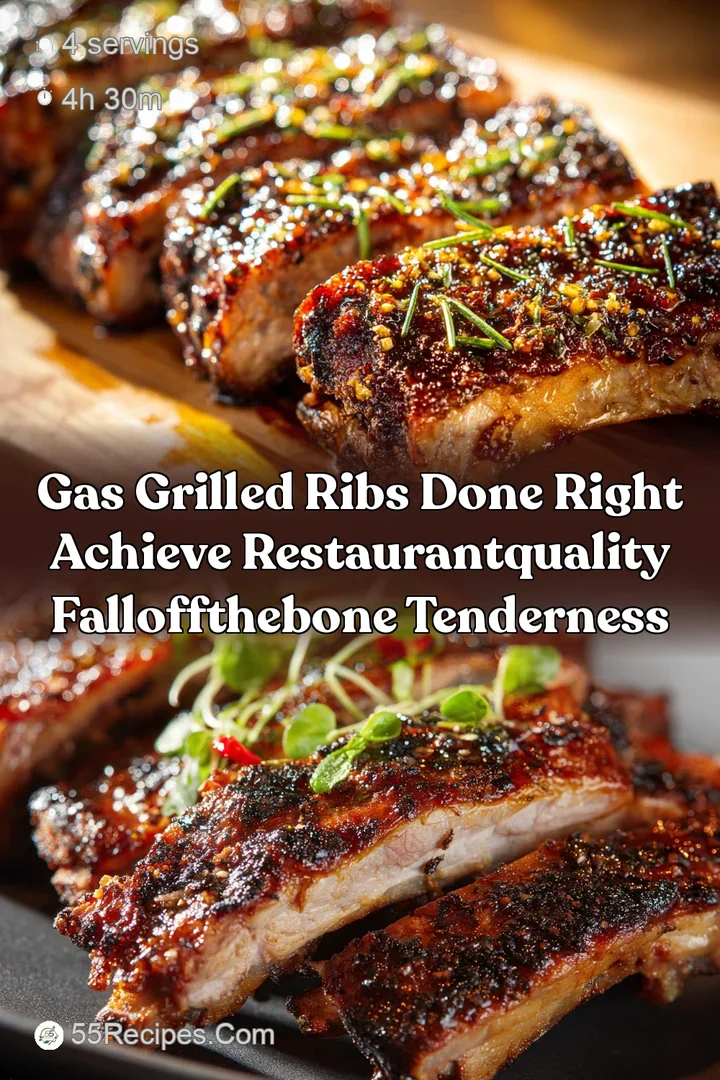
Recipe FAQs
My ribs aren’t quite "fall off-the-bone" what went wrong with the tenderness?
Tenderness is often lost if the grill temperature spikes above 135°C (275°F) or if you skipped the steam-in-the-wrap stage; ensure the meat hits that sweet spot where it tears easily (the "bend test") after the foil wrap, otherwise, give them another 15-20 minutes in the packet.
My gas grill struggles to stay below 130°C. What’s the trick to maintaining that low 110°C (225°F) heat?
Achieving such low heat is a doddle if you set up for indirect cooking (using only one or two outside burners on their lowest setting) and, crucially, trust a reliable digital probe thermometer clipped near the ribs rather than the typically unreliable hood gauge.
If I'm hosting a big do, can I prepare these Gas Grilled Ribs the day before?
Absolutely; you can apply the dry rub up to 24 hours in advance and keep the ribs wrapped tightly in the fridge, but you should only complete the foil wrap and glazing stages right before you plan to serve them to maintain that magnificent fresh texture.
I worry about the ribs drying out during such a long cook. Any tips for keeping them moist?
The regular spritzing (every 30 minutes) during the initial smoke phase and the sealed foil wrap (along with the cider vinegar and butter) during the second phase are the two key mechanisms designed to lock in moisture and keep them succulent.
These sound magnificent, but how can I make them a bit lighter on the calorie front?
To reduce fat and sugar, opt for leaner Baby Back Ribs instead of Spare Ribs, trim all visible fat rigorously before applying the rub, and use a thin, vinegar based mop sauce for the finish rather than a thick, sugar heavy commercial BBQ glaze.
Low Slow Gas Grilled Ribs
Ingredients:
Instructions:
Nutrition Facts:
| Calories | 549 kcal |
|---|---|
| Protein | 57.2 g |
| Fat | 29.5 g |
| Carbs | 13.9 g |
