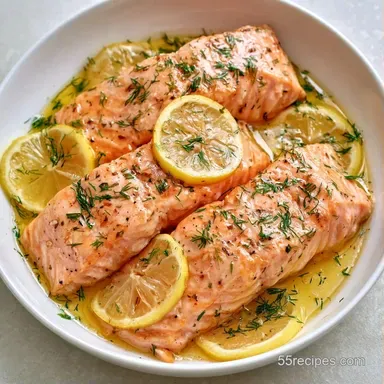
Poached Salmon with Lemon Sauce

- Total25 Mins
- Servings4 fillets
- Calories457 kcal
- Time: 10 min active + 15 min cook
- Taste: Buttery and clean with a bright lemon finish
- Best for: Weeknight dinners or a light brunch
The fillets should separate easily with a fork, possessing a buttery consistency. By skipping the intense heat of searing or grilling, you reduce the risk of the fish becoming dry or rubbery, though it can still overcook.
Rather than frying, you are effectively steaming the salmon in an aromatic broth. This poached salmon produces a tender, juicy result that seems elegant yet requires minimal work.
Enjoy this dish warm alongside asparagus or chilled in a refreshing salad. It provides a dependable approach to seafood that eliminates the worry of overcooking.
Poached Salmon Basics
Gentle Heat: Using a simmer instead of a boil helps limit muscle-fiber tightening and moisture loss.
The Steam Trap: A tight lid keeps the heat even, cooking the top of the fillet as efficiently as the bottom.
Ingredient Deep Dive
| Ingredient | Role | Substitute |
|---|---|---|
| Vegetable broth | Base for cooking | Water with a pinch of salt |
| Lemon juice | Zesty lift | White wine vinegar (use slightly less) |
| Fresh dill | Fresh flavor | Dried dill (start with 1/3 the amount) |
For the Poaching Liquid
- 4 (6 oz / 170g) salmon fillets, skin-on
- 2 cups (475ml) vegetable broth Why this? Provides savory depth without using heavy fats
- 1/4 cup lemon juice Why this? Balances the natural oiliness of the fish
- 1 lemon, thinly sliced
- 1 tbsp (15ml) olive oil
- 1 tsp (2g) whole black peppercorns
- 2 sprigs fresh dill
For the Lemon Sauce
- 2 tbsp (30g) unsalted butter Why this? Ensures a silky, rich finish
- 1 tbsp lemon juice
- 1 tbsp fresh dill, finely chopped
- 1/2 tsp (3g) salt
Key Steps
1. Prepare the Aromatics
Set a large pan over medium heat and add 1 tbsp olive oil. Stir in 2 cups vegetable broth, 1/4 cup lemon juice, 1 lemon (thinly sliced), 1 tsp whole black peppercorns, and 2 sprigs fresh dill. Bring the mixture to a very light simmer. Note: Aim for tiny bubbles rather than a rolling boil.

2. Gently Poach
Carefully lay 4 salmon fillets skin-side down into the simmering liquid. Immediately cover the pan with a tight-fitting lid to lock in the steam. Simmer gently for 8–12 minutes.
3. Check for Doneness
Take the fish out once the thickest area hits 145°F (63°C), which is the USDA safe temperature for fish, and the meat is opaque. Move the fillets to a plate to rest.

4. Finish the Lemon Sauce
Transfer the poaching liquid into a small saucepan. Simmer on medium-high heat for 5 minutes until it has reduced by half. Stir in 2 tbsp unsalted butter, 1 tbsp lemon juice, 1 tbsp chopped fresh dill, and 1/2 tsp salt until the sauce is smooth and glossy.

Common Problems and Fixes
White albumin can appear even when salmon is cooked gently; lower the heat if the liquid is above a bare simmer. This albumin is harmless and can appear during gentle cooking. Keep the liquid at a bare simmer to keep the proteins inside the fillet.
Remove the fish when its thickest part reaches 145°F (63°C). Use a thermometer to be sure. This prevents the poached salmon from becoming chalky.
| Problem | Root Cause | Solution |
|---|---|---|
| White albumin on fish | Heat too high | Lower to a gentle simmer |
| Rubbery texture | Overcooked | Remove at exactly 145°F |
| Sauce too thin | Not reduced enough | Simmer 2-3 minutes longer |
Storage and Leftovers

Store cooked fish in an airtight container in the fridge. According to USDA FSIS, cooked leftovers are safe for 3 to 4 days.
This poached salmon is actually great served cold. You can flake it into a salad or put it on cucumber slices for a light lunch. If you prefer it warm, reheat gently in a covered pan with a splash of vegetable broth over low heat until it reaches 165°F (74°C) in the food.
Customizing the Flavor
For a different twist, try adding a slice of fresh ginger or a star anise pod to the poaching liquid. This shifts the profile toward something more aromatic and earthy.
If you want a richer topping, you could skip the reduced broth sauce and use a sour cream dill sauce for a cool, creamy contrast. For a brunch version, a dollop of dairy free hollandaise works well on top of the fillets. For a fully dairy-free result, also replace these with plant-based versions: unsalted butter.
To make it a heartier meal, swap the vegetable broth for a light fish stock. This intensifies the seafood flavor of the poached salmon. Just be careful with the salt, as stock can be saltier than broth.
Recipe FAQs
Is 2 pounds of salmon enough for 4 people?
Yes, two pounds is plenty for four people. This recipe calls for four 6-ounce fillets, which totals 1½ pounds.
Which mistake is the most common when cooking salmon?
Overcooking the fish is the most frequent error. Remove the fillets once the thickest part reaches an internal temperature of 145°F.
How to prepare the poaching liquid?
Warm the olive oil in a wide pan over medium heat. Stir in the vegetable broth, lemon juice, peppercorns, and dill, then bring the mixture to a gentle simmer.
Can I poach salmon in milk?
You can use milk as a poaching liquid for a creamier result. This differs from this recipe by replacing the vegetable broth and lemon juice with milk.
What does poached mean in cooking?
Poaching is a technique where food is simmered gently in liquid. This method keeps the salmon moist and tender by trapping steam under a lid.
Where to store leftover salmon?
Keep cooked fish in a sealed container in the refrigerator. It remains safe to eat for 3 to 4 days.
Should the salmon be at room temperature before poaching?
You can add the fillets directly from the fridge to the pan. The gentle simmering process allows them to heat through evenly.
Poached Salmon with Lemon in 25 Minutes
Ingredients:
Instructions:
You May Also Like

Delicious Kokanee Salmon Recipes: Pan-Seared with Lemon-Dill Sauce
Looking for mouthwatering kokanee salmon recipes? Try my pan-seared version topped with a zesty…

How To Salmon Cakes Pan-Seared
Master how to salmon cakes with our step-by-step guide. Includes an easy salmon cakes recipe…

How to Cook Salmon In My Foolproof Crispy Skin Recipe
Want to know how to cook salmon in and get perfectly crispy skin?

How to Cook Coho Salmon: Easy & Flavorful Pan-Seared Recipe
Learn how to cook coho salmon perfectly with this easy, flavorful pan-seared recipe!

Sour Cream Dill Sauce
Home cooks seeking a bright finish will love this Sour Cream Dill Sauce.

Easy Dairy Free Hollandaise Sauce - A Creamy Brunch Essential
Try this easy Dairy Free Hollandaise Sauce! Rich, creamy, and perfect for eggs Benedict, veggies,…
