Pumpkin Ravioli Pasta
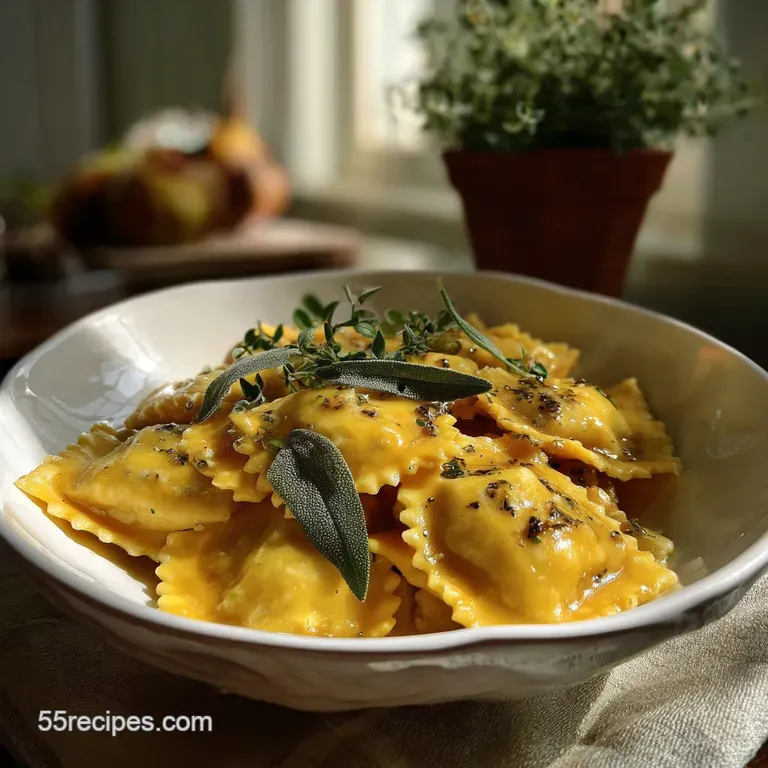
- Time: Active 45 minutes, Passive 15 minutes, Total 1 hours
- Flavor/Texture Hook: Silky dough meets earthy, sweet pumpkin with a shatter crisp sage finish.
- Perfect for: A cozy date night or a weekend project that tastes like pure luxury.
- Crafting the Silky Texture of Homemade Pumpkin Ravioli Pasta
- The Science of Why it Works
- Component Analysis for the Perfect Pumpkin Ravioli Pasta
- Essential Elements and Quality Substitutes
- The Essential Tools for Rolling and Sealing
- A Step-by-Step Guide to Assembling Your Pumpkin Ravioli Pasta
- Preventing Common Mishaps with Fresh Dough and Filling
- Guidelines for Adjusting Yield
- Debunking Common Kitchen Beliefs
- Storage Guidelines and Zero Waste Tips
- Elevating Your Final Dish with Garnish and Texture
- Recipe FAQs
- 📝 Recipe Card
Crafting the Silky Texture of Homemade Pumpkin Ravioli Pasta
The first time I tried making fresh pasta, I ended up with something that looked more like thick, chewy cardboard than the delicate ribbons I had imagined. It was a total mess, but it taught me one vital lesson: the magic is in the moisture.
When we talk about making a great Pumpkin Ravioli Pasta, we are really talking about the dance between the high protein flour and the richness of the egg yolks. It is that specific combination that gives you a dough supple enough to roll paper thin without tearing.
You are going to love how the earthy sweetness of the pumpkin plays against the sharp, salty punch of the Parmesan and the funk of the goat cheese. When that first ravioli hits the brown butter in the pan, the aroma of toasted nuts and fried sage fills the kitchen in a way that feels like a warm hug.
It's honestly the ultimate comfort food, and once you get the hang of the rolling technique, you'll never want the boxed stuff again.
We’ve all been there, staring at a pile of flour wondering if it’s ever going to come together. Trust me, it will. We are going to walk through every knead and every fold so you can avoid the "exploding ravioli" tragedy I faced in my early days.
Let’s get your station set up, put on some music, and turn these simple ingredients into something truly special.
The Science of Why it Works
Protein Denaturation: Kneading the dough aligns gluten proteins into a strong, elastic network that traps air and resists breaking during boiling. Starch Gelatinization: The pumpkin's natural starches swell when heated, creating a velvety, thick filling that remains stable inside the pasta pocket.
| Method | Time | Texture | Best For |
|---|---|---|---|
| Traditional Hand Rolled | 1 hours 15 mins | Rustic, slightly toothsome | Authentic weekend projects |
| Pasta Machine | 1 hours | Uniform, translucent, silky | Consistent, restaurant quality results |
| Wonton Wrapper Shortcut | 20 minutes | Very thin, soft | Quick weeknight cravings |
The choice between hand rolling and using a machine really comes down to the texture you crave. While a machine gives you that professional, even thinness, there is something incredibly satisfying about the tactile nature of a rolling pin.
If you choose the machine, you can push the dough to a thinner setting, which makes the pumpkin filling feel even more indulgent.
Component Analysis for the Perfect Pumpkin Ravioli Pasta
| Ingredient | Science Role | Pro Secret |
|---|---|---|
| '00' Flour | Low gluten, fine grind | Sift it twice for the most delicate crumb. |
| Egg Yolks | Emulsifier and fat source | Use yolks with deep orange centers for a golden dough. |
| Pumpkin Puree | Moisture and starch | Drain through a coffee filter to concentrate flavor. |
| Semolina Flour | Structural integrity | Adds a "bite" (al dente) that keeps pasta from being mushy. |
Essential Elements and Quality Substitutes
- 200g '00' flour: Why this? Provides the finest texture for delicate pasta skins.
- Substitute: All purpose flour (results in a slightly chewier, more rustic texture).
- 50g semolina flour: Why this? Gives the dough the necessary strength to hold heavy fillings.
- Substitute: Bread flour (adds similar protein strength but less grit).
- 2 large eggs + 2 yolks: Why this? The extra yolks add fat for a richer, more supple mouthfeel.
- Substitute: 3 whole eggs (will be slightly less rich and more elastic).
- 1 cup canned pumpkin puree: Why this? Consistent moisture levels compared to fresh roasted pumpkin.
- Substitute: Butternut squash puree (sweeter and slightly denser).
- 1/4 cup soft goat cheese (chevre): Why this? Adds a tangy creaminess that balances the sweet pumpkin.
- Substitute: Whole milk ricotta (milder and grainier texture).
- 1/4 cup freshly grated Parmesan cheese: Why this? Provides the "umami" saltiness needed for depth.
- Substitute: Pecorino Romano (sharper and saltier).
- 1/4 tsp ground nutmeg: Why this? A classic pairing that highlights the pumpkin's warmth.
- Substitute: Ground mace (similar profile but more floral).
- 1/8 tsp cayenne pepper: Why this? Just enough heat to cut through the heavy fats.
- Substitute: White pepper (more subtle, earthy heat).
- 4 tbsp unsalted butter: Why this? Allows you to control the salt while browning to a nutty aroma.
- Substitute: Ghee (higher smoke point, stays nutty without burning easily).
- 15 fresh sage leaves: Why this? Crisps up into herb "chips" that provide essential crunch.
- Substitute: Fresh thyme (smaller leaves, more lemony/woodsy).
- 1/2 cup reserved pasta water: Why this? Starchy liquid that binds the butter sauce to the pasta.
- Substitute: Vegetable broth (adds flavor but less emulsifying power).
Chef's Tip: If your pumpkin puree looks watery, spread it on a plate and microwave it for 2 minutes, then blot with a paper towel. This concentrates the "pumpkiny" punch and prevents your ravioli from getting soggy from the inside out.
The Essential Tools for Rolling and Sealing
To get the best results for your Pumpkin Ravioli Pasta, you really want a few specific tools. A kitchen scale is non negotiable for the dough because measuring flour by the cup is notoriously inaccurate.
I also highly recommend a bench scraper; it's the easiest way to incorporate the flour into the egg well without making a massive mess on your counter. For the filling, a piping bag (or even a Ziploc with the corner snipped) makes portioning much cleaner than using two spoons.
When it comes to the sauce, a wide stainless steel skillet is better than non stick. You want to see the butter changing color and the milk solids browning at the bottom. The contrast of the dark brown bits against the silver pan makes it much easier to time the sauce perfectly before it burns. If you're looking for more inspiration on how to use these tools for filled pastas, you might enjoy the technique used in my Crispy Deep recipe.
A step-by-step Guide to Assembling Your Pumpkin Ravioli Pasta
For the Silky Pasta Dough
- Mound the flours. Sift the '00' flour and semolina together on a clean work surface, creating a wide, deep well in the center. Note: A large well prevents the eggs from "breaching" the flour dam.
- Whisk the eggs. Place the 2 whole eggs, 2 yolks, and 1/2 tsp sea salt into the well and gently whisk with a fork.
- Incorporate slowly. Use the fork to gradually pull flour from the inner walls of the well into the egg mixture.
- Knead the dough. Once a shaggy ball forms, knead by hand for 10 minutes until the dough is smooth, elastic, and bounces back when poked.
- Rest the gluten. Wrap the dough tightly in plastic wrap and let it sit at room temperature for 30 minutes.
For the Creamy Pumpkin Filling
- Combine the cheeses. In a medium bowl, mix the 1 cup pumpkin puree, goat cheese, Parmesan, nutmeg, and cayenne. Note: Ensure the cheeses are fully incorporated for a uniform texture.
- Season the mix. Fold in 1/2 tsp cracked black pepper and adjust salt to taste.
For the Sage Brown Butter Sauce
- Roll the sheets. Divide the dough into four pieces and roll through a pasta machine until you can see the shadow of your hand through the sheet.
- Pipe and seal. Place 1 tablespoon mounds of filling 2 inches apart, brush the edges with a tiny bit of water, and fold the dough over, pressing out all air. Note: Air bubbles will cause the ravioli to burst in the water.
- Boil and brown. Cook ravioli in salted water for 3 minutes. Meanwhile, melt 4 tbsp butter in a skillet with 15 sage leaves until the butter foams and smells like toasted hazelnuts. Toss the pasta with the butter and 1/2 cup pasta water to emulsify.
Preventing Common Mishaps with Fresh Dough and Filling
The biggest frustration with making Pumpkin Ravioli Pasta is usually the "explosion" factor. You spend all that time rolling and filling, only to have the filling leak out into the boiling water. This almost always happens because of trapped air.
When you fold the top layer of pasta over your pumpkin mounds, use your fingers to "hug" the filling, pushing the air out toward the edges before you seal the seam.
Another issue is the sauce breaking. If your butter and pasta water refuse to become a creamy sauce, it’s likely because the heat is too high or you didn't whisk vigorously enough. The starch in the pasta water is the "glue" that holds the fat and liquid together. If you find your sauces often struggle to emulsify, the technique used in my Garlicky Penne Shrimp recipe is a great way to practice building a pan sauce.
Why Your Ravioli Might Struggle
| Problem | Root Cause | Solution |
|---|---|---|
| Dough is Tearing | Under kneaded or too dry | Knead longer; add 1 tsp of water at a time if it's crumbly. |
| Soggy Bottoms | Wet filling | Drain pumpkin puree overnight or blot with paper towels. |
| Ravioli Bursting | Trapped air bubbles | Press firmly around the filling to expel air before sealing. |
Common Mistakes Checklist
- ✓ Never skip the 30 minute rest for the dough; it’s essential for the gluten to relax.
- ✓ Don't overcrowd the boiling water - cook the ravioli in two batches if necessary.
- ✓ Ensure the sage leaves are completely dry before adding to the butter to avoid splattering.
- ✓ Use a slotted spoon or spider to gently lift the pasta; never dump them into a colander.
- ✓ Keep the finished pasta dough covered at all times so it doesn't develop a dry "skin."
Guidelines for Adjusting Yield
When you want to scale this recipe down for a solo dinner, it’s a bit tricky with the eggs. I recommend making the full batch of dough, using half for the Pumpkin Ravioli Pasta, and cutting the other half into fettuccine to freeze.
For the filling, you can easily halve the measurements, but since canned pumpkin is usually 15 oz, you'll have leftovers. Use that extra pumpkin for muffins or a small batch of soup!
Scaling up for a party (8-12 people) requires a bit of strategy. Don't try to double the dough in one bowl; it's too much work for your arms. Make two separate batches of dough. For the sauce, you'll need a very large skillet or two smaller ones. When doubling the butter, be careful it browns faster in larger quantities because of the increased surface area. If you love the idea of scaling up comfort meals, check out the The Comfort recipe for more efficiency tips.
Debunking Common Kitchen Beliefs
One myth that drives me crazy is that you need to add olive oil to your pasta water to keep the ravioli from sticking. All this does is make your pasta slippery, which prevents that beautiful sage butter sauce from clinging to it. The only way to prevent sticking is to use a large enough pot and plenty of salt.
Another common misconception is that "fresh is always better." While fresh Pumpkin Ravioli Pasta is spectacular, it’s very delicate. For certain heavy meat sauces, a dried pasta is actually superior.
However, for a light, aromatic butter sauce like this one, the tender, almost melt in-your mouth texture of fresh egg pasta is exactly what you want.
Storage Guidelines and Zero Waste Tips
Storage: You can store uncooked ravioli in the fridge for up to 24 hours, but make sure they are on a tray dusted heavily with semolina so they don't stick. Cooked leftovers will last about 3 days in an airtight container, though the sage will lose its crunch.
To reheat, I suggest a quick toss in a pan with a splash of water and a tiny knob of butter to loosen the sauce.
Freezing: This is the best way to save them! Place the raw ravioli on a parchment lined sheet pan in the freezer for 2 hours. Once they are frozen solid, transfer them to a freezer bag. They will keep for up to 2 months.
Cook them directly from frozen; just add an extra minute to the boiling time.
Zero Waste: If you have leftover dough scraps, don't toss them! Cut them into irregular shapes (the Italians call this "maltagliati" or "badly cut") and dry them for use in a bean soup later.
Any leftover pumpkin filling is incredible stirred into oatmeal or spread on toast with a little extra honey and sea salt.
Elevating Your Final Dish with Garnish and Texture
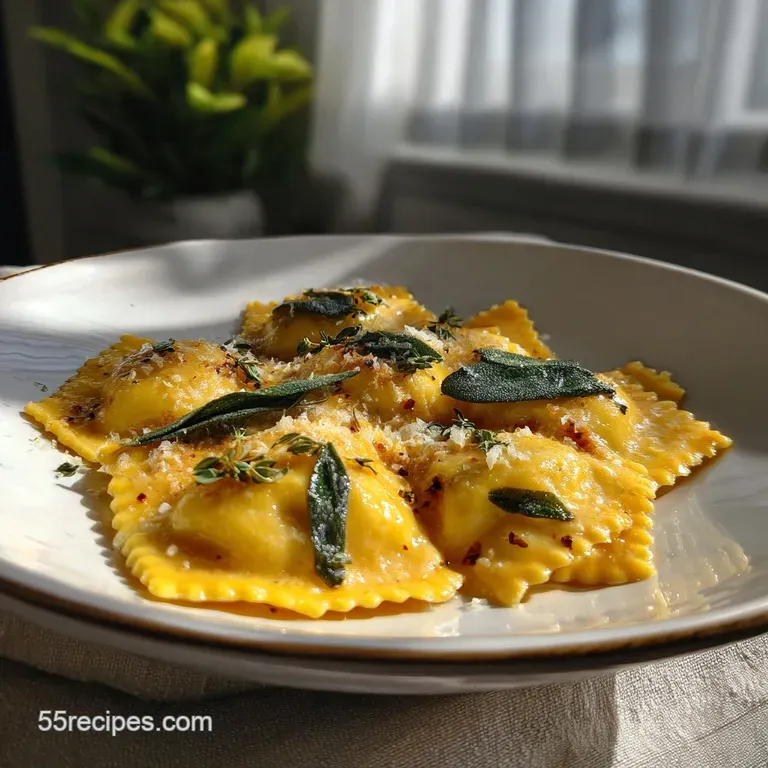
The final presentation of your Pumpkin Ravioli Pasta is all about the contrast of textures. When you plate the dish, make sure those crispy sage leaves are sitting right on top. They shouldn't just be for flavor; they are the "shatter" element that makes the soft pasta more interesting.
I like to finish with a final micro plane grating of fresh Parmesan and a few extra cracks of black pepper.
If you want to get really fancy, add some toasted hazelnuts or pine nuts for an extra layer of crunch. The earthy, toasted notes of the nuts mirror the brown butter perfectly. Serving this on a warmed plate is also a small but "chef level" move that keeps the butter from congealing before your guests can take their first bite.
Enjoy every silky, buttery mouthful you earned it!
Recipe FAQs
What sauce goes on pumpkin ravioli?
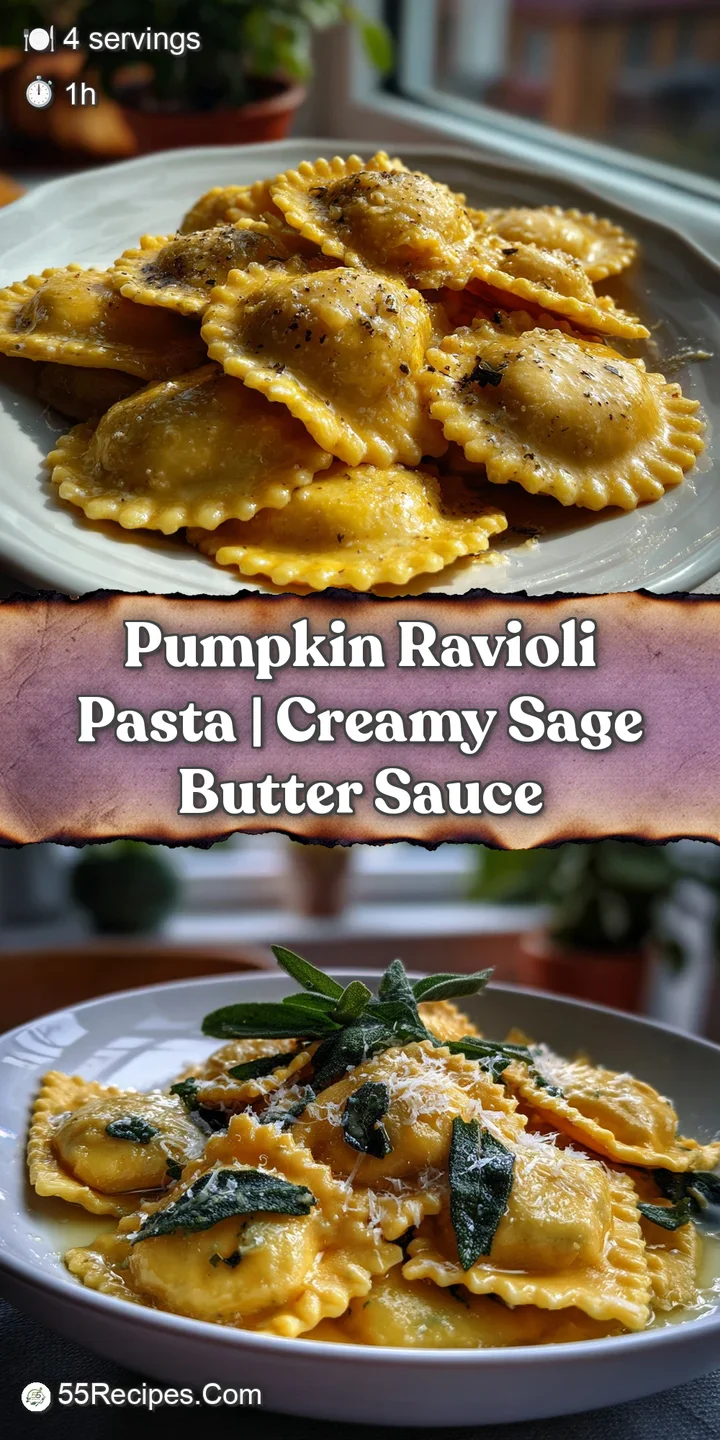
Brown butter and sage is classic. The nutty richness of brown butter pairs beautifully with the sweet pumpkin, while fried sage leaves add a fragrant, crisp counterpoint. You could also consider a creamy Alfredo or a light tomato based sauce.
What should I serve with pumpkin ravioli?
A simple green salad is perfect. Its freshness cuts through the richness of the ravioli. You might also enjoy some crusty bread for mopping up any extra sauce. For a heartier meal, consider a simple roasted chicken or pork tenderloin.
Is Trader Joe's pumpkin ravioli good?
Yes, it's a popular and generally well regarded option. Many find it to be a convenient and tasty shortcut for a seasonal favorite. It often features a pleasant pumpkin filling and decent pasta texture.
What kind of pumpkin is best for ravioli?
A sugar pumpkin or pie pumpkin is ideal. These varieties have a dense, sweet flesh with less water content and fewer stringy bits than carving pumpkins, resulting in a richer, smoother filling.
Can I use butternut squash instead of pumpkin?
Yes, butternut squash is an excellent substitute. It offers a similar sweetness and texture, and you can prepare it using the same methods as pumpkin. If you enjoyed mastering the balance of moisture in this recipe, you'll find the same principles apply to our Creamy Dreamy The Ultimate Homemade Chicken Alfredo for a similar velvety texture.
How do I prevent my ravioli from breaking when boiling?
Ensure the filling is not too wet and seal edges firmly. Overfilling can also cause strain. Make sure to press out all air pockets before sealing to prevent them from expanding and bursting during cooking.
Can I make the pasta dough ahead of time?
Yes, you can refrigerate the dough for up to 2 days. Wrap it tightly in plastic wrap. If you enjoyed mastering the dough handling in this recipe, see how we adapt similar techniques for The No Fuss Canned Pumpkin Recipes Streusel Bars.
Pumpkin Ravioli Pasta
Ingredients:
Instructions:
Nutrition Facts:
| Calories | 470 calories |
|---|---|
| Protein | 15.8 g |
| Fat | 21.2 g |
| Carbs | 52.9 g |
| Fiber | 3.1 g |
| Sugar | 2.1 g |
| Sodium | 425 mg |
