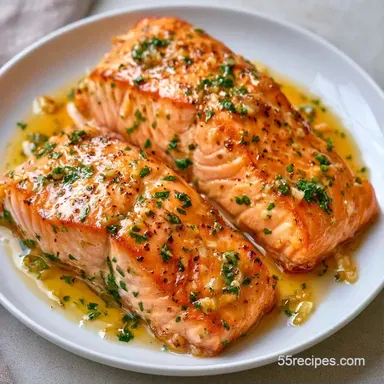
Baked Frozen Salmon Recipe with Garlic and Butter

- Time: 10 min active + 15 min baking
- Flavor & Texture: Buttery, flaky, and bright
- Perfect for: Busy weeknight dinners
Frozen Salmon Recipe with Garlic and Butter
The smell of garlic and lemon bubbling in a foil packet is a win. It's the easiest way to get a dinner on the table when you've only got frozen fillets in the freezer.
You get a rich, buttery sauce and tender fish without the stress of pan-searing. This frozen salmon recipe with garlic and butter relies on a simple steaming technique to keep things moist.
It's fast and cleanup is almost zero since everything stays in the foil. You just toss the packets when you're done.
Why the Foil Works
- Foil Pouches: Trapping the steam prevents the fish from drying out in the oven's dry heat.
- Patting Dry: Removing surface water ensures the butter sauce sticks to the fish instead of sliding off.
| Option | Prep Time | Texture | Best For |
|---|---|---|---|
| Frozen Fillets | 10 mins | Tender and steamed | Fast weeknight meals |
| Fresh Fillets | 5 mins | Firmer, easier to sear | Special occasions |
The Ingredient List
Why These Ingredients Work
| Component | Purpose | Substitute Notes |
|---|---|---|
| Unsalted Butter | Provides richness and prevents the fish from sticking | Ghee or vegan butter. Note: May introduce a subtle nuttiness |
| Lemon Juice | Balances the richness | Lime juice. Note: Result is zestier and more tropical |
| Aluminum Foil | Traps steam for moist cooking | Parchment paper. Note: Less airtight, so some steam may escape |
Ingredients
- 4 (6 oz) salmon fillets, thawed and patted dry Why this? Ensures the fish cooks evenly
- 1/2 tsp salt
- 1/4 tsp black pepper
- 4 lemon slices, cut thin
- 4 tbsp unsalted butter, melted
- 3 cloves garlic, minced
- 1 tbsp fresh lemon juice
- 1/4 tsp dried oregano
- 1 tbsp fresh parsley, finely chopped
- 1 tbsp extra virgin olive oil
Tools You Will Need
- Baking sheet (rimmed)
- Heavy duty aluminum foil
- Small whisk or fork
- Instant read meat thermometer
- Paper towels
Cooking Instructions

Phase 1: Initial Preparation
- Use paper towels to pat the thawed salmon fillets dry. Note: This prevents the fish from boiling in its own liquids
- Season each side of the fillets with 1/2 tsp salt and 1/4 tsp black pepper.
Phase 2: Building the Flavor
- Mix 4 tbsp melted butter, 3 cloves minced garlic, 1 tbsp fresh lemon juice, and 1/4 tsp dried oregano in a small bowl until well combined.
- Set your oven to 400°F (200°C).
- Cut four large squares of heavy-duty aluminum foil and brush the center of each with a portion of 1 tbsp extra virgin olive oil.
Phase 3: Folding and Baking
- Position one salmon fillet in the middle of each foil square and spread the garlic butter mixture evenly across the top.
- Add a lemon slice to each fillet, then fold the foil edges up and pinch them tightly to create a sealed, airtight packet.
- Arrange the packets on a large rimmed baking sheet and bake for 12–15 minutes.
Phase 4: The Final Touch
- Verify doneness with an instant-read meat thermometer. The fish is cooked when the center registers 145°F (63°C) or when the flesh flakes easily with a fork.
- Take them out of the oven and garnish each fillet with 1 tbsp finely chopped fresh parsley just before serving.
Avoiding Common Problems
Overcooking is the biggest risk here. Because the foil traps heat, the fish continues to cook for a few minutes after you pull it from the oven. If you wait until it looks "done" in the oven, it might be rubbery by the time you eat.
If the sauce seems watery, it usually means the salmon wasn't patted dry enough. The extra moisture from the frozen fillets mixes with the butter, thinning out that velvety glaze.
Rubbery Texture
Remove the fish slightly before it looks fully opaque in the center. The carryover heat will finish the job.
Watery Sauce
Be aggressive with the paper towels before seasoning. The drier the fish, the thicker the sauce.
Bland Flavor
Ensure you season both sides of the fillet before adding the butter mixture.
| Problem | Fix |
|---|---|
| Rubbery fish | Pull at 145°F and let rest in foil |
| Watery sauce | Pat fillets drier before cooking |
| Burnt garlic | Ensure foil is sealed tightly |
Swapping Ingredients
For a dairy-free alternative, replace the butter with melted coconut oil or a plant-based butter substitute. This maintains the richness while slightly altering the taste. For a deeper, woodsy note, try mixing in some smoked paprika.
If you prefer a more herbal flavor, swap out the oregano for fresh thyme or dill. This dish pairs perfectly with a sour cream dill sauce on the side to add a touch of creaminess.
Storage and Reheating
Store the chilled salmon in a glass container for up to 2 days in the refrigerator.
Avoid freezing the fish after cooking, as this causes the texture to degrade and become mushy.
To reheat without drying it out, place the fillet in a covered dish in the oven at 275°F (135°C) until the thickest part reaches 165°F (74°C) on an instant-read thermometer, about 10 minutes. Alternatively, warm it in a lidded pan with a teaspoon of water to create a small amount of steam.
Serving Suggestions
I suggest serving this with steamed asparagus or a scoop of fluffy quinoa to soak up the garlic butter.
For a pretty presentation, slide the fillet out of the foil and onto a platter, then pour the remaining pan juices from the pouch over the top. Garnish with an extra wedge of lemon and a sprinkle of fresh parsley for a pop of color.
Common Questions
Is it true I can bake salmon without thawing it first?
False. This recipe requires thawed fillets to ensure the seasoning sticks and the fish cooks evenly.
Tip: Thaw fillets in the refrigerator overnight for the best texture.
Can I use a different type of fish?
Yes, any firm white fish or trout works well in this method.
Tip: Adjust the baking time based on the thickness of the fillet to avoid overcooking.
How do I prevent the glaze from burning?
Seal the foil pouches tightly to trap steam and protect the butter from direct heat.
Tip: Check that the foil is pinched firmly at the top to maintain an air-tight seal.
Which side dishes pair best with this meal?
Steamed asparagus or a fresh garden salad pairs beautifully with the garlic butter.
Tip: Serve with quinoa or brown rice to soak up the extra lemon butter sauce.
Is there a healthier way to prepare this?
Yes, you can reduce the melted butter and increase the lemon juice for a lighter version.
Tip: Use a higher ratio of olive oil to butter to lower the saturated fat content.
Garlic Butter Frozen Salmon Baked