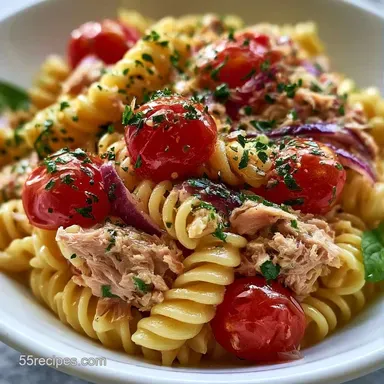
Zesty Mediterranean No Mayo Tuna Pasta Salad
- Time:15 minutes active + 10 minutes cooking
- Flavor/Texture Hook: Zesty, tangy, and crisp
- Perfect for: Healthy meal prep or a light lunch
The smell of fresh lemon juice hitting extra virgin olive oil always takes me back to the first time I tried to ditch the mayo in my salads. For years, I made those thick, creamy tuna salads that felt like a lead weight in my stomach by 2 p.m. I loved the taste, but the energy crash was real.
I needed something that felt fueled and vibrant, not something that put me for a nap.
I started experimenting with Mediterranean flavors, swapping the heavy fats for bright acids. The result was a dish that actually tasted like the ingredients instead of just tasting like a jar of condiment.
It's a bright, clean version of a classic that works just as well on a Tuesday at the office as it does at a Sunday picnic.
You can expect a meal that's crisp and tangy. This No Mayo Tuna Pasta Salad relies on the quality of the olive oil and the freshness of the lemon to carry the flavor. It's a simple assembly, but the way the flavors meld together over an hour or two in the fridge is where the magic happens.
No Mayo Tuna Pasta Salad
The beauty of this dish is how it handles storage. Unlike mayo based salads that can get a weird, separated texture after a day, this oil based version stays stable. It's the kind of meal you can make on Sunday and still have a fresh tasting lunch on Wednesday.
When you first mix it, the flavors are distinct. The saltiness of the Kalamata olives hits first, followed by the sharp bite of red onion. But as it sits, the pasta absorbs some of the vinaigrette, turning the noodles into little flavor bombs.
It's a practical approach to eating that doesn't sacrifice the punch of a traditional salad.
Quick Specs
This recipe is designed for the busy cook who wants something wholesome without spending an hour in the kitchen. The timing is tight, and the tools are minimal.
Pasta Absorption: Cooking the pasta al dente ensures it doesn't turn into mush when you add the dressing. The noodles keep a bit of a bite, which provides a necessary contrast to the flaked tuna.
Acid Balance: The combination of lemon juice and red wine vinegar provides two different types of tang. One is bright and citrusy, while the other is deeper and more pungent.
Oil Emulsion: Whisking the oil and acid together creates a temporary bond that coats the pasta evenly. This prevents the oil from just pooling at the bottom of the bowl.
| Feature | Fast Vinaigrette Version | Classic Mayo Version |
|---|---|---|
| Texture | Light and glossy | Thick and creamy |
| Prep Time | 15 minutes | 20 minutes |
| Shelf Life | 3-4 days (stable) | 2-3 days (may separate) |
| Feel | Energizing/Fresh | Heavy/Comforting |
The Key Ingredient Trick
The real hero here is the Rotini. Because this recipe uses rotini, you can actually use any type of pasta that has a hole or spiral to catch the oil. The twists in the pasta act like little scoops, holding onto the dressing and the bits of minced garlic. If you used a smooth pasta like linguine, the dressing would just slide off, leaving you with bland noodles.
Using Albacore tuna in water also keeps the profile clean. Tuna packed in oil can sometimes be too heavy when you're already adding a third of a cup of olive oil to the dressing. Water packed tuna absorbs the lemon garlic vinaigrette better, which makes the fish taste more integrated into the salad.
Everything You'll Need
I've found that using a small mason jar for the dressing is the fastest way to get a good emulsion. You just throw everything in and shake it for 30 seconds. It's much faster than whisking in a bowl and leaves you with one less thing to wash.
For the Pasta Base
- 12 oz (340g) Rotini or Fusilli pasta Why this? Spirals trap the dressing effectively
- 4 cups (950ml) Water
- 1 tbsp (15g) Salt Why this? Seasons the pasta from the inside out
For the Mediterranean Mix
- 2 (5 oz / 142g) cans Albacore tuna in water, drained thoroughly Why this? Firmer texture than light tuna
- 1 cup (150g) Cherry tomatoes, halved Why this? Adds juicy pops of acidity
- 1/2 cup (75g) Red onion, finely diced Why this? Provides a sharp, clean crunch
- 1/2 cup (60g) English cucumber, diced Why this? Cooler and less watery than field cucumbers
- 1/4 cup (15g) Fresh parsley, finely chopped Why this? Adds a fresh, herbal finish
- 1/4 cup (40g) Kalamata olives, sliced Why this? Briny, salty depth
For the Zesty Dressing
- 1/3 cup (80ml) Extra virgin olive oil Why this? Rich, fruity base for the dressing
- 3 tbsp (45ml) Freshly squeezed lemon juice Why this? Brightness that cuts through the tuna
- 1 tbsp (15ml) Red wine vinegar Why this? Adds a tangy, fermented edge
- 1 clove (5g) Garlic, minced Why this? Pungent, savory aromatic
- 1 tsp (5g) Dried oregano Why this? Classic Mediterranean herbal note
- 1/2 tsp (3g) Salt
- 1/4 tsp (1g) Black pepper
| Original Ingredient | Substitute | Why It Works |
|---|---|---|
| Rotini Pasta | Penne | Similar structure, though holds slightly less sauce |
| Albacore Tuna | Skipjack Tuna | Lighter flavor, often lower in mercury |
| Red Wine Vinegar | Apple Cider Vinegar | Similar acidity, but adds a subtle fruitiness |
| Kalamata Olives | Capers | Same briny saltiness, but more concentrated |
| Red Onion | Shallots | Milder flavor, less likely to overpower the tuna |
| Fresh Parsley | Fresh Cilantro | Earthier taste, works well with a lime twist |
Necessary Kitchen Gear
You don't need any fancy gadgets for this. A large pot for the pasta, a colander for draining, and a big mixing bowl are the basics. I highly recommend a wide bowl rather than a deep one. It gives you more surface area to toss the ingredients without smashing the cherry tomatoes or breaking the tuna chunks too small.
If you have a whisk, use it for the dressing, but a jar is my go to shortcut. Also, a sharp chef's knife is important for the red onion. You want the onion diced very finely so you get a bit of flavor in every bite without biting into a huge, raw chunk of onion.
The Cooking Process
This is a fast process, but the order of operations matters. If you add the dressing to hot pasta, the noodles will absorb all the oil immediately, and you'll end up with a dry salad.
Phase 1: Preparing the Base
Bring the salted water to a rolling boil. Add the pasta and cook according to package directions until it is al dente (usually 8-10 minutes). The pasta should have a slight resistance in the center. Drain the pasta in a colander and rinse briefly with cool water.
This stops the cooking process and washes away excess starch so the noodles don't stick together. Transfer the cooled pasta to your large mixing bowl.
Phase 2: Emulsifying the Dressing
In a small bowl or mason jar, combine the olive oil, lemon juice, red wine vinegar, minced garlic, oregano, salt, and pepper. Whisk vigorously or shake the jar for 30 seconds until the mixture is opaque.
You're looking for a unified emulsion where the oil and lemon juice have blended into a thick, glossy liquid rather than staying separated.
Phase 3: The Final Assembly
Add the drained tuna to the pasta. Use a fork to flake the fish into bite-sized chunks, being careful not to over mix it into a paste. Fold in the halved cherry tomatoes, diced red onion, English cucumber, chopped parsley, and sliced Kalamata olives. Pour the emulsified dressing over the mixture.
Toss everything thoroughly until all ingredients are evenly coated in the dressing.
Chef's Note: For the best flavor, let the salad sit in the fridge for at least 30 minutes before serving. This allows the garlic and oregano to permeate the tuna and pasta.
Avoiding Common Issues
The most frequent complaint with a No Mayo Tuna Pasta Salad is that it can turn out "dry" after a few hours in the fridge. This happens because pasta is like a sponge; it continues to absorb liquid even after it's cooked and cooled.
Why Your Pasta Feels Dry
If you notice the salad looks a bit dull or the noodles seem thirsty, it's simply the starch absorbing the vinaigrette. To fix this, don't add more salt. Instead, drizzle in another tablespoon of olive oil and a squeeze of fresh lemon juice right before serving. This restores the glossy finish and wakes up the flavors.
To Stop the Veggies from Weeping
Sometimes the cucumbers and tomatoes release water, which thins out the dressing. To prevent this, ensure your English cucumber is diced and patted dry with a paper towel. Also, add the tomatoes and cucumbers at the very end of the assembly process.
To Avoid Fishy Overtones
If the tuna flavor is too dominant, it's usually because the tuna wasn't drained enough. Water packed tuna can leave a metallic aftertaste if the liquid remains. Press the tuna firmly against the lid of the can or use a fine mesh strainer to get every last drop of water out before adding it to the bowl.
| Problem | Root Cause | Solution |
|---|---|---|
| Dry/Bland Pasta | Starch absorption | Add 1 tbsp olive oil + lemon squeeze |
| Watery Dressing | Veggie moisture | Pat cucumber dry; add veggies last |
| Overpowering Tuna | Poor drainage | Press tuna firmly to remove all water |
Fun Flavor Twists
Once you have the base down, you can easily shift the profile of this recipe. I often change the herbs depending on what's in my garden. If I want something a bit more "bright," I'll swap the parsley for fresh basil and add a pinch of red pepper flakes for heat.
For a higher protein version, you can stir in 1/4 cup of Greek yogurt. This gives you that creamy texture without the mayo, keeping it a Healthy Tuna Pasta Salad No Mayo style. The yogurt adds a tang that complements the lemon perfectly.
If you're looking for more inspiration for your meal prep, you might like my Zesty Homemade Salad Dressing, which uses a similar acid to oil ratio and works great on simple greens. For those who want to swap the tuna for another protein, this Mediterranean style also works well with grilled shrimp or chickpeas for a vegetarian option.
For a Salty Mediterranean Punch
Increase the Kalamata olives to 1/2 cup and add a handful of crumbled feta cheese. The saltiness of the feta replaces some of the need for added salt in the dressing.
For a Low Carb Alternative
Swap the rotini for chickpea pasta or spiralized zucchini. If using zucchini, don't boil it; just sauté it for 2 minutes so it doesn't release too much water into your No Mayo Tuna Pasta Salad.
Scaling the Recipe
When you're making this for a crowd, you can't always just double every ingredient linearly. Spices and salt tend to intensify differently when scaled up.
Scaling Down (1/2 Batch): Use 6 oz of pasta and one 5 oz can of tuna. Reduce the olive oil to 2.5 tablespoons and the lemon juice to 1.5 tablespoons. Use a smaller bowl to ensure the dressing still coats everything evenly.
Scaling Up (2x-4x Batch): For a double or triple batch, increase the bulk ingredients (pasta, tuna, veggies) normally. However, only increase the salt and dried oregano to 1.5x the original amount first. Taste the salad after tossing and add more if needed.
When doubling the recipe, you might find you need slightly less liquid (about 10% less) because the larger volume of ingredients retains moisture more effectively.
Pasta Myths
There's a common belief that rinsing pasta is a "sin" in the kitchen. In a hot pasta dish, that's true because you want the starch to help the sauce cling to the noodle. But for a cold No Mayo Tuna Pasta Salad, rinsing is a must.
It stops the cooking immediately and prevents the noodles from sticking together into one big clump.
Another myth is that tuna packed in oil is better for salads because it's "more flavorful." While it tastes richer, it often clashes with a vinaigrette. The extra oil from the can can make the salad feel greasy rather than zesty.
Stick to water packed tuna and let the high-quality extra virgin olive oil do the heavy lifting.
Storage and Waste
This salad keeps remarkably well. Store it in an airtight container in the fridge for up to 4 days. I don't recommend freezing it, as the cucumbers and tomatoes will lose their structure and become mushy upon thawing.
To keep the No Mayo Tuna Pasta Salad fresh, give it a quick stir and a fresh squeeze of lemon before each serving. This redistributes the oil that may have settled at the bottom.
- - Olive Brine
- Don't pour the liquid from the Kalamata olive jar down the drain. It's packed with flavor. Use a teaspoon of it in your next homemade vinaigrette or use it to marinate chicken breasts.
- - Tuna Can
- If you have a bit of tuna left in the can, mix it with the leftover dressing from the bowl and spread it on a piece of whole grain toast.
- - Vegetable Scraps
- Save the ends of the red onion and the cucumber peels in a freezer bag. Once the bag is full, boil them with other scraps to make a basic vegetable stock.
Serving and Enjoyment
This is a versatile dish. I usually serve it as a main lunch, but it also works as a side for grilled proteins. It pairs really well with a light piece of fish; if you're looking for another seafood idea, my Tilapia and Pasta is a great warm counterpart to this cold salad.
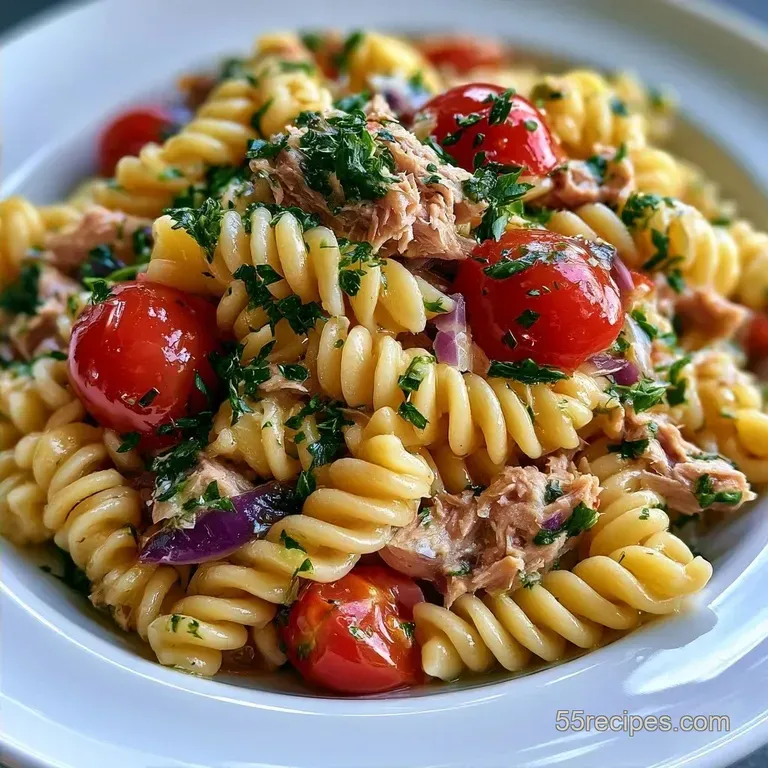
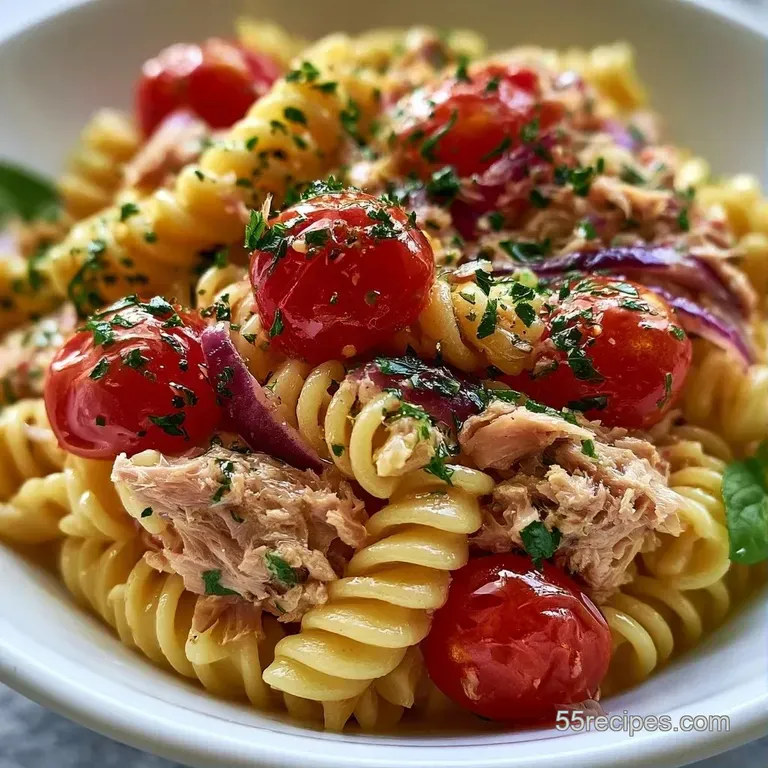
For the best presentation, serve it in a wide, shallow bowl. Top it with a few extra whole cherry tomatoes and a sprinkle of fresh parsley to make the colors pop. Because it's a Cold Tuna Pasta Salad No Mayo version, it's refreshing on a hot day, but it's also filling enough to be a stand alone meal.
If you're taking this to a potluck, keep the dressing in a separate jar and toss it in just before serving. This ensures the pasta doesn't absorb too much of the liquid while it's sitting on the table, keeping the texture crisp and the flavors vibrant.
Trust me, that little bit of extra effort makes a huge difference in the final bite.
High in Sodium
840 mg 840 mg of sodium per serving (37% 37% of daily value)
The American Heart Association recommends a limit of 2,300mg of sodium per day for most adults, with an ideal limit of 1,500mg for most adults with hypertension.
Tips to Reduce Sodium
-
Reduce Pasta Water Salt-25%
Reduce or omit the 1 tbsp of salt used for boiling the pasta; most of this sodium is discarded, but the pasta still absorbs a significant amount.
-
Eliminate Added Dressing Salt-25%
Remove the 1/2 tsp of salt from the dressing and allow the lemon juice and red wine vinegar to provide the necessary flavor punch.
-
Low-Sodium Tuna Choice-20%
Switch to no-salt-added canned tuna to reduce the sodium inherent in the canning process.
-
Rinse Kalamata Olives-15%
Rinse the Kalamata olives thoroughly under cold water before slicing to remove excess surface brine.
-
Enhance Fresh Aromatics
Double the amount of fresh parsley and minced garlic to add more complex flavor without increasing sodium levels.
Recipe FAQs
What can I use instead of mayonnaise in a tuna pasta salad?
Use an emulsion of olive oil, lemon juice, and red wine vinegar. This creates a light, zesty dressing that replaces the heaviness of mayo.
How to make tuna salad taste good without mayonnaise?
Whisk olive oil, lemon juice, and vinegar with garlic and oregano. If you enjoyed mastering the emulsion technique here, see how the same principle works in our Brown Butter Sauce to create a unified flavor.
What can I serve with tuna pasta salad?
Serve with light, complementary side dishes. This ensures the meal remains refreshing and balanced without overpowering the dressing.
Is it normal to put salad cream or mayonnaise on tuna pasta?
Yes, it is common. However, using a vinaigrette makes the dish lighter and allows the fresh vegetables to stand out.
How to use canned tuna in a salad recipe?
Drain the water thoroughly and flake the fish with a fork. This prevents the salad from becoming watery and ensures the tuna is evenly distributed.
What is the best healthy tuna salad recipe?
Choose a recipe using extra virgin olive oil and fresh vegetables. This provides heart-healthy fats without the processed additives found in commercial dressings.
What goes with tuna instead of mayonnaise?
Combine lemon juice and red wine vinegar with olive oil. These ingredients provide the acidity and moisture needed to bind the tuna and vegetables effectively.
No Mayo Tuna Pasta Salad for 4 Servings