How to Roast a Brined Turkey: Foolproof Guide
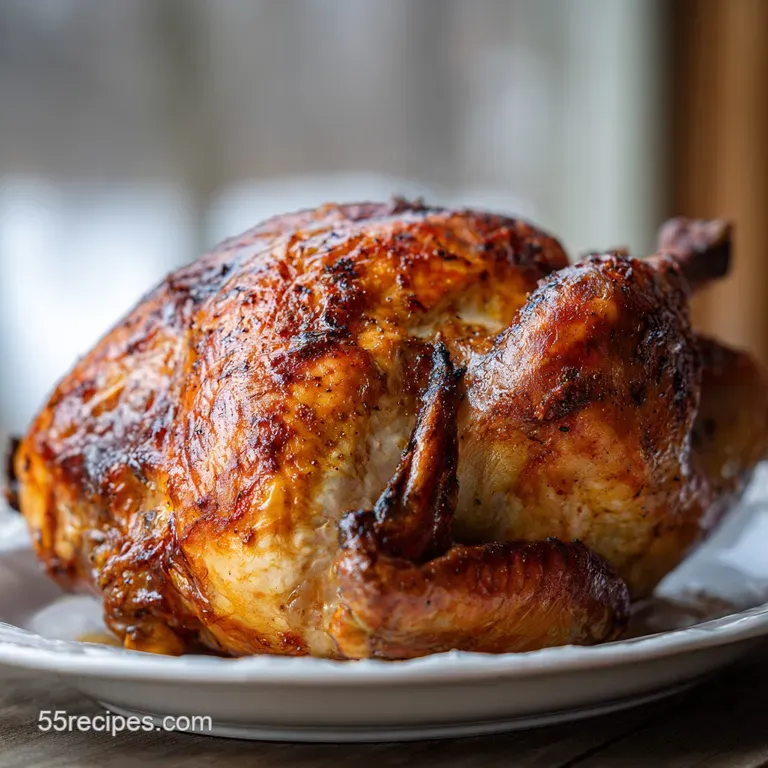
- Time: Active 45 minutes, Passive 14 hours, Total 14 hours 45 minutes
- Flavor/Texture Hook: Shatter crisp skin with velvety, herb infused meat
- Perfect for: Stress free holiday hosting or a grand Sunday family dinner
- How to roast a brined turkey with ease
- Why This Method Works
- Essential Component Analysis
- Quality Ingredients for Better Flavor
- Best Tools for Easy Roasting
- Step-by-Step Guide to Success
- Fixing Common Bird Disasters
- Scaling for Different Crowds
- Debunking Turkey Myths
- Storing and Repurposing Your Turkey
- Sides to Complete Your Meal
- Roasting Brined Turkey FAQs
- 📝 Recipe Card
How to roast a brined turkey with ease
I still remember the "Great Turkey Disaster" of 2014. I’d spent a fortune on a heritage bird, followed a fancy magazine recipe to the letter, and ended up serving something that had the texture of a wool sweater. It was heartbreaking.
I realized then that no amount of gravy can save a bird that's been parched by the oven’s heat. That’s when I started obsessing over the science of the soak.
There is nothing quite like the aroma that fills your kitchen when you finally pull that bird out of the oven. It’s a mix of toasted rosemary, sizzling butter, and that deep, savory scent of roasted poultry that practically screams comfort.
When you get it right, the skin doesn't just look good; it has a literal snap to it, revealing meat underneath that is so juicy it actually glistens on the carving board.
We’re going to walk through this together so you don't make the same mistakes I did. No more dry white meat or rubbery skin. By using a simple wet brine and a few temperature tricks, we’re going to make sure your turkey is the star of the show.
Trust me, once you see how much moisture a simple salt and honey bath adds, you’ll never go back to the old way.
Why This Method Works
- Osmosis Synergy: The salt in the brine moves from an area of high concentration (the water) to low concentration (the turkey cells), carrying moisture and flavor deep into the muscle fibers.
- Protein Relaxation: Salt causes the tightly wound protein filaments in the meat to unwind and swell, which allows them to hold onto 10% more water during the aggressive heat of roasting.
- Maillard Acceleration: The raw honey in our brine provides simple sugars that react with the heat, creating a deep mahogany color and complex savory sweet notes on the skin.
- Thermal Buffer: Because the meat is more hydrated, it is much more forgiving if you accidentally leave it in the oven for an extra 10 minutes past its peak.
| Turkey Weight | Internal Temp | Rest Time | Visual Cue |
|---|---|---|---|
| 5.5 - 6.5 kg | 74°C (165°F) | 30 minutes | Juices run clear when thigh is pierced |
| 6.5 - 7.5 kg | 74°C (165°F) | 45 minutes | Drumsticks move easily in sockets |
| 8 kg + | 74°C (165°F) | 1 hour | Skin is deep gold and taut |
Roasting a bird of this size requires patience, and the resting time is just as vital as the cook time. If you cut into it too soon, all that moisture we worked so hard to get inside will just puddle out on your counter, leaving the meat parched.
Essential Component Analysis
| Ingredient | Science Role | Pro Secret |
|---|---|---|
| Kosher Salt | Breaks down myosin proteins to retain juice | Use coarse salt; it dissolves cleaner and isn't as "sharp" as table salt. |
| Raw Honey | Lowers the caramelization temperature of the skin | Maple syrup works too, but honey gives a more floral, subtle sweetness. |
| Fresh Oranges | Acidity helps tenderize the surface layers | Squeeze the rounds slightly before dropping them into the brine. |
| Garlic Head | Releases sulfur compounds for a savory base | Halve it crosswise to expose every single clove to the liquid. |
The key to a successful roast starts long before the oven is turned on. Similar to the prep work for The Sunday Roast recipe, ensuring your aromatics are fresh will make a massive difference in the final aroma.
Quality Ingredients for Better Flavor
For the brine, you will need 3.8 liters (1 gallon) of cold filtered water and 180g (3/4 cup) of Kosher salt. To balance that salt, we use 120ml (1/2 cup) of raw honey or maple syrup.
For the aromatics, grab 1 head of garlic, 3 sprigs of fresh rosemary, 5 sprigs of fresh thyme, and 2 tablespoons of whole black peppercorns. We also use 2 large oranges, sliced into rounds, to add a bright, citrusy lift to the brine.
For the actual roasting, you’ll need one 5.9 kg (13 lb) whole turkey, ensuring it is fresh or fully thawed. You will also need 115g (1/2 cup) of unsalted butter, softened to room temperature, and 1 teaspoon of cracked black pepper.
Finally, for the roasting pan floor, gather 1 large onion (quartered), 2 carrots (roughly chopped), and 2 stalks of celery (roughly chopped).
- Kosher Salt: Essential for the brine. Substitute: Sea salt (use 20% less by volume). Why this? Larger crystals dissolve predictably without over salting the bird.
- Raw Honey: Adds sweetness and browning. Substitute: Brown sugar. Why this? It provides a more complex flavor profile than white sugar.
- Unsalted Butter: For rubbing under and over the skin. Substitute: Ghee or olive oil. Why this? Milk solids in butter help create a perfectly browned crust.
- Whole Turkey: The main event. Substitute: Two large turkey breasts if cooking for a smaller crowd. Why this? Roasting a whole bird provides the best bones for gravy.
Best Tools for Easy Roasting
You don't need a professional kitchen, but a few specific items make this much safer and easier. First, you need a very large, food grade bucket or a specialized brining bag that can hold at least 8 to 10 liters. If you don't have a bucket, a clean cooler with plenty of ice around the bag works in a pinch.
A heavy duty roasting pan with a rack is non negotiable. The rack keeps the bird elevated, allowing hot air to circulate under the turkey so the bottom doesn't get soggy. You’ll also want a digital meat thermometer. This is the only way to be 100% sure the turkey is cooked through without overdoing it.
Honestly, don't even bother guessing by the "pop up" timers that come in the bird they are notoriously inaccurate and usually go off when the meat is already past the point of no return.
step-by-step Guide to Success
- Heat the aromatics. Combine 1 liter of the water with the salt, honey, garlic, rosemary, thyme, and peppercorns in a large pot. Note: Heating a portion of the water first ensures the salt and honey dissolve completely.
- Infuse the brine. Bring the mixture to a simmer for 5 minutes until the salt is gone and the kitchen smells like a garden.
- Cool it down. Add the remaining cold water and the orange slices to the pot. Note: Never put a raw turkey into warm liquid; the brine must be completely cold.
- Submerge the bird. Place the turkey in your brining container and pour the liquid over it. Note: If the bird floats, weigh it down with a heavy plate.
- Refrigerate and wait. Let the turkey soak for at least 12 hours, but no more than 24. Note: Over brining can lead to a "mushy" texture.
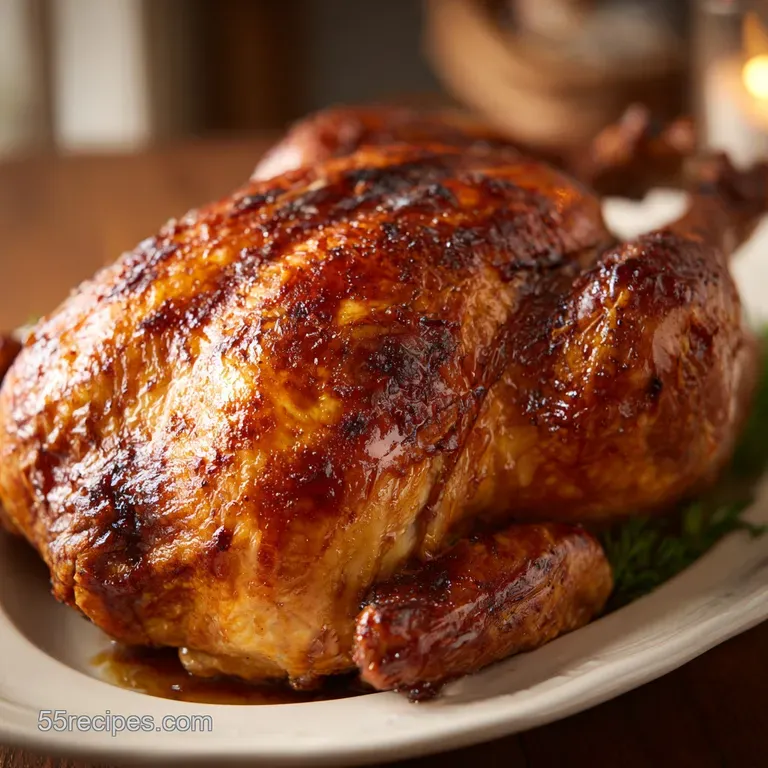
- Dry the skin. Remove the turkey from the brine, pat it thoroughly dry with paper towels, and let it sit uncovered in the fridge for 2 hours. Note: This "air drying" phase is the secret to skin that will shatter when you bite it.
- Season and stuff. Rub the softened butter all over and under the skin. Place the onion, carrots, and celery in the bottom of the roasting pan.
- Start the roast. Preheat your oven to 165°C (325°F). Place the bird on the rack and roast until the skin is golden and the thermometer hits 74°C (165°F).
- Rest the meat. Transfer the turkey to a carving board and let it sit for at least 30 to 45 minutes. Note: This allows the juices to redistribute throughout the meat.
Chef's Tip: If you want an even deeper flavor, consider using a Turkey Injection Recipe after the brining process. It’s like a double insurance policy for moisture.
Fixing Common Bird Disasters
One of the most frequent complaints I hear is that the turkey tastes "too salty." This usually happens because the bird was pre brined at the grocery store. Check the label carefully for words like "enhanced," "basted," or "in a salt solution." If your turkey is already treated, skip the wet brine entirely or you'll end up with a salt lick.
Another issue is the skin browning too fast while the inside is still raw. This usually happens in ovens with strong top heating elements. If you see the breast getting dark too quickly, don't panic. Just make a "tent" out of aluminum foil and drape it loosely over the top.
This deflects the direct heat while the rest of the bird catches up.
| Problem | Root Cause | Solution |
|---|---|---|
| Rubbery Skin | Not enough drying time | Pat dry with paper towels and air dry in the fridge for 2 hours before roasting. |
| Pink Meat Near Bone | Natural marrow seepage | As long as the temp is 74°C (165°F), it is safe. Pinkness is common in young birds. |
| Dry Breast Meat | Overcooked while waiting for thighs | Remove the bird when the breast hits 72°C; carryover heat will take it to 74°C. |
Common Mistakes Checklist
- ✓ Forgetting to remove the giblets from the cavity before brining (they won't ruin it, but they are hard to find later!).
- ✓ Using a brine that is still warm, which can partially "cook" the outside and invite bacteria.
- ✓ Not rinsing the bird after brining if you used a very high salt concentration.
- ✓ Opening the oven door every 20 minutes to baste this just lets all the heat out and dries the meat.
Scaling for Different Crowds
If you are cooking for a smaller group, you can easily use this same method for a 3 kg turkey breast. You'll want to reduce the brining time to about 6 hours so it doesn't get too salty.
The roasting time will also drop significantly, usually taking only 1 hour 15 minutes to 1 hour 45 minutes.
For those massive 9 kg (20 lb) birds, you’ll need to double the brine recipe to ensure the bird is fully submerged. Keep the salt to water ratio the same (about 45g of salt per liter of water).
When roasting larger birds, I recommend starting them upside down (breast side down) for the first hour to let the juices pool in the breast meat, then carefully flipping them over to finish browning the skin.
| Premium Ingredient | Budget Alternative | Flavor Impact |
|---|---|---|
| Fresh Herbs (Rosemary/Thyme) | Dried Poultry Seasoning | Slightly less "bright" but still very savory and aromatic. |
| Raw Honey | Granulated Sugar | The skin will brown faster; watch for burning. |
| Fresh Oranges | Orange Juice Concentrate | Adds a stronger citrus punch but less zest aroma. |
Debunking Turkey Myths
A common misconception is that you need to baste the turkey every half hour to keep it moist. In reality, the liquid you pour over the skin just runs off into the pan. Every time you open that oven door, the temperature drops, which actually extends the cooking time and dries the meat out more.
The brine handles the moisture from the inside out; the butter handles the skin from the outside in. Leave the door shut!
Another myth is that brining makes the gravy too salty. This only happens if you don't use a rack. If the bird sits directly in its juices, the salt from the skin leaches into the pan drippings.
By using an elevated rack and adding aromatic vegetables (onion, carrot, celery) to the pan, you create a balanced base for a velvety, flavorful gravy that isn't a salt bomb.
Storing and Repurposing Your Turkey
Leftover turkey is practically a holiday requirement. Once the bird has cooled, carve all the remaining meat off the bones. Store it in an airtight container in the fridge for up to 4 days. If you won't get through it all, turkey freezes beautifully for up to 3 months.
I like to freeze it in 500g portions with a little bit of leftover gravy to keep it from drying out in the freezer.
Don't you dare throw away that carcass! The bones from a brined and roasted turkey make the most incredible stock. Throw the bones into a large pot with some water, an onion, and a few peppercorns.
Simmer it for 4 hours, and you’ll have a golden, gelatinous liquid gold that is perfect for soups or risotto. It’s the ultimate zero waste move that keeps the flavors going for weeks.
Sides to Complete Your Meal
This turkey is the star, but it needs a supporting cast. I always serve this with a sharp, slightly sweet cranberry sauce to cut through the richness of the buttered skin. A sourdough stuffing is also a great choice because it soaks up the juices without becoming a soggy mess.
If you are looking for something a bit different for the side, this roast pairs perfectly with a creamy root vegetable mash. Since the oven is already on and set to a moderate temperature, you can often slide a tray of roasted Brussels sprouts or honey glazed carrots onto the bottom rack during the last 45 minutes of the turkey's cook time.
It makes timing the whole meal much less of a headache!
Roasting Brined Turkey FAQs
How do you cook a turkey after brining it?
Pat it very dry, then roast using high heat initially, followed by moderate heat. After soaking, you must thoroughly dry the skin to achieve crispiness, then rub with butter and roast uncovered until the internal temperature hits 165°F (74°C) in the thickest part of the thigh.
How long does it take to cook a brined turkey?
Cooking time varies significantly based on size, but budget 13 15 minutes per pound at 325°F (165°C). Always rely on a meat thermometer, not time, as the brine has already significantly impacted the moisture level, making precise time estimation difficult.
Do you need to rinse a brined turkey before roasting?
No, do not rinse a lightly or moderately brined turkey. A quick pat dry is usually sufficient; rinsing washes away the flavor absorbed just beneath the skin, and if you skip rinsing, you'll benefit from the residual seasoning.
Do brined turkeys roast faster?
False. While the added moisture can slightly buffer the initial temperature rise, the cooking time is largely the same as an unbrined bird; the brine's benefit is moisture retention, not speed. If you want a great roasted result, focus on mastering temperature control, just as you would when learning How to Cook recipe.
Why is my brined turkey skin still soggy after roasting?
The skin was likely too wet when it entered the oven. You must air-dry the turkey uncovered in the refrigerator for at least two hours after brining; this critical step evaporates surface moisture so the skin can crisp up, a technique that also improves crispy results when you learn How to Roast recipe.
Can I skip resting the turkey after roasting if it was brined?
No, resting is mandatory for juicy results, even with brining. Let the turkey rest, tented loosely with foil, for 30 45 minutes so the muscle fibers can relax and reabsorb the accumulated juices.
What internal temperature must a brined turkey reach?
Pull the bird when the breast registers 160°F (71°C) and the thigh reaches 170°F (77°C). Due to carryover cooking during the rest, the internal temperature will rise the remaining 5 degrees, ensuring the breast hits the safe and tender final temperature of 165°F (74°C).
Roast Brined Turkey Guide
Ingredients:
Instructions:
Nutrition Facts:
| Calories | 628 kcal |
|---|---|
| Protein | 74.8 g |
| Fat | 34.5 g |
| Carbs | 2.4 g |
| Fiber | 0.4 g |
| Sugar | 1.6 g |
| Sodium | 790 mg |
