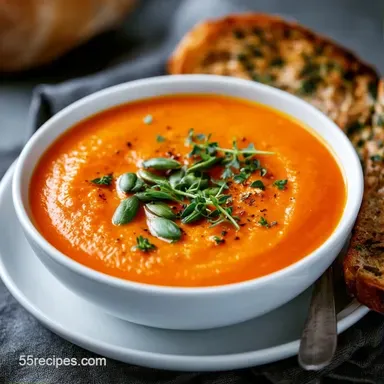
Roasted Pumpkin Soup with Sage
- Time: 15 min active + 60 min cooking
- Flavor/Texture Hook: Rich, smooth, and savory sweet
- Perfect for: Chilly weeknight dinners or family gatherings
The smell of roasted squash and cinnamon hits you the moment you open the door. It's the kind of aroma that makes everyone migrate toward the kitchen without being told. For me, this dish is all about the first rainy Tuesday of October, when the house feels a bit too cold and you need something that feels like a warm hug in a bowl.
I used to just boil everything in one pot, but the taste was flat. Bringing a pot of Pumpkin Soup to the table that actually tastes like autumn requires a bit of patience with the oven. You want those edges of the squash to turn a deep, dark mahogany before they ever touch the liquid.
Homemade Pumpkin Soup tastes different when you balance the richness of coconut milk with a hit of bright acid. It's that contrast between the heavy, comforting base and a sharp finish that keeps you coming back for more.
How to Nail This
- Roasted Base: Roasting the pumpkin at 200°C creates brown, caramelized edges. This adds a toasted depth you can't get from simmering raw chunks.
- Fat Balance: The coconut milk adds a creamy weight that carries the cinnamon and nutmeg across your palate.
Right then, let's look at how the method changes the result. Most people argue between using a pot or an oven, but the real magic happens when you do both.
| Method | Time | Texture | Best For |
|---|---|---|---|
| Stovetop Only | 45 mins | Lighter, thinner | Quick weeknights |
| Oven + Pot | 75 mins | Dense, rich | Maximum flavor |
| Slow Cooker | 6 hours | Very soft, uniform | Set and forget |
Ingredient Deep Dive
The components here are all about contrast. We have the natural sugars of the pumpkin hitting the salty butter and the sharp lemon juice. If you enjoy a bit of heat, this base also works well for a creamy coconut milk curry soup by swapping sage for red curry paste.
| Ingredient | What It Does | Best Swap |
|---|---|---|
| Sugar Pumpkin | Provides the earthy, sweet base | Butternut squash (slightly nuttier) |
| Full fat Coconut Milk | Adds creaminess and stabilizes the soup | Heavy cream (richer, less tropical) |
| Fresh Sage | Cuts through the sweetness with a piney note | Fresh thyme (more subtle) |
| Lemon Juice | Brightens the flavor and cuts the fat | Lime juice (sharper, zesty) |
For the Pumpkin Soup base, I always suggest sugar pumpkins over the giant carving pumpkins. Carving pumpkins are watery and bland, while sugar pumpkins have a dense, creamy flesh. Souring the Pumpkin Soup at the very end with lemon juice is the one step that prevents it from tasting like a dessert.
Tools You'll Need
While not strictly required, these tools will help you prepare the Pumpkin Soup with ease.
- Large Sheet Pan: Choose one with raised edges to prevent oil from leaking into the oven.
- Dutch Oven: The heavy base ensures consistent heat distribution while cooking the onions.
- Immersion Blender: This is the quickest method for achieving a creamy consistency without moving hot soup into a blender jar.
- Parchment Paper: Stops the pumpkin from sticking to the baking sheet.
From Prep to Plate
For the Roasted Base
Set your oven to 200°C. Combine the cubed pumpkin with olive oil, salt, and pepper on a parchment lined baking sheet. Arrange them in a single layer to ensure they roast instead of steaming.
Bake for 30-40 minutes, flipping halfway through, until the edges are mahogany colored and tender.
For the Aromatic Sauté
While the pumpkin is in the oven, melt butter in a Dutch oven over medium heat. Sauté the diced onions for 5-7 minutes until they are translucent. Stir in the chopped sage, minced garlic, nutmeg, and cinnamon.
Cook for another 2 minutes until the spices are fragrant and nutty.
For the Simmer and Finish
Add the vegetable broth and roasted pumpkin cubes to the pot. Let it simmer gently for 10 minutes to allow the flavors to merge. Mix in the maple syrup and coconut milk.
The Final Blend
Using an immersion blender, process the Pumpkin Soup on high for 60-90 seconds until completely smooth. Stir in the fresh lemon juice immediately before ladling into bowls.
Fixing Common Issues
If your Pumpkin Soup is too thin, it usually means the pumpkin wasn't roasted long enough or the broth was too plentiful. You can fix this by simmering the pot uncovered for 10 minutes to reduce the liquid.
When the Pumpkin Soup has a grainy texture, it's often because the onions weren't sautéed enough or the blender didn't run long enough. Give it another 60 seconds with the immersion blender on the highest setting.
If the Pumpkin Soup flavor feels bland, don't just add salt. Often, it needs more acid. A tiny extra squeeze of lemon juice can wake up all the other spices.
| Problem | Root Cause | Solution |
|---|---|---|
| Too Watery | Excess broth or under roasted pumpkin | Simmer uncovered for 10 mins |
| Grainy Texture | Under processed aromatics | Blend for another 60 seconds |
| Bland Taste | Lack of acidity | Add 1 tsp more lemon juice |
Swaps and Variations
Thanks to the coconut milk, this is already a wonderful Vegan Pumpkin Soup. For an even lighter version, simply use low-sodium broth and omit the butter.
For a Healthy Pumpkin Soup, you can replace the maple syrup with a bit of stevia or exclude it entirely, as the roasted pumpkin provides natural sweetness. You can prepare a Slow Cooker Pumpkin Soup if you're pressed for time, but since you'll lose the roasted depth, I still advise browning the pumpkin in the oven first.
To add a little spark, stir in some smoked paprika or a dash of cayenne. If you'd like to try another squash, my butternut squash soup offers a slightly different flavor profile.
| Original Ingredient | Substitute | Why It Works |
|---|---|---|
| Vegetable Broth | Chicken Broth | Deeper, meatier flavor. Note: Not vegan |
| Maple Syrup | Honey | Similar sweetness. Note: Slightly floral |
| Coconut Milk | Cashew Cream | Same creamy thickness. Note: More neutral taste |
Storage and Freezing
Keep any remaining soup in an airtight container in the refrigerator for 4 days. You'll find the taste actually improves after a night's rest as the nutmeg and cinnamon meld together.
For longer storage, this Pumpkin Soup stays fresh in the freezer for 3 months. It's best to freeze the soup in single serving portions. Let it defrost in the refrigerator overnight before serving.
To warm it up, place the soup in a pot over medium low heat. If the texture has become too thick during freezing, stir in a bit of coconut milk or water. Gently stir until it begins to bubble, taking care not to let it reach a full boil, as the coconut milk could split.
Presentation Ideas
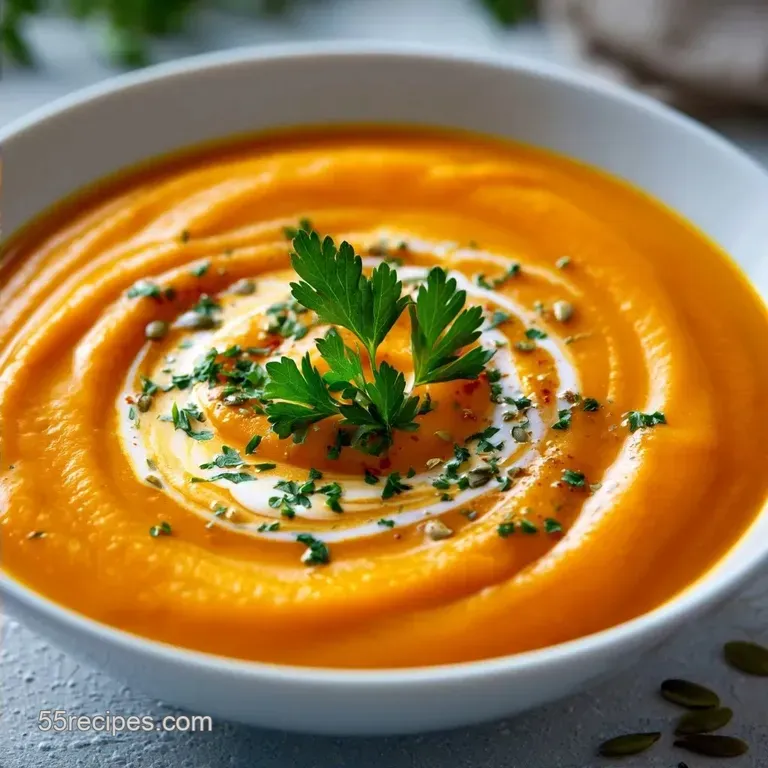
To make this Pumpkin Soup look like it came from a bistro, focus on the garnishes. A swirl of coconut cream on top creates a beautiful white contrast against the orange base.
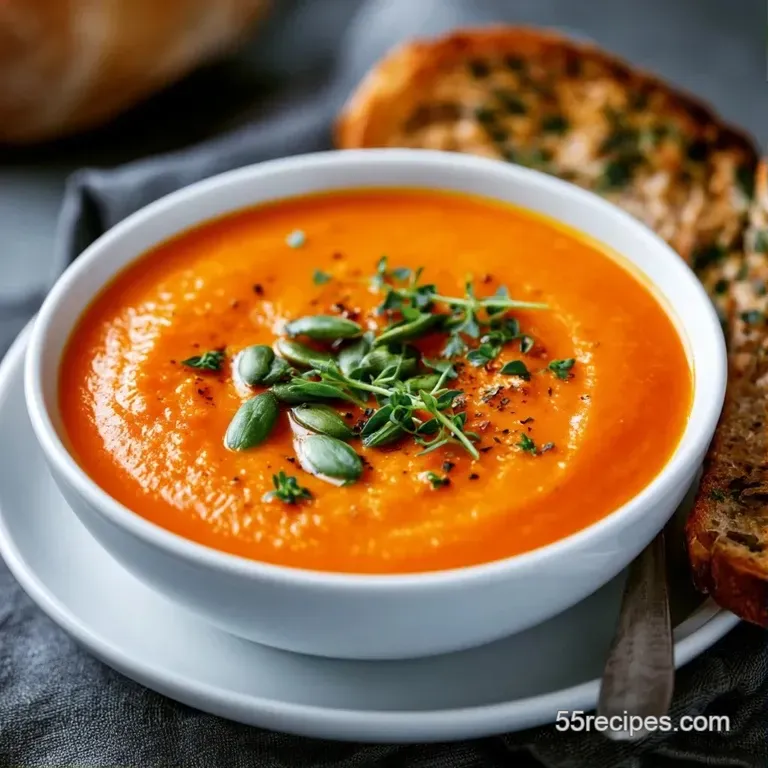
Add a few toasted pumpkin seeds for a bit of crunch. I also like to fry a couple of whole sage leaves in butter for 30 seconds until they're crisp. Place one leaf in the center of the bowl for a professional touch.
Serve your Pumpkin Soup in wide, shallow bowls rather than deep mugs. This allows the aroma to hit the diner more effectively and gives you more room for toppings like cracked black pepper or a drizzle of olive oil.
How to Actually Nail This
The key to a perfect Pumpkin Soup is managing the natural sugars. Since pumpkins are quite sweet, they can quickly shift from caramelized to burnt, so keep a close eye on the oven around the 30 minute mark.
A balanced Pumpkin Soup relies on the harmony between "warm" spices (cinnamon, nutmeg) and "bright" elements (lemon). If the flavor profile resembles a pie too closely, simply add a bit more lemon or salt.
To achieve maximum Pumpkin Soup richness, avoid using "light" coconut milk. The fat provides the necessary body, ensuring the soup doesn't end up feeling like a thin vegetable broth.
Lastly, the Pumpkin Soup finish is all about the blend. When using a stand blender, process in small batches and leave the vent slightly open to prevent a pressure explosion. A silky, velvety texture is what elevates this from a home meal to a restaurant quality dish.
Chef's Note: If you have pumpkin seeds left over from peeling the squash, don't throw them away. Rinse them, toss with oil and salt, and roast at 200°C for 10 minutes for a delicious garnish.
Now you can create a truly comforting meal. Just remember to roast your squash until it is dark and aromatic, and you'll have a Pumpkin Soup that everyone will want the recipe for. Enjoy your Pumpkin Soup!
Recipe FAQs
How to get a deep flavor in pumpkin soup?
Roast the pumpkin cubes at 400°F until the edges are mahogany colored. This caramelization adds a rich, nutty base that boiling cannot achieve.
What prevents the soup from tasting bland?
Stir in fresh lemon juice right before serving. The acidity cuts through the richness of the coconut milk to brighten the earthy pumpkin.
Is it true that pumpkin must be boiled instead of roasted?
No, and here's why. Roasting concentrates the sugars and provides a more complex flavor profile than simmering in water.
Why does my soup feel grainy?
Process the mixture on high for 60 to 90 seconds with an immersion blender. Ensuring the roasted pumpkin is completely pulverized creates a velvet texture.
Can I make this recipe vegan?
Substitute the butter with a plant based alternative for sautéing. If you enjoy working with creamy dairy-free bases, you can apply similar principles to our creamy almond milk pudding.
Which side dishes pair best with this?
Serve the soup with crusty toasted bread. The crunch provides a necessary textural contrast to the smooth, blended consistency.
Roasted Pumpkin Soup