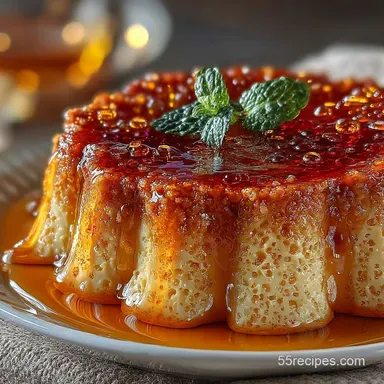
Silky Smooth Classic Crème Caramel the Perfect Makeahead French Custard
- Unlocking the Magic of French Custard: Why Crème Caramel Reigns Supreme
- The Anatomy of Elegance: What Makes This Dessert So Iconic
- Assembling Your Essential Pantry for Flawless Crème Caramel
- Phase One: Crafting the Amber Nectar (The Caramel)
- Phase Two: Preparing the Velvety Custard Base
- The Gentle Art of Water Bath Baking
- The Grand Finale: Releasing Your Beautifully Set Dessert
- Troubleshooting Common Crème Caramel Calamities
- Recipe FAQs
- 📝 Recipe Card
Unlocking the Magic of French Custard: Why Crème Caramel Reigns Supreme
There is a certain undeniable elegance in simplicity, and nowhere is this more evident than in the classic creme caramel . This dessert whispers of old-world patisseries, yet it remains one of the most achievable, deeply satisfying treats you can create at home.
Forget the fussy layers or complicated techniques often associated with French pastry; this recipe delivers that breathtaking "wow" factor with surprisingly humble ingredients. It is the definitive baked custard, a testament to how perfect ratios can transform milk, eggs, and sugar into something truly luxurious.
If you’ve ever hesitated about making a baked custard, consider this your moment. We are demystifying every step to guide you toward the best creme caramel you’ve ever tasted.
The Anatomy of Elegance: What Makes This Dessert So Iconic
What truly sets this dessert apart, and often causes friendly debate, is understanding the subtle differences between similar baked delights. Many people confuse it with its cousins, but the distinctions are important for managing expectations.
When discussing creme caramel vs flan , the line is often blurred, especially in different global contexts. In essence, they are kissing cousins; the French version often leans toward a silkier, slightly less dense texture, achieved through a precise ratio of dairy.
Conversely, creme caramel vs creme brulee presents a clearer contrast: crème brûlée is baked cream with a hardened, blow torched sugar crust on top, while our star is defined by the molten, liquid caramel that pools beneath it when inverted.
A Silken Texture Promised: Setting Expectations for Success
The ultimate goal for any silky creme caramel enthusiast is that fork tender, utterly smooth texture. This is not a spongy cake or a dense pudding; it should quiver delicately.
To achieve this, we rely heavily on using a combination of both whole milk and heavy cream this dual dairy approach provides the necessary richness without making the final product heavy.
On top of that,, the integrity of the eggs is paramount; we use a blend of whole eggs for structure and extra yolks purely for luxurious mouthfeel. Getting this custard balance right is the foundation of a successful bake.
The Essential Art of the Liquid Gold Topping
The defining feature is, undeniably, the glistening pool of amber sauce. This is not a mere afterthought; it is integral to the entire experience. We craft this topping from scratch by caramelizing granulated sugar until it reaches a deep, burnished copper hue.
This step requires focus, as the transition from perfect amber to acrid bitterness is swift. Once set in the bottom of the ramekin, this hardened sugar will liquefy during baking, bathing the custard in a flavourful, slightly bittersweet syrup upon release the very definition of creme caramel .
Why Mastering This Classic Beats Boxed Desserts Every Time
While the store-bought versions certainly have their place for quick fixes, nothing compares to the homemade experience. Making this easy creme caramel recipe from scratch allows you to control the quality of your vanilla, ensure your dairy is fresh, and, most importantly, avoid the artificial stabilizers that can give pre-made custards a rubbery edge.
This mastery over the simple ingredients results in a dessert that tastes bright, clean, and genuinely decadent.
Assembling Your Essential Pantry for Flawless Crème Caramel
A successful custard depends entirely on the quality of its components. Since the flavour profile is so minimal relying chiefly on vanilla, dairy, and caramelized sugar every ingredient must sing its part clearly.
For this recipe, which yields 6 individual servings (using 6-ounce ramekins), meticulous measurement is your friend.
Selecting Dairy Excellence: Milk vs. Cream Ratios
For the liquid component, we look for richness that sets without being heavy. Our blend calls for 2 cups of whole milk (full fat) combined with 1 cup of heavy cream (double cream) .
This 2:1 ratio offers a delightful structure the milk provides hydration, while the cream ensures that satisfying richness that coats the palate beautifully. Avoid low-fat options entirely, as they will result in a custard that is too firm and lacking in necessary flavour depth.
Vanilla Intensity: Choosing the Right Extract or Bean
Vanilla is the primary aromatic signature here. You have two excellent options. A high-quality 1 teaspoon of pure vanilla extract works wonderfully and is convenient.
However, if you are aiming for the absolute peak of flavour, split open half a vanilla bean , scrape out those tiny black seeds, and steep them directly into the warming milk mixture. The visual appeal of the seeds speckled throughout the pale custard is an added bonus.
The Crucial Measurements for the Sugar Syrup Base
For the caramel that forms the base, simplicity reigns: 1 cup of granulated sugar paired with just ¼ cup of water . The small amount of water helps the sugar dissolve evenly before it begins to caramelize, which is a critical safety net against immediate scorching.
Why Room Temperature Eggs Are Non-Negotiable
When combining the eggs into your warm dairy, temperature matching is key to preventing curdling. You will need 4 large whole eggs plus 2 extra large egg yolks .
Ensure these are brought out of the refrigerator at least 30 minutes before you begin preparation. If cold eggs meet warm liquid too quickly, they risk seizing or scrambling, which is the nemesis of a smooth creme caramel recipe .
Phase One: Crafting the Amber Nectar (The Caramel)
This is where many beginners feel intimidated, but armed with focus, you’ll nail this on the first attempt. Place your 1 cup of sugar and ¼ cup of water into a heavy bottomed, light coloured saucepan (so you can easily see the colour change).
Place this over medium heat. The golden rule here is: Do not stir. Stirring introduces too much agitation and encourages crystallization, leading to grainy sugar. Allow the mixture to bubble gently.
As the edges turn amber, you can gently swirl the pan by moving it in a circular motion this is your only means of agitation. Once the mixture achieves a deep, rich amber colour, akin to old pennies or dark honey, immediately remove it from the heat.
Working swiftly but carefully, pour this hot liquid evenly across the bottoms of your six prepared ramekins. Set these aside immediately; the caramel will harden quickly, forming a protective, flavourful floor.
Related Recipes Worth Trying
- The Foolproof Silky Creme Caramel Recipe Classic Flan — Master the classic Crème Caramel with this trustworthy recipe for a silky custard base and perfect amber caramel sauce Achieve that glorious wobble every time
- Scrumptious Salted Caramel Gelato: A Deliciously Easy Homemade Treat — Indulge in the rich flavors of salted caramel gelato! Easy to make, this creamy dessert is the perfect summer indulgence. Check out my recipe!
- Delightfully Creamy Caramel Apple Jam Recipe: A Taste of Autumn — Discover my cherished caramel apple jam recipe! This homemade caramel apple jam is the ideal fall treat, delicious on toast or as a topping.
Phase Two: Preparing the Velvety Custard Base
While your caramel is hardening, turn your attention to the custard. Gently heat the 2 cups of milk and 1 cup of cream along with the pinch of sea salt and your vanilla element in a medium saucepan.
Heat until small bubbles appear around the edges this is steaming hot, but do not allow it to boil . Remove from the heat. In a separate bowl, whisk together the 4 whole eggs, 2 extra yolks, and ½ cup of sugar until the mixture is just combined and slightly paler; you want to mix it thoroughly without beating excessive air into it.
The Gentle Art of Water Bath Baking
Preheat your oven to a gentle 325° F ( 160° C) . Arrange your six caramel coated ramekins inside a large, deep roasting pan. Now, gently pour the liquid custard base into the ramekins, leaving about half an inch of space at the top.
Carefully place the roasting pan onto the middle rack of your preheated oven. Only now, once the pan is safely positioned, do you introduce the water bath: carefully pour hot (but not quite boiling) water into the roasting pan until it reaches halfway up the sides of the ramekins.
This bain marie is essential insulation for achieving that perfect texture.
Heating the Sugar Without Stirring: The Fine Line
As detailed in Phase One, the critical aspect of heating the sugar is patience and avoidance of physical stirring. Allowing the heat to work uniformly from the bottom ensures an even colour transition, leading to the clean, liquid gold sauce we desire for a truly iconic creme caramel .
Tempering the Eggs for a Smooth Texture
The tempering process slowly adding the hot dairy to the eggs is what prevents scrambling. Think of it as a gradual introduction. Pour the hot dairy in a very thin, slow stream while continuously whisking the eggs.
This slowly raises the temperature of the eggs without shocking them into coagulation, directly resulting in a much smoother final product.
Straining Secrets: Ensuring Zero Lumps in Your Mixture
Once fully combined, your custard mixture must be strained. This is arguably the secret weapon for achieving that silky creme caramel . Pass the entire liquid mixture through a fine mesh sieve at least twice.
This removes any trace of over whisked bubbles, any accidental bits of cooked egg, or the chalazae from the yolks, guaranteeing a completely homogenous batter.
Achieving the Perfect Bake: Temperature and Time Guidelines
Bake for approximately 45 to 55 minutes . You are looking for a bake where the outer edges of the custard are completely set, but the very centre still shows a slight, gentle wobble when you nudge the pan.
This residual heat will finish the setting process during cooling, ensuring the interior isn't rubbery.
The Grand Finale: Releasing Your Beautifully Set Dessert
Once baked, carefully remove the pan from the oven and let the custards cool down to room temperature while still sitting in the water bath on a wire rack. Once they are no longer warm to the touch, cover each ramekin tightly with cling film and transfer them to the refrigerator.
They require a minimum of 4 hours chill time, though overnight is truly best for structural integrity. To serve, run a very thin, flexible knife or offset spatula carefully around the inner edge of the ramekin.
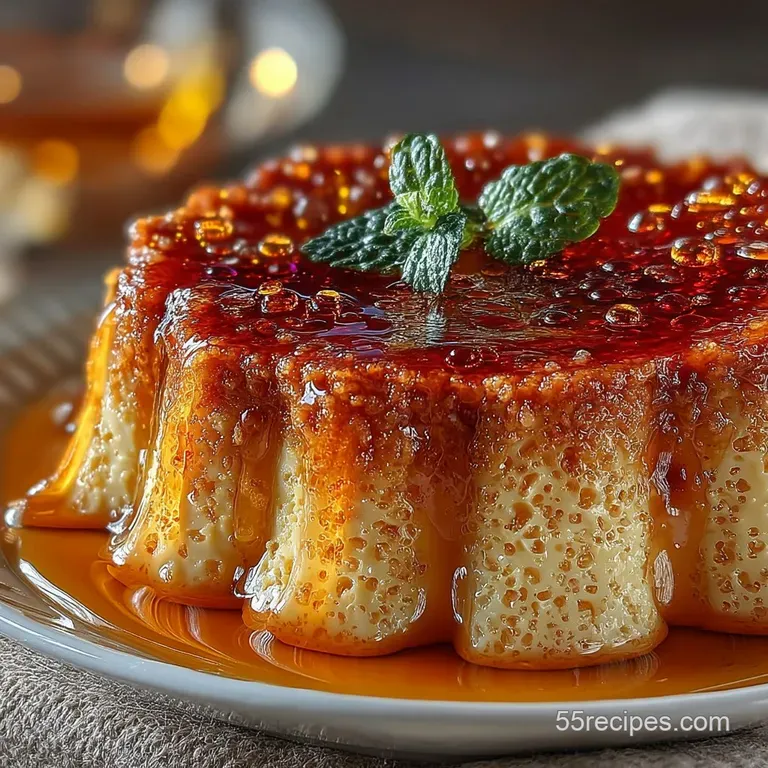
Place your serving plate upside down over the ramekin, and with one swift, confident flip, invert them both. Give the bottom of the ramekin a little shake if necessary; the caramel should flow down around the base of the set custard, creating that signature presentation.
Troubleshooting Common Crème Caramel Calamities
Even the most seasoned bakers run into hiccups. Knowing how to diagnose issues is key to making this the best creme caramel for your guests.
The Critical Chill Period Before Unmolding
If you attempt to unmould your custard before it has adequately chilled, you risk structural failure. The custard needs that cold time to firm up its protein matrix. Rushing this step means the custard will likely collapse under its own weight as soon as it's inverted. Patience truly pays off here.
When the Custard Shakes Too Much: What Went Wrong?
If your custard is excessively jiggly, or has a noticeable hole or crater in the centre after cooling, it means it was slightly overbaked . While a slight wobble is desired, too much movement means the proteins tightened too much.
Next time, pull it from the water bath when the centre is still quite loose.
Flavor Twists: Infusing Your Custard Beyond Vanilla
While classic vanilla is unbeatable, feel free to experiment during the milk warming stage. You can add a strip of orange zest, a few cracked cardamom pods, or even a touch of almond extract to infuse complex background notes into the finished dessert. Remember to strain these additions out before mixing with the eggs.
Making Ahead: Can Crème Caramel be Frozen?
Generally, freezing is not recommended for creme caramel . The high water content in the custard means that during the freezing and thawing process, ice crystals will form, breaking down the delicate structure and resulting in a weepier, grainy texture when thawed.
This dessert truly shines when made one day and served the next.
Recipe FAQs
Why is my Crème Caramel mixture curdled or grainy after baking?
This usually happens for two main reasons: either the oven temperature was too high, or you didn't strain the custard mixture properly. Baking in a gentle water bath is vital to prevent the eggs from scrambling.
Always strain the custard through a fine mesh sieve twice to catch any rogue solids and ensure that characteristic silky finish.
I’m terrified of burning the caramel how do I get that perfect amber colour for my Crème Caramel?
Don’t panic; it’s easier than making a decent cup of tea on a Monday morning! Keep the heat steady and watch it like a hawk once it starts turning colour; do not stir it, just gently swirl the pan.
You want the colour of old pennies or dark honey if it looks like you’re about to light a match under it, pull it off the heat immediately, as it will keep cooking off the burner.
How long must I chill the dessert, and can I make the Crème Caramel ahead of time?
Yes, making it ahead is brilliant, as it actually improves the texture! You must chill the finished custards for a minimum of four hours, but overnight is truly best. This allows the custard to fully set and firms up the caramel sauce so it releases cleanly when you invert it.
My custard cracked or separated when I tried to unmould it what went wrong?
If it cracked, it was likely overbaked, resulting in a spongy texture instead of a wobble. If it stuck, it means the caramel didn't fully liquefy around the edges, or you didn't run a knife all the way around the rim before inverting.
Give that knife a good wiggle around the edges before flipping onto the plate to ensure a smooth release.
Can I make this recipe dairy-free or use less sugar?
For a lighter version, you can substitute the heavy cream with an extra cup of whole milk, though it sacrifices some of that classic decadent richness. Completely dairy-free is tricky; you'd need a high fat oat or soy cream alternative, as regular milk won't provide enough body.
Reducing the sugar is fine, but be aware it changes how the caramel sets and the overall sweetness balance.
Silky Classic Creme Caramel 2