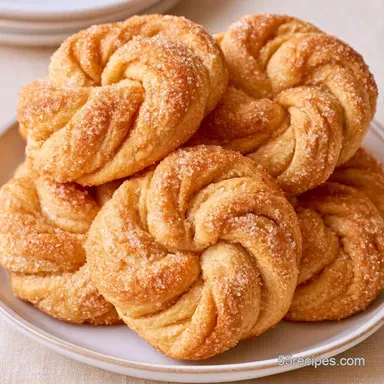
Old Fashioned German Sour Cream Twists
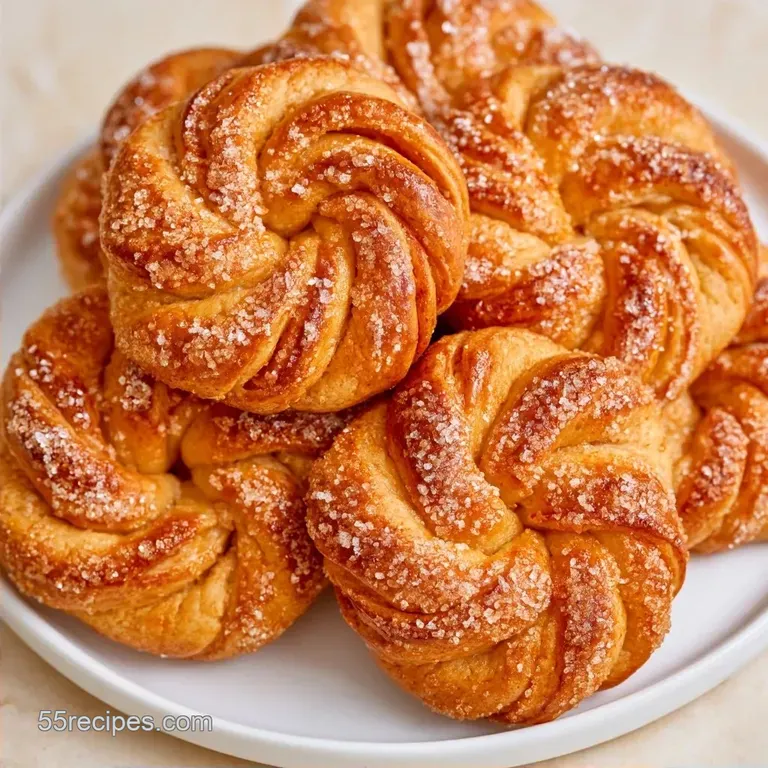
- Time: 20 min active + 2 hours chilling
- Flavor/Texture Hook: Crisp, deep-brown exterior with a smooth, creamy heart
- Perfect for: Festive cookie platters or a midday tea
The aroma of browned butter and cinnamon greets you even before you open the oven. I once puzzled over why this particular treat is a staple for some but unknown to others. They aren't soft sugar cookies, nor are they exactly pastries; they occupy a unique space, providing a crispness that lasts for several days.
I recall my first attempt at making these by hand. I spent twenty minutes working the butter into the flour with my fingers, but the heat from my hands warmed the fat. Consequently, I ended up with flat, oily spots on my baking sheet.
That taught me that velocity and temperature are everything. When executed correctly, Sour Cream Twists evoke a classic German tradition. They are airy yet indulgent, with the dairy's acidity preventing the sweetness from becoming overwhelming.
Sour Cream Twists Basics
These cookies are all about the contrast. You get a hard, crystalline sugar shell that breaks away to reveal a tender, almost cake like interior. Most people assume they are difficult because of the "twist" shape, but it's actually just a bit of rolling and twisting.
To get them right, you need to respect the chill time. If you skip the two hours in the fridge, the dough will be too soft to roll into that 1/4 inch thickness. Trust me, trying to roll warm sour cream dough is like trying to shape wet sand.
- For a firmer set
- chill 3 hours instead of 2.
- For a crunchier edge
- bake 15 minutes.
- For a softer bite
- bake 12 minutes.
| Method | Time | Texture | Best For |
|---|---|---|---|
| Fast (No Chill) | 45 mins | Spreads/Flat | Quick cravings |
| Classic (Chilled) | 2 hours 35 mins | Holds shape | Gifting/Platters |
Ingredient Deep Dive
The balance of fats here is what creates the texture. We use both butter and sour cream, which prevents the cookie from becoming a hard biscuit. The egg yolks add a richness that you just don't get with a whole egg alone.
| Ingredient | What It Does | Best Swap |
|---|---|---|
| All purpose flour | Provides structure | Whole wheat (makes it denser) |
| Sour cream | Adds tang and tenderness | Greek yogurt (slightly more tart) |
| Unsalted butter | Creates flakiness | Coconut oil (adds a nutty hint) |
| Egg yolks | Adds richness | Extra butter (less tender) |
1. For the Dough
You'll need 3 cups (375g) of all purpose flour, 1/2 cup (100g) of granulated sugar, and 1/2 tsp (3g) of salt. For the fats, grab 1/2 cup (115g) of unsalted butter, kept chilled and cubed. The wet mix needs 1 cup (240g) of low-fat sour cream, 1 large egg, 2 large egg yolks, and 1 tsp (5ml) of vanilla extract.
Finally, add 1 tsp (3g) of instant yeast to give them a slight lift.
2. For the Cinnamon Sugar Coating
Keep 1/2 cup (100g) of granulated sugar and 1 tbsp (8g) of ground cinnamon in a separate shallow bowl.
| Original Ingredient | Substitute | Why It Works |
|---|---|---|
| low-fat sour cream | Full fat sour cream | Higher fat. Note: Results in a richer, softer cookie |
| Instant Yeast | Baking Powder | Chemical lift. Note: Lacks the subtle fermented flavor |
| Unsalted Butter | Salted Butter | Same fat content. Note: Reduce added salt by 1/4 tsp |
Essential Tool List
While a food processor simplifies the process, it isn't strictly required. You can use a pastry cutter instead, though you'll need to work quickly to keep the butter from melting.
I also recommend lining your pan with parchment paper. Since the coating has a high sugar content, it can easily caramelize and stick to the pan. Other than that, a simple rolling pin and a sharp knife for cutting the strips are the only essentials.
Making Your Twists
Phase 1: Quick Dough Preparation
- Pulse together flour, 1/2 cup sugar, and salt in a food processor 3-5 times.
- Incorporate the chilled, cubed butter, processing for about 1 minute until the mixture resembles coarse sand.
- Using a separate bowl, whisk the low-fat sour cream, egg, egg yolks, and vanilla extract.
- Add the wet mixture to the processor and pulse briefly until a soft dough forms. Note: To avoid tough cookies, stop as soon as the dough clumps.
Phase 2: The Necessary Chill
- Form the dough into a flat disk on a surface lightly dusted with flour, cover it with a damp kitchen cloth, and refrigerate for 2 hours. Note: This ensures the butter is firm enough for rolling.
- Coat your workspace with the cinnamon sugar mixture.
Phase 3: Shaping and Baking
- Divide the chilled dough in half and roll one part into an 8 x 16 inch rectangle, about 1/4 inch thick.
- Slice the dough into 1 x 4 inch strips, twist each once or twice, and roll them in cinnamon sugar.
- Arrange the twists on a parchment lined pan and bake at 350°F (175°C) for 12–15 minutes until edges are mahogany colored.
Fix Common Problems
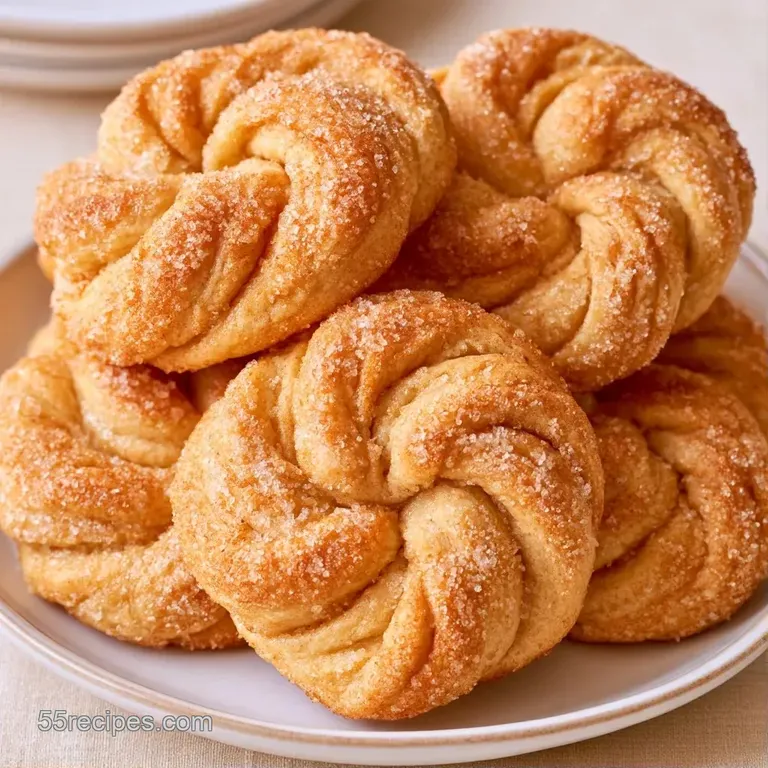
Sticky Dough Fix
If the dough clings to your fingers, don't just keep dumping flour on it. That's how you end up with a dry, tasteless cookie. Instead, pop the dough back in the fridge for 20 minutes. Honestly, just greasing your hands with a tiny bit of neutral oil also works wonders.
Flat Twist Fix
When your twists lose their shape in the oven, it's usually because the butter was too warm when they went in. Make sure the dough is cold to the touch. If your kitchen is hot, keep the second half of the dough in the fridge until the moment you're ready to roll it.
Sinking Sugar Fix
If the cinnamon sugar seems to disappear or "sink" into the dough, you might be over handling the strips. Twist them quickly and roll them in the sugar immediately before placing them on the pan. Don't press the sugar in; let it sit naturally on the surface.
Flavor and Diet Swaps
Feel free to customize this recipe to suit your taste. For a "Zesty Twist," stir a teaspoon of lemon zest into the wet ingredients. For a richer profile, replace the cinnamon with cocoa powder and a pinch of espresso powder.
To make these dairy-free, substitute the sour cream with thick cashew cream, though the resulting texture will be slightly heavier. If you're presenting these as part of a platter, they pair wonderfully with Honey Ice Cream for a contrast of hot and cold.
Gluten-free Alternative
A gluten-free all-purpose flour mix works great here. Since you don't have to worry about overworking the gluten, you can be more vigorous with the food processor. Just ensure the chill time remains the same.
Freshness and Storage
Store these in an airtight container, where they'll stay crisp at room temperature for about 5 days. Avoid the refrigerator, as the humidity can make the cinnamon sugar coating sticky.
For longer storage, freeze them on a tray in a single layer before moving them to a freezer bag. They keep for about 3 months. To restore the shattering crust, warm them for 5 minutes at 300°F (150°C).
If you have leftover cinnamon sugar, don't toss it. Mix it with melted butter and popcorn for a quick snack.
Serving Suggestions
These are a classic for a reason. I love serving them with a strong cup of black coffee to balance the sweetness. Because they have that tangy sour cream base, they also work surprisingly well with a sharp cheddar cheese slice on the side.
If you're putting together a traditional dessert table, these look great next to a Sweet Noodle Kugel. The different textures make the whole spread feel more intentional.
Why Most Recipes Fail
While they may look like typical cookies, Sour Cream Twists function more like a shortcrust pastry. Overmixing the dough develops too much gluten, which can transform a tender treat into something with a bread like consistency.
Cold Fat: Maintaining chilled butter ensures that tiny steam pockets form in the oven, creating a flaky interior.
Thermal Shock: Moving the dough directly from the fridge to a hot oven helps the sugar set rapidly, which locks the twists in place.
Sugar Balance: Too much sugar within the dough causes the cookies to spread. By using a moderate amount in the base and a generous amount in the coating, you achieve the perfect balance.
Per USDA guidelines, keeping your dairy ingredients refrigerated until they are needed is the best way to ensure both food safety and the correct texture.
You are now ready to begin. These cookies require a bit of patience due to the chilling time, but the result is a snack that feels truly elevated. Just remember: work quickly, keep the dough cold, and avoid over pulsing. Happy baking!
Recipe FAQs
What is the European equivalent of sour cream?
Use Schmand or crème fraîche. These provide the necessary thickness and tang required to maintain the dough's structure.
Is sour cream the same as schmand?
No, but they are very similar. Schmand typically has a higher fat content, which can make the twists slightly richer.
Why must the dough be refrigerated for two hours?
It firms up the fats. Chilling ensures the dough is stable enough to be rolled to 1/4 inch thickness without sticking or spreading.
How to stop the sticky dough from clinging to your hands?
Dust your workspace and palms with flour. This creates a physical barrier that prevents the fat-rich dough from adhering to your skin.
Is it true that room temperature butter yields the same result?
No, this is a common misconception. Cold butter is essential for the shattering mahogany crust; warm butter causes the cookies to flatten into greasy puddles.
Which drinks pair best with these sweet treats?
Serve them with a tart beverage. A citrusy drink like a refreshing lemon lime soda cuts through the richness of the butter and sour cream.
Can you skip the refrigeration phase if your kitchen is already cold?
Surprisingly, no. Even in a cool room, the dough requires a consistent, low temperature to properly set the emulsion for rolling.
Sour Cream Twists