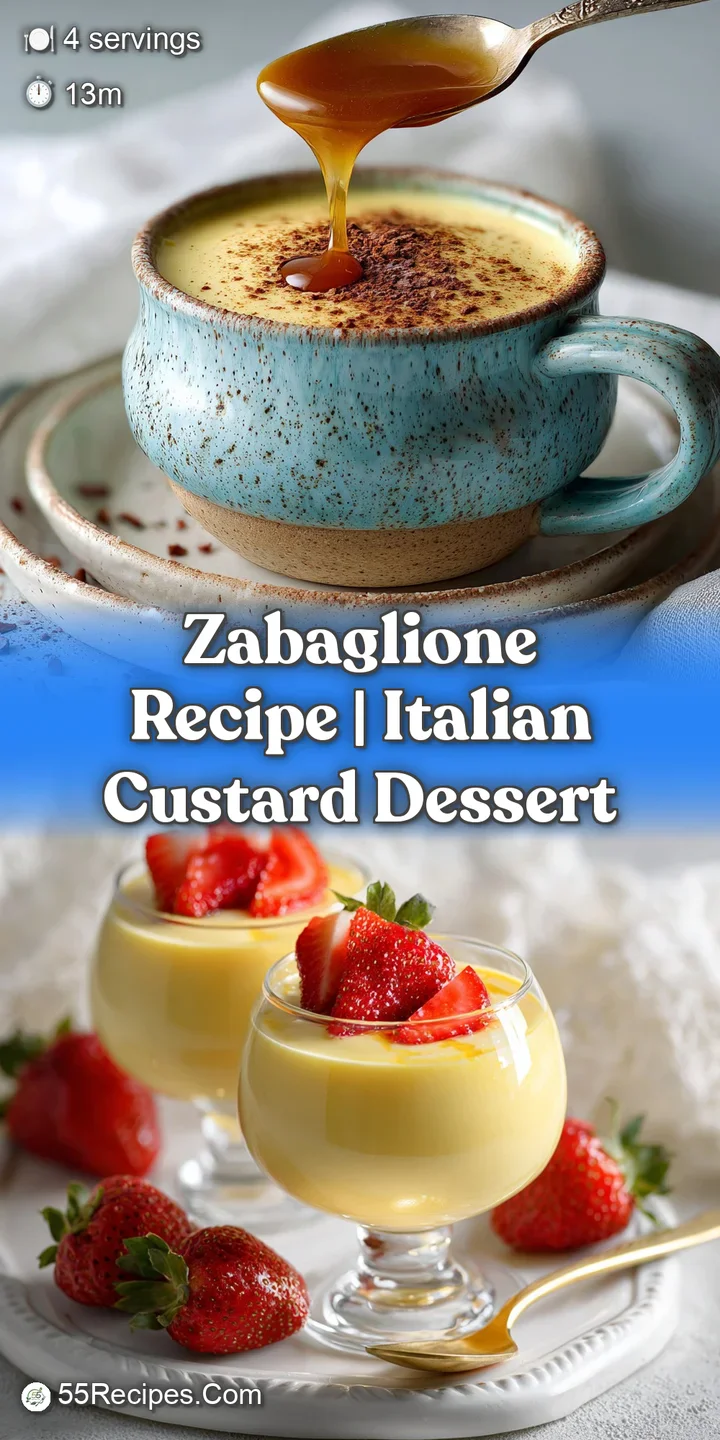
Zabaglione Recipe: Traditional Italian Custard
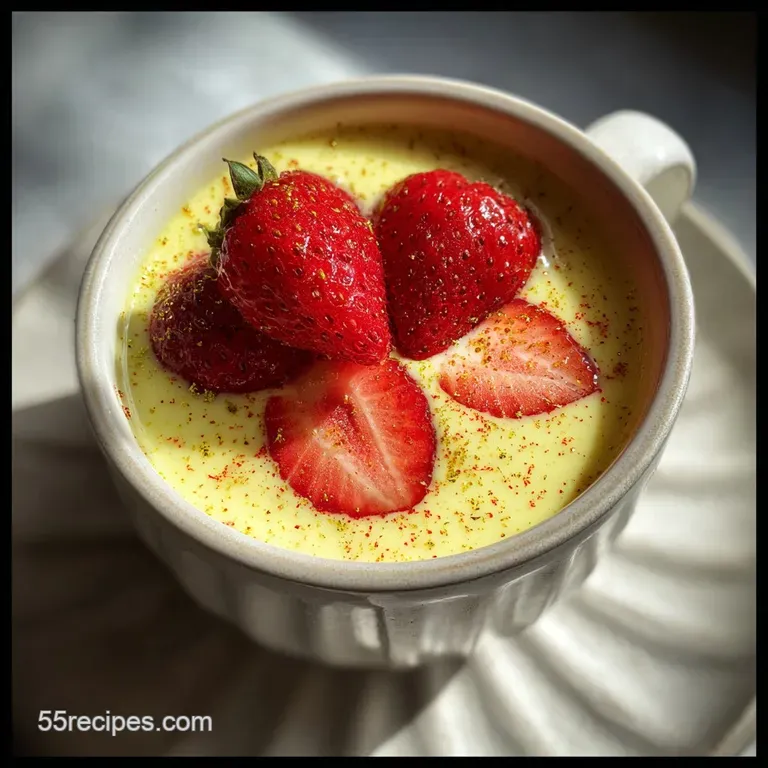
- How to Make This Classic Zabaglione Recipe
- Science Behind This Airy Custard
- Key Specs for Busy Cooks
- Pure Ingredients for Rich Texture
- Minimal Tools for Best Results
- Step by Step Whipping Guide
- Fixing Common Custard Mistakes
- Scaling the Recipe Properly
- Myths About This Custard
- Keeping Your Custard Fresh
- Creative Ways to Serve
- Recipe FAQs
- 📝 Recipe Card
How to Make This Classic Zabaglione Recipe
The rhythmic clinking of a whisk against a glass bowl is the heartbeat of my kitchen whenever I crave something fancy but don't want to spend hours baking. Imagine a cloud of warm, boozy custard hitting your tongue, tasting of sweet wine and sunshine.
It’s that velvety, light as-air texture that makes this traditional Italian treat such a staple in my repertoire.
I’ll be honest, my first attempt years ago ended up as a bowl of sweet scrambled eggs because I got distracted by a phone call. It was a sugary disaster, but it taught me that this recipe isn't about complexity; it’s about focus.
Once you understand how the steam works with the yolks, you’ll be whipping this up for every dinner party you host.
We are keeping things very simple today. No fancy machines, no complicated tempering, just a few ingredients and a little bit of arm strength. Whether you’re serving it warm over fresh berries or using it as a base for other desserts, this is the version that works every single time without the fuss.
Science Behind This Airy Custard
Understanding the physics of this foam makes the process much less intimidating when you're standing over the stove.
- Protein Denaturation: Gentle heat causes egg proteins to uncoil and bond together, trapping air bubbles created by your whisk to form a stable foam.
- Lecithin Emulsification: The natural fats in the egg yolks act as a bridge between the Marsala wine and the sugar, creating a smooth, unified texture.
- Vapor Management: Using a double boiler ensures the temperature stays below 180°F, preventing the eggs from curdling into a solid mass.
| Servings | Ingredient Adjustments | Pan Size | Cook Time |
|---|---|---|---|
| 2 people | 2 yolks, 25g sugar, 40ml wine | Small saucepan | 5 minutes |
| 4 people | 4 yolks, 50g sugar, 80ml wine | Medium saucepan | 8 minutes |
| 8 people | 8 yolks, 100g sugar, 160ml wine | Large saucepan | 12 minutes |
When adjusting for a crowd, remember that the whisking effort increases significantly. If you’re doubling the batch, I’d suggest a larger bowl to allow for maximum aeration so the custard doesn't feel heavy.
Key Specs for Busy Cooks
When you're squeezed for time, this recipe is a lifesaver because it feels sophisticated but takes less time than making a pot of coffee. We are looking at a total of 13 minutes from start to finish. It’s the kind of speed that makes it perfect for those "oh no, I forgot dessert" moments.
Much like the creamy texture found in a well made Aji Amarillo Sauce recipe, the goal here is total smoothness. You want the sugar to be completely dissolved before the heat even hits the yolks. If you feel a grain of sugar between your fingers, keep whisking before you move to the stove.
The balance of the 80ml Marsala wine against the 4 large egg yolks is what provides that signature bite. If you use too much liquid, the foam won't hold its structure and you'll end up with a thin sauce instead of a thick, spoonable cream.
Pure Ingredients for Rich Texture
| Ingredient | Science Role | Pro Secret |
|---|---|---|
| 4 Egg Yolks | Primary emulsifier | Use room temperature yolks for faster aeration |
| 50g Sugar | Stabilizes protein structure | Superfine sugar dissolves faster than standard granulated |
| 80ml Marsala | Flavor and liquid volume | Use "Superiore" for a deeper, more caramel like finish |
For the best results, stick to these specific amounts.
- 4 large egg yolks: Why this? Provides the fat and structure needed for a thick, stable foam.
- Substitute: 4 pasteurized yolks from a carton (though fresh is fluffier).
- 50g granulated sugar: Why this? Adds sweetness and helps the egg proteins stretch without breaking.
- Substitute: Caster sugar (dissolves even better).
- 80ml Marsala wine: Why this? The classic Italian choice for that fermented, nutty depth.
- Substitute: Sweet Sherry or Vin Santo.
- 1 pinch sea salt: Why this? Sharpens the sweetness and cuts through the richness of the yolk.
- Substitute: Standard table salt.
- 150g fresh raspberries or strawberries: Why this? The acidity balances the heavy custard.
- Substitute: Blueberries or blackberries.
- 4 Savoiardi biscuits: Why this? Provides a necessary crunch to contrast the silky cream.
- Substitute: Almond biscotti or ladyfingers.
Minimal Tools for Best Results
Two Must Have Tools
You really only need a stainless steel bowl and a balloon whisk. Avoid using a copper bowl unless you are very experienced, as it can react with the wine and change the color. A hand held electric mixer is a great shortcut if you want to save your wrist, but I find the manual whisk gives me better control over the heat.
The second tool is a simple saucepan that your bowl can sit on top of without touching the water. This "bain marie" setup is non negotiable. If the bottom of the bowl touches the boiling water, you are effectively frying the eggs, which we definitely don't want.
step-by-step Whipping Guide
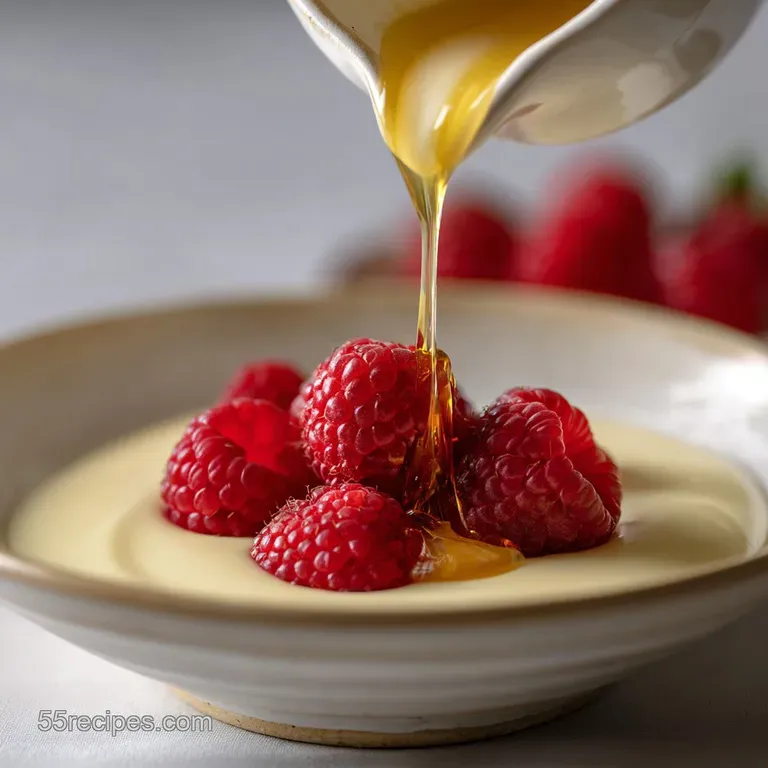
Phase 1 Cold Emulsion
- Separate the eggs. Place the 4 large egg yolks into your heat proof bowl, ensuring no whites remain. Note: Egg whites prevent the yolks from reaching maximum volume.
- Add the sugar. Pour in the 50g granulated sugar and the pinch of sea salt.
- Whisk until pale. Beat the yolks and sugar together until the mixture turns a light lemon color.
Phase 2 Double Boiler
- Incorporate the wine. Slowly pour the 80ml Marsala into the yolk mixture while whisking constantly.
- Simmer the water. Fill a saucepan with 2 inches of water and bring to a bare simmer.
- Set the bowl. Place your bowl over the simmering water, making sure the bottom is dry and not touching the water.
- Whisk vigorously. Cook for about 8 minutes until the custard triples in volume and thickens.
Phase 3 Ribbon Stage
- Check for the ribbon. Lift the whisk; the custard should fall in a thick "ribbon" that stays on the surface for 3 seconds.
- Prepare the fruit. Divide the 150g fresh raspberries into 4 serving glasses.
- Pour and serve. Ladle the warm zabaglione over the fruit and garnish with a Savoiardi biscuit for a satisfying shatter.
Fixing Common Custard Mistakes
Scrambled Egg Texture
This happens when the heat is too high or you stop whisking. If you see tiny solid bits forming at the edges of the bowl, immediately remove it from the heat and whisk like your life depends on it.
If it’s too far gone, you can try passing it through a fine mesh sieve, but it’s usually better to start over with fresh yolks.
The Foam Collapses
If your custard looks watery or loses its height quickly, it likely wasn't cooked long enough. The proteins need to reach a specific temperature (around 160°F) to hold the air. It should feel warm to the touch and look opaque, not translucent.
| Problem | Root Cause | Solution |
|---|---|---|
| Thin/Runny | Under whisking or too much wine | Whisk longer over heat until the ribbon stage is reached |
| Grainy | Sugar didn't dissolve | Whisk yolks and sugar thoroughly before adding wine or heat |
| Lumpy | Water touched the bowl | Ensure water is only simmering and the bowl sits high above it |
Chef's Tip: If you are worried about the eggs curdling, keep a larger bowl of ice water nearby. If the mixture starts looking "tight" or grainy, plunge the bottom of your whisking bowl into the ice water for 10 seconds while whisking to drop the temp instantly.
Common Mistakes Checklist
- ✓ Never let the water in the saucepan reach a rolling boil; a gentle simmer is plenty.
- ✓ Whisk in a figure eight motion to incorporate the most air possible.
- ✓ Ensure your bowl is completely grease free before starting.
- ✓ Use a bowl that is much larger than you think you need to allow for the 3x expansion.
Scaling the Recipe Properly
If you're cooking for a big family gathering, you can easily double this. However, I recommend using a hand mixer for anything over 6 portions. Your arm will give out before the custard is ready otherwise! When doubling, keep the wine at 1.5x the original amount (120ml instead of 160ml) to ensure it stays thick enough.
For a solo treat, you can halve the recipe using 2 yolks. Since the volume is smaller, it will cook much faster usually in about 4 to 5 minutes. Use a smaller saucepan so the steam is concentrated under the smaller bowl.
| Method | Time | Texture | Best For |
|---|---|---|---|
| Hand Whisk | 8-10 mins | Very airy and delicate | Traditionalists and small batches |
| Electric Mixer | 5-6 mins | Extremely stable and thick | Large crowds or tired wrists |
| Cold Version | 15 mins | Mousse like and firm | Summer desserts or Tiramisu |
While the traditional method is beautiful, sometimes you just need a quick win. If you're used to making a Chimichurri Recipe where you just toss things together, the electric mixer method will be your best friend here.
Myths About This Custard
One common myth is that you must use Marsala or it isn't "real" zabaglione. While Marsala is the tradition, the technique works with almost any fortified wine or even strong espresso. The science of the egg foam doesn't care about the flavor profile, only the liquid to yolk ratio.
Another misconception is that you can't over whisk it. You actually can! If you keep it over the heat too long after it reaches the ribbon stage, the proteins will eventually tighten so much that the moisture is squeezed out, leaving you with a rubbery, deflated mess. Stop as soon as it looks thick and glossy.
Keeping Your Custard Fresh
Storage Guidelines
This is a "serve immediately" kind of dessert. Because it’s a foam, it will naturally begin to deflate after about 20 minutes. If you must make it ahead, you can whisk it over an ice bath until cold, then fold in 100ml of whipped heavy cream to stabilize it.
This "Zabaglione Freddo" will stay fluffy in the fridge for up to 24 hours.
Zero Waste Tips
Don't throw away those 4 egg whites! You can store them in a sealed container in the fridge for up to 4 days or freeze them for months. They are perfect for making a quick pavlova or adding fluff to your morning omelet. You can also use the leftover berries to make a quick compote for toast the next day.
Creative Ways to Serve
The Coffee Twist
This is the ultimate zabaglione recipe for tiramisu. Simply swap half of the Marsala for a double shot of strong espresso. Once cooked and cooled, fold it into 250g of mascarpone cheese.
It creates a much deeper, more complex flavor than the standard egg and sugar mix used in most quick tiramisu recipes.
Non Alcoholic Variation
For a kid friendly or alcohol free version, replace the wine with 60ml of white grape juice and a teaspoon of lemon juice. The acidity is crucial for the structure. It won't have the same fermented depth, but the texture remains remarkably similar silky, sweet, and incredibly light.
If you want a truly decadent experience, try serving it warm over a slice of toasted panettone or pound cake. The cake soaks up the extra custard like a sponge, creating a dessert that feels like a warm hug.
Trust me, once you master the basic whisking rhythm, you’ll find yourself putting this on everything from grilled peaches to simple bowls of chocolate chips.
Recipe FAQs
What are the ingredients in zabaglione?
Egg yolks, sugar, and Marsala wine are the core ingredients. A pinch of salt enhances the flavors, and it's traditionally served with fruit or biscuits. For a twist, you can use other fortified wines or even espresso.
What's the difference between zabaglione and custard?
Zabaglione is a lighter, foamier custard. Traditional custards rely on a milk or cream base and are often baked or thickened on the stovetop, resulting in a denser texture. Zabaglione is made solely from egg yolks, sugar, and wine whipped over gentle heat, creating an airy, mousse like consistency.
Is zabaglione served warm or cold?
Traditionally, zabaglione is served warm. This is when its airy, foamy texture is at its peak. However, a chilled version, often called "Zabaglione Freddo," can be made by cooling and stabilizing it, making it suitable for warmer weather or as a base for other desserts.
What is Italy's most famous dessert?
It's difficult to name a single "most famous" Italian dessert, but Tiramisu is certainly a top contender. Other incredibly popular choices include Panna Cotta, Gelato, and Cannoli. Zabaglione itself is a classic, deeply traditional dessert with regional variations.
Can I make zabaglione without Marsala wine?
Yes, you can substitute the Marsala wine. While Marsala provides a unique depth, you can use sweet Sherry, Vin Santo, or even a non-alcoholic version with white grape juice and a touch of lemon juice. If you enjoyed mastering the technique of creating a stable emulsion here, see how the same principle of balancing liquids applies to our Easy Eel Sauce Recipe Unagi Sauce at Home.
How do I prevent my zabaglione from scrambling?
Use a double boiler setup and whisk constantly over gentle heat. The bowl should not touch the simmering water, which provides indirect heat. Keep whisking vigorously until the mixture triples in volume and thickens to a ribbon stage.
If it starts to look grainy, immediately remove from heat and whisk rapidly.
What can I do with leftover egg whites from making zabaglione?
Don't throw them away; egg whites have many uses. They are perfect for making meringues, pavlovas, or adding to baked goods for extra lightness. You can also freeze them for later use in recipes like Homemade Tomato Pizza Recipe The SunDrenched San Marzano Pie where they might be used to bind a sauce or create a lighter dough.
Zabaglione Recipe
Ingredients:
Instructions:
Nutrition Facts:
| Calories | 189 calories |
|---|---|
| Protein | 4.2g |
| Fat | 5.4g |
| Carbs | 29g |
| Fiber | 3.1g |
| Sugar | 21.8g |
| Sodium | 66mg |
