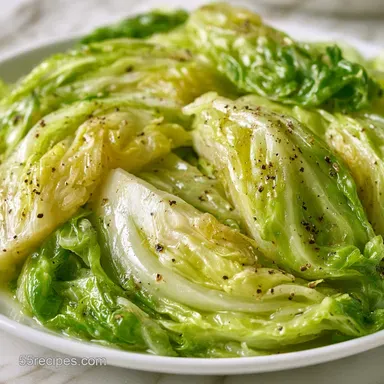
Cook Boiled Cabbage: Crisp-Tender and Guilt-Free
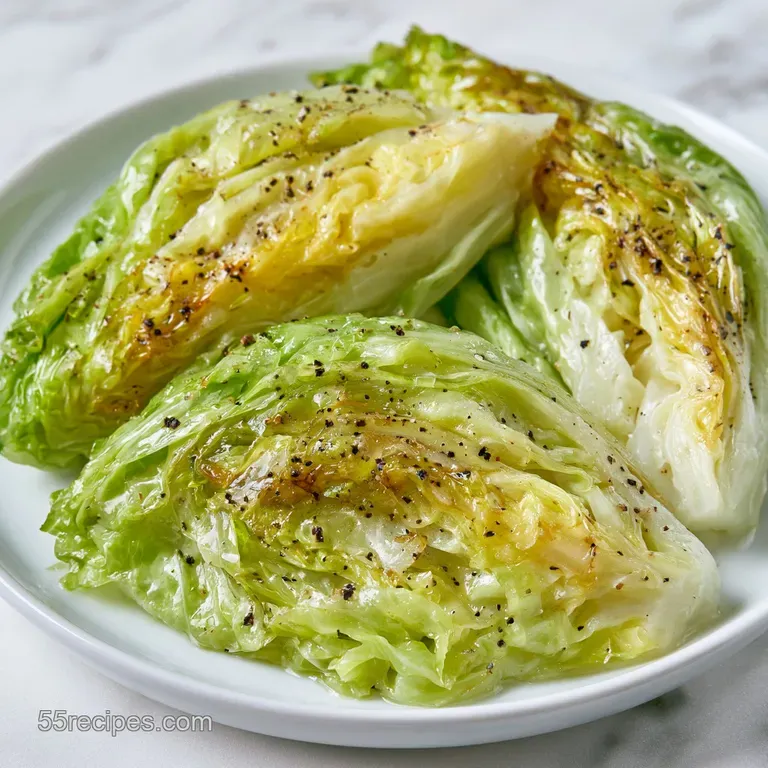
- Time: 5 min active + 12 min cook = Total 17 minutes
- Flavor/Texture Hook: Tender crisp bite with a bright, lemony finish
- Perfect for: Quick weeknight sides or meal prep
- How to Cook Boiled Cabbage
- The Secret to the Texture
- Component Analysis
- Gathering Your Essentials
- Equipment Needed
- The Cooking Process
- Fixing Common Cabbage Issues
- Troubleshooting Common Issues
- Ways to Mix It Up
- Adjusting the Serving Size
- Cabbage Beliefs Debunked
- Storage and Reheating Tips
- Serving Suggestions
- Recipe FAQs
- 📝 Recipe Card
That specific, sharp aroma of cabbage hitting boiling water always takes me back to my grandmother's kitchen. But for years, I actually hated it. I remember making a batch for a family dinner where I left the pot on just two minutes too long, and the whole house smelled like a gym locker.
The cabbage was this grayish green mush that just slid off the fork. It was a total disaster.
Then I realized the secret isn't about how much water you use, but when you stop. The moment that opaque white center turns translucent and bright, you've won. Now, whenever I cook boiled cabbage, I treat it more like blanching greens than boiling a potato.
It stays snappy, tastes fresh, and actually feels like a vegetable rather than a side dish afterthought.
You can expect a side that's velvety yet firm, with a clean taste that doesn't overpower the main course. We're going to use a few simple tricks to keep the color popping and the flavor light. Trust me, once you see that bright green hue in the pot, you'll never go back to the overcooked stuff.
How to Cook Boiled Cabbage
The goal here is to hit that sweet spot where the cabbage is cooked through but still has a slight "snap" to it. Most people make the mistake of simmering it for twenty minutes, which is where that funky smell comes from. By keeping the boil short and the drain immediate, we lock in the nutrients and the color.
When you cook boiled cabbage this way, you're essentially flash cooking the leaves. This preserves the crunch and prevents the cabbage from releasing too many of those sulfurous compounds that make the kitchen smell. It's a fast process, but the timing is everything.
If you're planning a bigger feast, this side pairs perfectly with some Corned Beef and Cabbage, which is the gold standard for this kind of prep. The key is to keep the cabbage as a separate, bright element to cut through the richness of the meat.
The Secret to the Texture
Why does this method actually work? It comes down to how the plant cells react to heat and salt.
- Salt Saturation: Adding salt to the water draws out a bit of moisture from the leaves, which helps them soften faster without needing a long boil.
- Thermal Shock: Draining the water immediately stops the residual heat from overcooking the leaves into mush.
- Acid Finish: The lemon juice breaks down the remaining "cabbage" taste and brightens the overall flavor profile.
- Oil Coating: Tossing with olive oil while steaming creates a velvety barrier that keeps the cabbage from drying out on the plate.
| Method | Time | Texture | Best For |
|---|---|---|---|
| Stovetop Boil | 12 mins | Tender Crisp | Quick sides |
| Oven Roast | 30 mins | Charred/Sweet | Hearty meals |
| Steaming | 15 mins | Very Soft | Low calorie diets |
I've found that the stovetop method is the only way to get that specific "bright" result. While roasting is great for sweetness, the boil is what gives you that clean, refreshing taste.
Component Analysis
Understanding the role of each ingredient helps you tweak the recipe without ruining the texture.
| Ingredient | Science Role | Pro Secret |
|---|---|---|
| Sea Salt | Texture Control | Use coarse salt to ensure even distribution in the water |
| Lemon Juice | Flavor Balance | Add it while steaming for maximum absorption |
| Olive Oil | Mouthfeel | Use a high-quality EVOO for a peppery finish |
| Green Cabbage | Main Structure | Slice into consistent ribbons for a uniform cook |
Gathering Your Essentials
You don't need a pantry full of spices for this. The beauty of this recipe is its simplicity. We're focusing on high-quality basics that let the cabbage shine.
- 1 medium head (approx. 2 lbs / 900g) Green Cabbage Why this? Standard green cabbage has the best crunch to softness ratio
- 8 cups (1.9L) Water
- 1 tbsp (15g) Sea Salt Why this? Essential for seasoning the cabbage from the inside out
- 1 tbsp (15ml) Extra Virgin Olive Oil Why this? Adds a silky finish and carries the pepper flavor
- 1 tbsp (15ml) Fresh Lemon Juice Why this? Cuts through the sulfur and adds brightness
- ½ tsp (1g) Freshly Cracked Black Pepper Why this? Adds a subtle heat to contrast the lemon
- ¼ cup (15g) Fresh Parsley, chopped Why this? Adds a hit of color and herbal freshness
If you don't have a lemon on hand, a teaspoon of apple cider vinegar works in a pinch, though it's a bit more pungent. For the oil, any neutral oil like avocado oil works, but you'll lose that fruity note from the olive oil.
Equipment Needed
You can keep this very basic. You don't need any fancy gadgets, just a few standard kitchen tools.
- Large stockpot (at least 6 quarts to allow the cabbage to move)
- Sharp chef's knife
- Large cutting board
- Colander for draining
- Tongs or a slotted spoon
Right then, let's get into the flow. I like to have everything chopped and the water already heating up before I start the actual boil. This ensures the cabbage doesn't sit around and oxidize.
The Cooking Process
Let's crack on with the actual cooking. Follow these steps closely, especially the timing, to avoid the "mush" zone.
- Remove the outer damaged leaves from the cabbage. Note: These are usually just dusty or wilted.
- Cut the cabbage into quarters and slice out the tough inner core.
- Cut each quarter into 1 inch (2.5cm) thick ribbons or bite sized squares. Note: Keeping them uniform ensures they cook at the same rate.
- Bring the 8 cups of water and 1 tbsp sea salt to a rolling boil in your stockpot.
- Carefully add the cabbage ribbons to the boiling water.
- Reduce heat to medium high and cook for 5 to 8 minutes until the color shifts from opaque white to a translucent, bright green.
- Drain the cabbage immediately in a colander. Note: This stops the cooking process instantly.
- Return the cabbage to the pot while still steaming.
- Toss with 1 tbsp olive oil, 1 tbsp lemon juice, and ½ tsp black pepper until evenly coated.
- Garnish with the chopped parsley and serve.
Chef's Note: If you want a more "Southern boiled cabbage" vibe, add a pinch of red pepper flakes and a knob of butter instead of olive oil. It makes the dish feel much richer and more comforting.
Fixing Common Cabbage Issues
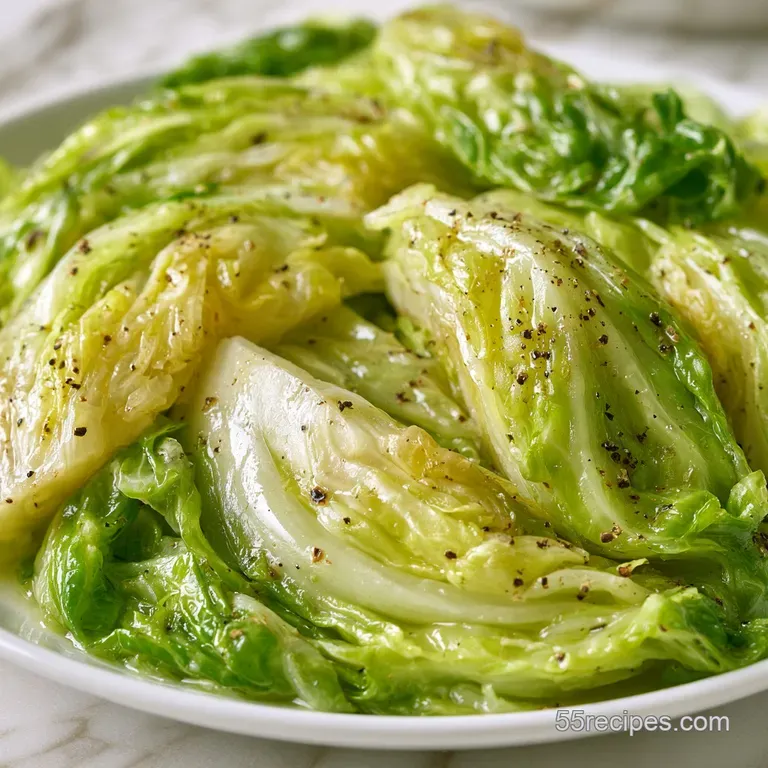
Even with a simple dish, things can go sideways. Usually, it's a matter of timing or temperature.
Troubleshooting Common Issues
| Issue | Solution |
|---|---|
| Why Your Cabbage Smells Pungent | This happens when the cabbage is overcooked. The heat breaks down the sulfur containing compounds, releasing that "boiled egg" smell. To fix this, shorten your boil time by 2 minutes next time. |
| Why Your Cabbage Is Mushy | Mushiness is caused by lingering heat. If you leave the cabbage in the pot after draining, it continues to cook in its own steam. Always use a colander to get it out of the water immediately. |
| Why The Flavor Is Bland | If it tastes flat, you likely didn't use enough salt in the water. Salt doesn't just season the outside; it penetrates the leaves during the boil. |
Common Mistakes Checklist:
- ✓ Didn't remove the core (makes the dish woody)
- ✓ Boiled for 10+ minutes (creates the smell)
- ✓ Added lemon juice too early (can dull the color)
- ✓ Used a pot that was too small (cabbage crowds and cooks unevenly)
- ✓ Forgot to salt the water (results in bland leaves)
Ways to Mix It Up
While this version is a clean, classic side, you can easily adapt it. If you're looking for a heartier meal, try boiling it with a rutabaga for a traditional root vegetable mix.
For a variation in color, use red cabbage. Just be warned: red cabbage bleeds a lot of purple pigment. To keep that color from turning blue, you must add the lemon juice or vinegar during the boil, not just at the end.
You can also try "Southern boiled cabbage" by adding a sliced onion and a bit of smoked paprika to the water. This gives it a deeper, more savory profile that pairs great with grilled meats.
Adjusting the Serving Size
Scaling this recipe is pretty straightforward, but you can't just multiply everything linearly if you're doing huge batches.
Scaling Down (Half Batch): Use half a head of cabbage and 4 cups of water. I recommend reducing the cook time by about 1 minute since there's less mass in the pot to absorb the heat. Use a smaller pot so the water returns to a boil quickly.
Scaling Up (Double or Triple): When you double the recipe, don't double the salt use about 1.5x the amount. Too much salt in a large pot can make the cabbage taste metallic. Work in batches if your pot is small; otherwise, the cabbage at the bottom will mush before the top is even cooked.
| Option | Cabbage Amount | Water Amount | Salt Adjustment |
|---|---|---|---|
| Single | 2 lbs | 8 cups | 1 tbsp |
| Double | 4 lbs | 14 cups | 1.5 tbsp |
| Triple | 6 lbs | 20 cups | 2 tbsp |
Make sure your pot is large enough that the cabbage can swim. If it's packed too tight, you'll get uneven cooking.
Cabbage Beliefs Debunked
There are a few things people say about cabbage that just aren't true.
Myth: You need to boil cabbage for 20 minutes to make it digestible. Truth: This is outdated advice. A quick 5-8 minute boil softens the fibers enough for digestion while keeping the nutrients intact. Overboiling actually destroys the Vitamin C.
Myth: Adding baking soda keeps the cabbage green. Truth: While it might keep the color, it ruins the texture and adds a soapy, chemical taste. Stick to salt and a quick drain for the best results.
Storage and Reheating Tips
If you have leftovers, store them in an airtight container in the fridge for up to 4 days. Cabbage holds its structure surprisingly well when chilled.
Freezing: Honestly, don't freeze boiled cabbage. The cellular structure breaks down during freezing, and when you thaw it, it becomes a watery mess. It's just not worth it.
Reheating: To keep the texture, avoid the microwave if you can. Instead, toss the cabbage in a hot skillet with a tiny bit of butter for 2-3 minutes. This "re sears" the edges and brings back some of that snap.
If you must use a microwave, use a low power setting and heat in 30 second bursts.
Zero Waste: Don't throw away the outer leaves or the core! The core can be finely diced and added to a slaw, and the outer leaves are great for simmering in a vegetable stock. According to USDA FoodData, cabbage is packed with fiber and vitamins, so using every part is a win for your health and your wallet.
Serving Suggestions
Since this is a light, bright side, it works best with heavy or savory proteins. It's the perfect counterpoint to a rich roast or a salty cured meat.
I love serving this alongside a piece of seared salmon or a grilled pork chop. The lemon and parsley notes act like a palate cleanser between bites of rich meat. If you're going vegetarian, try it with a side of roasted chickpeas or a quinoa bowl.
For a more traditional feel, serve it with boiled potatoes and carrots. Just remember to boil the potatoes first since they take much longer than the cabbage. You can even use the same pot, just add the cabbage in the last 7 minutes of the potato cook time.
Recipe FAQs
How is the best way to boil cabbage?
Boil ribbons in salted water for 5 to 8 minutes. Drain immediately in a colander to stop the cooking process and prevent the vegetable from becoming mushy.
Can diabetics eat cooked cabbage?
Yes, it is an excellent choice. Cabbage is naturally low in calories and carbohydrates, making it very blood sugar-friendly.
Can cabbage reduce swelling?
No, this is a common misconception. While folk remedies suggest using leaves topically, there is no scientific evidence that eating boiled cabbage reduces systemic swelling.
How long does cabbage take to soften when boiled?
Cook for 5 to 8 minutes. You will know it is ready when the color shifts from opaque white to a translucent, bright green.
Why does my boiled cabbage smell like eggs?
You likely overcooked it. Excessive heat breaks down sulfur containing compounds, releasing a pungent odor; try reducing your boil time by 2 minutes next time.
Can I freeze boiled cabbage?
No, avoid freezing it. The cellular structure breaks down during the freezing process, which turns the cabbage into a watery mess upon thawing.
How to reheat boiled cabbage without it becoming mushy?
Toss it in a hot skillet for 2 to 3 minutes. This re-sears the edges and restores the snap. This side pairs perfectly with my homemade Salisbury steak.
Cook Boiled Cabbage