Homemade Onion Straws Recipe
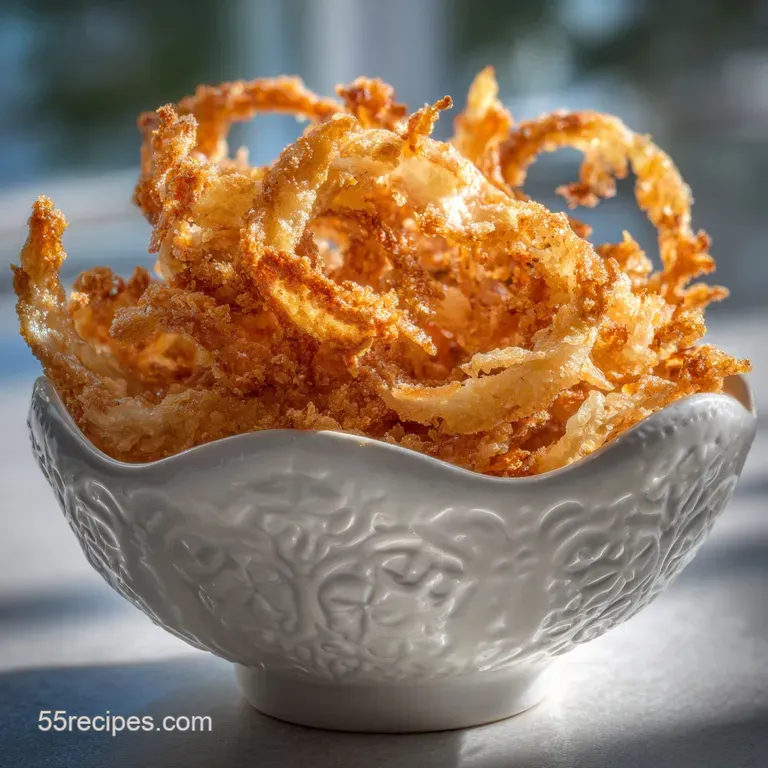
- Time: Active 15 minutes, Passive 45 minutes, Total 1 hours
- Flavor/Texture Hook: Shatter crisp exterior with a sweet, tender interior
- Perfect for: Topping gourmet burgers or serving as a steakhouse style appetizer
- Achieving Professional Results With This Onion Straws Recipe
- The Reason These Straws Stay Shatter Crisp
- Essential Ingredients For This Savory Appetizer
- Tools For Making Perfect Golden Strings
- Easy Steps To Perfect Golden Frying
- Avoiding Common Frying And Coating Mistakes
- Making Simple Swaps For Every Diet
- Keeping Your Leftover Straws Perfectly Crunchy
- Flavorful Pairings For Your Crispy Toppings
- Debunking Common Frying Misconceptions
- High in Sodium
- Recipe FAQs
- 📝 Recipe Card
Achieving Professional Results With This Onion Straws Recipe
I still remember the first time I tried to make these at home for a Friday night burger bash. I thought I could just slice some onions, toss them in flour, and call it a day. Honestly, it was a disaster the coating fell off in the oil, and the onions were basically limp noodles.
I was so frustrated I almost gave up on fried onions entirely.
But then I learned the secret is all in the prep work. Once I realized that the soak is just as important as the fry, everything changed. Now, when I drop a handful of these into the hot oil, the sizzle is music to my ears, and the aroma fills the kitchen with that irresistible savory sweetness.
They come out golden, tangled, and so light they practically melt in your mouth.
Trust me, once you see how easy it is to get that perfect "shatter" crunch, you’ll never go back to the frozen stuff. We are talking about paper thin ribbons of onion that stay crispy even under a heavy ladle of gravy or a juicy burger patty.
Let’s get into the nitty gritty of why this method actually works every single time.
The Reason These Straws Stay Shatter Crisp
- Enzyme Breakdown: The lactic acid in the buttermilk softens the sulfur compounds in the onions, removing the harsh "bite" and leaving only sweetness.
- Amylose Bond: Adding cornstarch to the flour increases the starch to protein ratio, which creates a more brittle, glass like coating that won't turn chewy.
- Moisture Displacement: A 45 minute soak draws out excess water from the onion cells, preventing them from steaming the coating from the inside out during frying.
| Method | Total Time | Texture | Best For |
|---|---|---|---|
| Traditional Deep Fry | 1 hours | Shatter crisp and airy | Authentic steakhouse style |
| Air Fryer Method | 40 minutes | Firm and crunchy | Lower calorie snacking |
| Oven Baked | 50 minutes | Tougher but browned | Large batch convenience |
Choosing the deep fry method is the way to go if you want that authentic, silky yet-crunchy mouthfeel. The hot oil hits every tiny crevice of the tangled strings, ensuring no soggy spots remain. It’s a bit more hands on, but for a special burger night, the results are simply incomparable.
Essential Ingredients For This Savory Appetizer
| Component | Science Role | Pro Secret |
|---|---|---|
| Vidalia Onions | High sugar content | Slice against the grain for maximum surface area and faster crisping. |
| Buttermilk | Acidic tenderizer | Keep it ice cold to help the flour adhere better in the dredging stage. |
| Cornstarch | Moisture repellent | Mixes with flour to create a barrier that prevents oil from soaking in. |
If you find yourself loving the way these onions turn out, you might also want to try the technique used in the Homemade Blooming recipe. It uses a similar seasoned dredge but focuses on a whole onion presentation that is always a total crowd pleaser.
Tools For Making Perfect Golden Strings
You don't need a professional kitchen to pull this off, but a few specific tools make the process much smoother. First and foremost, a mandoline slicer is your best friend here. Trying to get these paper thin with just a chef's knife is a workout you don't need, and consistency is key for even cooking.
A heavy bottomed pot, like a cast iron Dutch oven, is also essential for maintaining a steady oil temperature. When you drop cold onions into hot oil, the temperature can plummet. The thick walls of a Dutch oven hold onto heat, ensuring the oil recovers quickly so your straws don't end up greasy.
- Mandoline Slicer: Use the thinnest setting (about 1/16th of an inch).
- Deep Fry Thermometer: Essential for hitting that 375°F sweet spot.
- Fine Mesh Spider: Perfect for scooping out the delicate tangles without breaking them.
- Large Baking Sheet: Lined with paper towels to drain the onions immediately after frying.
Easy Steps To Perfect Golden Frying
- Prep the onions. Use a mandoline to slice 2 Large Vidalia or Yellow Onions into paper thin rings. Note: Consistency ensures every piece finishes cooking at the exact same moment.
- Start the soak. Submerge the rings in 2 cups Buttermilk and add 1 tsp Kosher Salt, pressing down to ensure they are fully covered.
- Wait for flavor. Let the onions soak for 45 minutes until they look slightly translucent and feel softened.
- Whisk the dredge. In a wide bowl, combine 1.5 cups All Purpose Flour, 0.5 cup Cornstarch, 1 tbsp Smoked Paprika, 1 tsp Garlic Powder, 0.5 tsp Cayenne Pepper, 1 tsp Black Pepper, and 2 tsp Fine Sea Salt.
- Heat the oil. Pour 1 quart Canola Oil into a heavy pot and heat until it reaches 375°F on a thermometer.
- The dredging process. Take a handful of onions from the buttermilk, let the excess drip off, and toss thoroughly in the flour mixture.
- Shake it off. Place the coated onions in a fine mesh strainer and shake until the excess flour falls away. Note: This prevents the oil from getting "muddy" with burnt flour bits.
- Flash fry. Drop the onions into the oil in small batches, frying for about 2 minutes until they are golden brown and crackling.
- Drain and season. Use a spider to move them to a paper towel lined sheet and sprinkle with a tiny bit more salt while they are still hot.
Avoiding Common Frying And Coating Mistakes
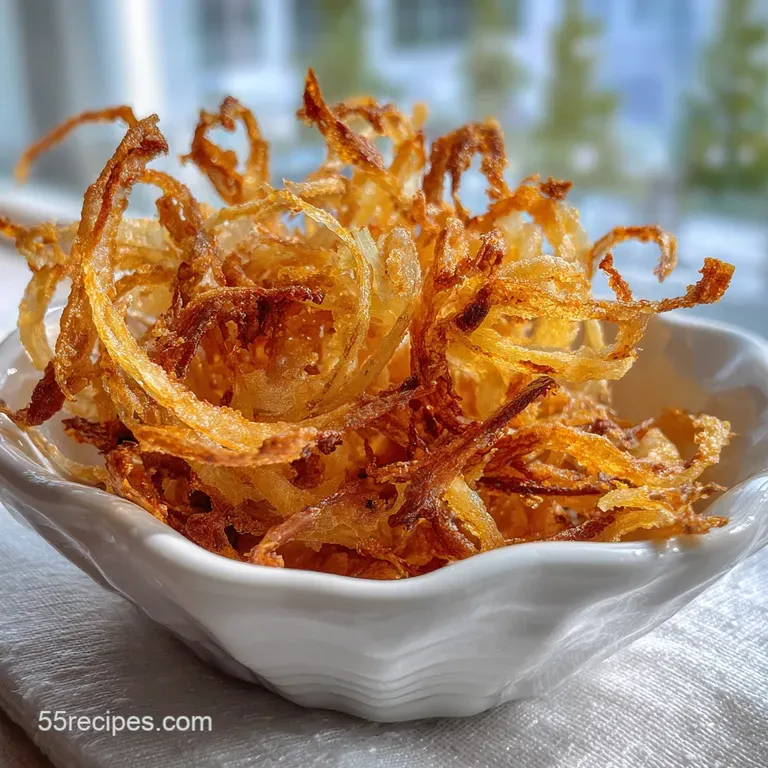
Fixing The Sogginess Problem
If your onion straws come out limp, the oil temperature likely dropped too low. When you add too many onions at once, the oil loses its heat, and instead of frying the exterior, it just soaks into the flour. Always work in small batches and wait for the oil to return to 375°F before the next round.
Preventing The Coating From Falling Off
If the flour isn't sticking, the onions might be too dry before dredging. The buttermilk acts as the glue. Make sure you don't pat the onions dry after the soak; you want that creamy liquid to grab onto the seasoned flour and cornstarch mix.
| Problem | Root Cause | Solution |
|---|---|---|
| Dark/Bitter Coating | Oil is too hot (over 400°F) | Reduce heat and add a splash of room temp oil to cool it. |
| Clumpy Tangled Mess | Overcrowding the pan | Fry only one loose handful at a time. |
| Flavorless Straws | Salt added too late | Season both the buttermilk soak and the flour dredge. |
Common Mistakes Checklist
- ✓ Never skip the 45 minute soak; it’s vital for removing the harsh onion bite.
- ✓ Don't use a lid while frying, as steam will build up and ruin the crunch.
- ✓ Avoid using old oil, which can give the straws a heavy, fishy aftertaste.
- ✓ Shake off every bit of excess flour before the onion hits the oil.
- ✓ Use a thermometer rather than "guessing" when the oil is ready.
Making Simple Swaps For Every Diet
Scaling this recipe is actually quite easy because the ratio of flour to cornstarch is what matters most. If you are cooking for a crowd, don't just double the salt and spices start with 1.5x and taste the dredge first.
Liquids like the oil and buttermilk can be increased 1:1, but the dry coating goes a long way.
For a smaller batch, you can easily halve the onions. If you only have one large onion, use 1 cup of buttermilk and half of the flour mixture. Since you're deep frying, you'll still need enough oil to submerge them, so don't cut the oil amount by more than 20% even for a small batch.
| Original Ingredient | Substitute | Why It Works |
|---|---|---|
| Buttermilk (2 cups) | Whole Milk + 2 tbsp Lemon Juice | The acid provides the same tenderizing effect. |
| Canola Oil (1 quart) | Peanut Oil | High smoke point and very neutral flavor profile. |
| All Purpose Flour (1.5 cups) | Cup for-Cup GF Flour | Note: Results in a slightly crunchier, grainier texture. |
Chef's Tip: Freeze your flour for 15 minutes before mixing the dredge. The temperature shock between the ice cold flour and the hot oil creates tiny steam pockets that make the crust extra bubbly and light.
Keeping Your Leftover Straws Perfectly Crunchy
Storage Guidelines You can keep these in an airtight container at room temperature for about 2 days, but they are best eaten within a few hours. If you must refrigerate them, they will stay safe for 4 days, but the moisture in the fridge will definitely soften that beautiful crust.
I don't recommend freezing these after they are fried, as the onion inside becomes mushy when thawed.
Reheating Tips Whatever you do, stay away from the microwave! It will turn your beautiful onion straws into a rubbery mess. To bring back the crunch, spread them out on a baking sheet and pop them into a 350°F oven for 5 minutes.
If you have an air fryer, 2 minutes at 360°F works like a charm.
Zero Waste Tips Don't throw away the buttermilk after soaking the onions! It’s full of savory onion flavor now. You can use it as a base for a savory fried chicken brine later that day.
Also, the tiny "ends" of the onions that are too small to slice can be tossed into a freezer bag for your next batch of homemade stock.
Flavorful Pairings For Your Crispy Toppings
These straws are the ultimate crowning glory for a steakhouse style meal. I love piling them high on top of a burger with a little bit of barbecue sauce and sharp cheddar cheese. The way the crunch of the onion cuts through the richness of the beef is absolute perfection.
If you’re looking for a more "comfort food" vibe, try serving these alongside my French Onion Meatloaf recipe. The sweetness of the straws complements the savory, melted Gruyere in the meatloaf beautifully. They also make a fantastic topping for a green bean casserole or even a bowl of thick, creamy potato soup.
- Steak Topper: Pile them on a ribeye with a dollop of garlic butter.
- The Ultimate Dip: Serve them as an appetizer with a side of zesty horseradish sauce.
- Salad Crunch: Use them instead of croutons on a wedge salad with blue cheese dressing.
Debunking Common Frying Misconceptions
One major myth is that you can use any old onion for this recipe. While red onions look pretty, they have a much higher water content and don't crisp up quite as well as yellow or Vidalia onions. The sugars in the Vidalias are what give you that deep, mahogany gold color without the onions tasting burnt.
Another thing people get wrong is the oil. Many think you need "fancy" oil to get good results. In reality, expensive extra virgin olive oil has a smoke point that is far too low for deep frying. Stick to canola, vegetable, or peanut oil.
These are affordable, neutral in flavor, and can handle the high heat required to get that signature shatter crisp texture.
Decision Shortcut If you want a light and airy texture, use the buttermilk soak and deep fry. If you want a tangy, bold flavor, add an extra teaspoon of cayenne and smoked paprika to the flour.
If you want to save time, you can reduce the soak to 20 minutes, though the onions will be slightly more pungent.
High in Sodium
1095 mg mg of sodium per serving (48% % of daily value)
The American Heart Association recommends limiting sodium intake to no more than 2,300mg per day for most adults.
Tips to Reduce Sodium in Your Fried Onions
-
Reduce Salt Usage-25%
This recipe uses both Kosher and Sea Salt. Reducing the amount of kosher salt by half and eliminating the fine sea salt can significantly decrease sodium content.
-
Low Sodium Buttermilk-15%
Check the label of your buttermilk for sodium content, and choose the brand with the lowest sodium level available. Some brands have substantially more sodium than others.
-
Spice It Up!-10%
Increase the amount of smoked paprika, garlic powder, cayenne pepper, and black pepper to enhance flavor and compensate for reduced salt. Experiment with different amounts to find your preferred balance.
-
Fresh Herbs & Spices
Enhance the flavor of your fried onions with fresh herbs like chives, parsley, or thyme. Experiment with different combinations to create a unique and flavorful dish without adding extra sodium.
Recipe FAQs
How to cut onions for onion straws?
Slice the onions using a mandoline slicer on the thinnest setting (around 1/16th inch). Consistency is crucial so that every ring fries evenly and achieves the same delicate, shatter like texture.
How do you get the coating to stick to onion straws?
Ensure the onions are fully saturated in the buttermilk before dredging. The buttermilk acts as the binder; you need the wet surface to grab the seasoned flour mixture properly.
Are onion straws more unhealthy than fries?
No, they can be significantly lighter than standard fries. Because the onion slices are so thin, they absorb less oil than thick cut potatoes, especially when using the correct high temperature frying method.
What onion straws made of?
They are primarily made from thinly sliced sweet onions, buttermilk, and a dredge of flour mixed with cornstarch. The cornstarch is key, as it increases the brittle nature of the coating, preventing it from becoming heavy or chewy.
Is it true you must use yellow or Vidalia onions?
No, but using them yields the best results for color and sweetness. Red onions contain too much moisture and their flavor can become slightly bitter when fried at high heat, unlike the sugary Vidalia variety.
How long should the onions soak in the buttermilk?
Soak the onions for a minimum of 45 minutes to allow for proper moisture draw down and tenderizing. This long soak softens the harsh sulfur compounds, ensuring the final product is sweet rather than pungent.
What is the best oil to use for frying onion straws?
Use a neutral oil with a high smoke point, such as Canola or Peanut oil. If you enjoy balancing acidity and fat, you might like experimenting with a similar oil ratio when making a dipping sauce like our Aji Amarillo Sauce recipe.
Crispy Onion Straws Recipe
Ingredients:
Instructions:
Nutrition Facts:
| Calories | 209 kcal |
|---|---|
| Protein | 3.2 g |
| Fat | 10.4 g |
| Carbs | 26.8 g |
| Fiber | 1.9 g |
| Sugar | 3.8 g |
| Sodium | 1095 mg |
