The Chefs Definitive Slowcooked Veal Osso Buco with Gremolata
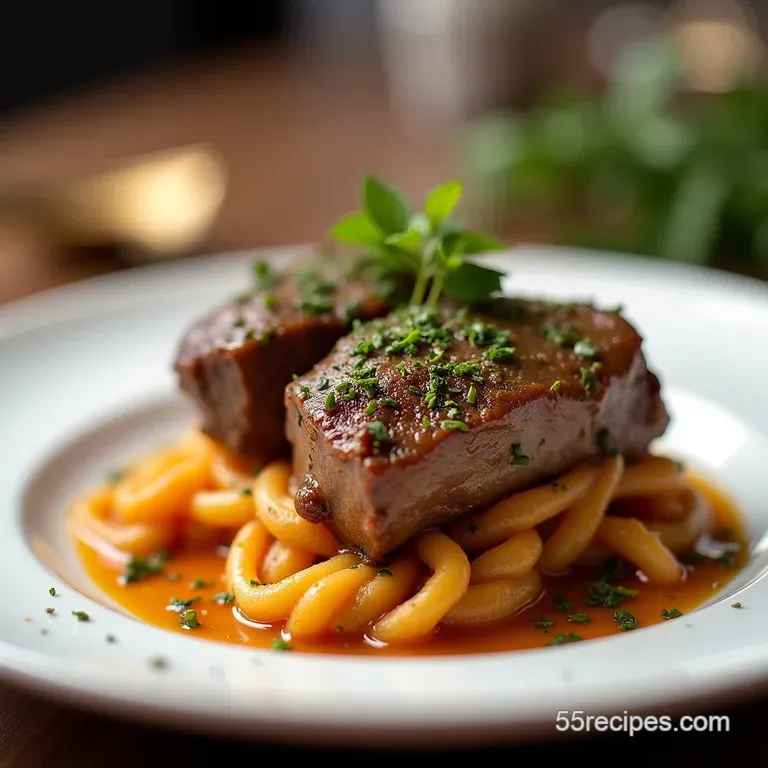
- Unveiling the Secrets to Perfect Milanese Veal Osso Buco
- Why This Braising Technique Transforms Tough Veal Shanks
- Sourcing Superior Components for Rich Flavor Depth
- Essential Tools for Mastering the Braise
- Step-by-Step Journey to Succulent Veal Osso Buco
- Achieving the Ideal Sear and Deglazing Technique
- Optimizing Flavor: Serving Suggestions and Pairing
- Storing and Reviving Leftover Osso Buco Masterpieces
- Recipe FAQs
- 📝 Recipe Card
Unveiling the Secrets to Perfect Milanese Veal Osso Buco
The Classic Veal Osso Buco is more than just a dish; it’s an Italian culinary institution, hailing proudly from Milan. It speaks of patient cooking, deep, resonant flavours, and that incomparable moment when fork tender meat yields with zero resistance.
We are embarking on a journey to create a truly sublime version of this classic, transforming thick cut veal shanks into a silken, unforgettable main course. This particular Veal Osso Buco recipe focuses on building flavour layers, ensuring that the final product achieves that much desired, near liquid consistency that defines authentic Milanese preparation.
While many look to the Veal Osso Buco slow cooker for ease, we’ll detail the traditional stovetop-to-oven method that yields superior depth.
Why This Braising Technique Transforms Tough Veal Shanks
Veal shanks, though lean, possess an impressive amount of connective tissue and bone marrow the very components that give this dish its character. The secret to transforming these tougher cuts into something melt in your mouth Osso Buco lies entirely in the slow, moist heat cooking process known as braising.
A True Taste of Lombardy Tradition
In Lombardy, the preparation emphasizes elegance born from simplicity. We use the entire shank, ensuring the bone marrow remains intact, as it melts into the sauce during cooking, providing a luxurious, nutty unctuousness that cannot be replicated any other way.
This method honors the integrity of the Veal shank recipes passed down through generations.
Setting Expectations for Slow Cooked Perfection
Achieving that falling apart texture requires time typically between two and a half to three hours of gentle simmering. Rushing this stage will result in chewy meat. Understanding this necessary timeline is key; this isn't a quick weeknight meal, but a deliberate act of culinary love.
While options like the Osso Buco recipe slow cooker exist for convenience, the traditional Dutch oven method allows for better control over the initial sear and the final reduction of the sauce.
The Essential Role of the Gremolata Topping
A richly braised dish, no matter how perfectly executed, can sometimes feel heavy. This is where the gremolata saves the day. This bright, uncooked topping a vibrant mixture of finely chopped parsley, lemon zest, and a whisper of garlic is sprinkled on just before serving.
It provides a necessary, dazzling counterpoint, cutting through the richness of the veal and the sauce, elevating the entire Veal Osso Buco Milanese experience.
Sourcing Superior Components for Rich Flavor Depth
The quality of your starting ingredients directly dictates the final success of your meal. Since the ingredient list is relatively short, high-quality sourcing is paramount.
For the veal, seek out thick cut (1.5 to 2 inches) Osso Buco shanks. If possible, ask your butcher to tie twine around the perimeter of the meat to help them hold their gorgeous circular shape during the long braise.
When selecting tomatoes, opt for high-quality imported crushed tomatoes, as their inherent sweetness provides better balance than watery domestic varieties. Finally, the stock whether homemade veal or high-quality beef stock should be low in sodium, allowing you to control the seasoning profile as the liquid reduces.
Essential Tools for Mastering the Braise

While you don't need a specialized kitchen, a few pieces of equipment are indispensable for executing this recipe flawlessly.
Selecting and Preparing the Veal Shanks Correctly
Before any cooking begins, the shanks must be prepared. Patting them thoroughly dry with paper towels is critical; moisture prevents the deep, flavourful browning we seek. Next, you must score the tough membrane circling the outside edge of the meat 3 to 4 times.
This prevents the shanks from curling into tight balls when exposed to heat. After seasoning liberally with kosher salt and black pepper, a light dredging in all-purpose flour helps create a protective crust and thickens the final sauce slightly.
The Foundation: Building Blocks for the Soffritto Base
Every great Italian braise starts with the soffritto —the slow cooked aromatic base. Finely dicing one large yellow onion, two carrots, and two celery stalks ensures that these vegetables break down completely during the long cook time, essentially melting into the sauce to provide sweetness and body.
This foundational mixture is sautéed gently until perfectly soft before any liquid is introduced.
Measuring Liquids: Wine, Stock, and Tomato Concentration
The liquids are crucial for achieving the perfect sauce consistency for your Veal Osso Buco with risotto . We begin with a half cup of dry white wine for acidity, which must be fully cooked down (reduced) to concentrate its flavour.
This is followed by high-quality stock (around 3 cups) and one large can of crushed tomatoes. The goal is for the liquid to only reach about three quarters of the way up the sides of the veal when nestled in the pot; the top portion needs exposure to the oven’s dry heat to prevent steaming and to develop textural complexity.
Related Recipes Worth Trying
- Crispy Onion Blossom Recipe Outback Style at Home — Craving a blooming onion Outback style This onion blossom recipe delivers that crispy pubstyle appetizer at home Get my easy tips for perfect onion petals
- Easy Veal Piccata Recipe: My Go-To Lemon Butter Delight — Need a quick & easy veal piccata recipe? This lemon butter version is a restaurant quality meal you can make at home in minutes! Get my tips for tender veal...
- Classic Veal Schnitzel: Crispy, Golden Perfection! — Craving authentic veal schnitzel? This recipe delivers crispy, golden perfection every time! Easy to follow & packed with flavour. Your tastebuds will thank...
Step-by-step Journey to Succulent Veal Osso Buco
This process unfolds methodically, ensuring each step contributes significantly to the final depth of flavour. The total time commitment, spanning prep and the lengthy braise, approaches three hours, but the results are worth every minute dedicated to this wonderful dish.
Achieving the Ideal Sear and Deglazing Technique
The initial high heat steps are non-negotiable if you want a truly rich sauce.
The Crucial First Step: Dredging and Browning the Meat
In a heavy bottomed Dutch oven, melt the butter with olive oil over medium high heat until shimmering. Working in batches so as not to overcrowd the pot, sear the floured shanks until a deep, mahogany brown crust forms on all sides this takes about three to four minutes per side.
Remove the browned shanks and set them aside on a clean plate. That fond left in the bottom of the pot is liquid gold; do not discard it.
Layering Aromatics and Introducing the Braising Liquid
Reduce the heat to medium and add your finely diced onion, carrot, and celery to the pot. Gently sauté, using a wooden spoon to scrape up all those flavorful browned bits from the bottom.
Once these vegetables are soft and translucent (about 8– 10 minutes), add the minced garlic and cook for just one minute until fragrant. Now, pour in the dry white wine.
Bring this mixture to a lively simmer, scraping again to ensure all flavour is lifted, and allow the wine to reduce by half. This concentrates the essential acidity.
Managing Heat: The Low and Slow Simmer Parameters
Nestle the seared veal shanks back into the pot, tucking them around the soffritto. Add the crushed tomatoes, the three cups of stock, fresh rosemary, thyme sprigs, and a bay leaf. Bring this entire mixture to a gentle simmer right on the stovetop.
Once simmering softly, cover the Dutch oven tightly and transfer it immediately to a preheated oven set to 325° F ( 160° C).
Let it braise undisturbed for a minimum of 2 hours 15 minutes, until the meat is exceptionally tender and yields easily to a fork. If, after removing the meat, the resulting sauce seems too thin, simply simmer it uncovered on the stovetop until it thickens to a coating consistency suitable for your Veal Osso Buco with risotto .
Crafting the Vibrant, Finishing Gremolata Zest
While the sauce is finishing its reduction, quickly assemble the crowning jewel: the gremolata. Finely chop a generous half cup of fresh Italian parsley. Use a microplane to capture the zest of one large lemon, ensuring you avoid the bitter white pith.
Mix these ingredients with one very small clove of finely minced or grated garlic. This preparation is bright, fresh, and provides the perfect herbaceous lift to the deeply savory braise.
Optimizing Flavor: Serving Suggestions and Pairing
The richness of this braise demands an equally capable companion to absorb the incredible sauce. The absolute classic pairing is Saffron risotto for Osso Buco , known as Risotto alla Milanese .
The earthy, subtle perfume of the saffron complements the deep flavour of the veal magnificently. For a simpler approach, creamy polenta or even buttery mashed potatoes work beautifully to catch every drop.
Storing and Reviving Leftover Osso Buco Masterpieces
One of the joys of a slow cooked dish is that the flavour deepens overnight.
Perfect Side Dishes to Complement Rich Veal
Beyond risotto, consider balancing the heaviness with something green and slightly bitter. Blanched asparagus tossed with quality olive oil or a sharply dressed arugula salad provides the necessary textural and flavour contrast.
Tips for Freezing and Thawing Your Braised Shanks
This dish freezes exceptionally well. Allow the Veal Osso Buco to cool completely, then transfer the shanks and sauce into an airtight, freezer safe container. It will keep well for up to three months.
Thaw overnight in the refrigerator before reheating gently on the stovetop or in a 300° F oven, ensuring it comes to temperature slowly to protect the tenderness of the meat.
Troubleshooting Common Issues in the Braising Pot
If your meat isn't tender after 2 hours 45 minutes, it simply needs more time; don't raise the temperature, just let it continue to simmer gently.
If you find the sauce is salty, add a quarter of a peeled potato to the sauce while simmering; the potato will absorb some of the excess salt, which you can then discard before serving.
If you are adapting this into a Veal Osso Buco slow cooker version, ensure the liquid doesn't fully cover the meat, and reduce the heat setting to low for 6- 8 hours.
Recipe FAQs
What's the secret to making sure my Veal Osso Buco is genuinely melt-in-the-mouth tender?
The key is patience and low, slow heat, much like waiting for the last bus on a rainy Tuesday! Ensure you cook it low around 325°F (160°C) for at least 2 hours and 15 minutes.
You’re aiming for the connective tissue to fully break down, so if it still feels chewy, pop it back in the oven for another half hour.
Do I absolutely have to make the Gremolata, or can I skip it if I'm short on time?
Honestly, while you can skip it, you’ll be missing the entire point of the dish! The gremolata (lemon zest, parsley, garlic) is the traditional, non-negotiable finishing touch that cuts through the richness of the veal and sauce.
It adds a necessary brightness, like a sudden burst of sunshine after a grey morning.
My sauce seems a bit thin after the braise; how do I get it nice and glossy?
It’s a common occurrence when braising; the liquid evaporates unevenly. Simply remove the shanks and simmer the remaining sauce vigorously on the stovetop for about 10 to 15 minutes uncovered. This will concentrate the flavour and reduce the liquid until it coats the back of a spoon nicely.
Can I prepare this Veal Osso Buco dish ahead of time, perhaps the day before?
Absolutely, and I highly recommend it! Osso Buco improves overnight; the flavours have more time to meld together beautifully. Cool it completely, store it in an airtight container in the fridge, and gently reheat it on the stovetop the next day, adding a splash of extra stock if it seems too thick.
What is the best way to serve Osso Buco if I don't want to bother with making traditional Risotto alla Milanese?
If you fancy something a bit less hands-on than saffron risotto, serving it over creamy, soft polenta is a superb alternative it’s just as brilliant for soaking up that rich sauce. Alternatively, incredibly buttery mashed potatoes or even thick pappardelle pasta work a treat.
Meltinyourmouth Veal Osso Buco